The shower is off, you want to shave or put on make-up – and the mirror is completely blank. A foggy bathroom mirror is pure physics: warm, humid air meets a cooler glass surface, and the water vapour settles on it as tiny droplets. Wiping it with a towel only helps for a moment and leaves streaks.
It is better to tackle the cause. These five tricks help the mirror clear faster or stop it from steaming up in the first place – and they also help against damp and mould in the bathroom.
Why your bathroom mirror fogs up
In the shower, the air in the bathroom takes up a large amount of water vapour very quickly. Warm air can hold more moisture than cold air. When it touches a surface cooler than itself, it cools down and releases water. The mirror often hangs on an outside wall or in front of cooler tiles, so it is one of the first surfaces to fog up.
The water forms countless tiny droplets on the glass. They scatter the light and the glass looks milky. The same moisture also settles on windows, tiles, grout and the ceiling. The Swiss Federal Office of Public Health points out that mould is unhealthy and the cause of damp should always be fixed. So a steamed-up mirror is also a signal: the moisture needs to get out of the bathroom.
| Trick | Effect | Effort |
|---|---|---|
| Airing or extractor fan | Lowers humidity, the glass clears faster | Daily, a few minutes |
| Washing-up liquid or shaving foam film | Prevents droplets for a while | A few minutes, repeat regularly |
| Anti-fog spray | Similar to the home remedy, follow the manufacturer | A few minutes, repeat regularly |
| Heated mirror | Keeps the glass warm, permanent solution | One-off installation by a professional |
| Squeegee after showering | Clear view and no limescale spots | One minute after every shower |
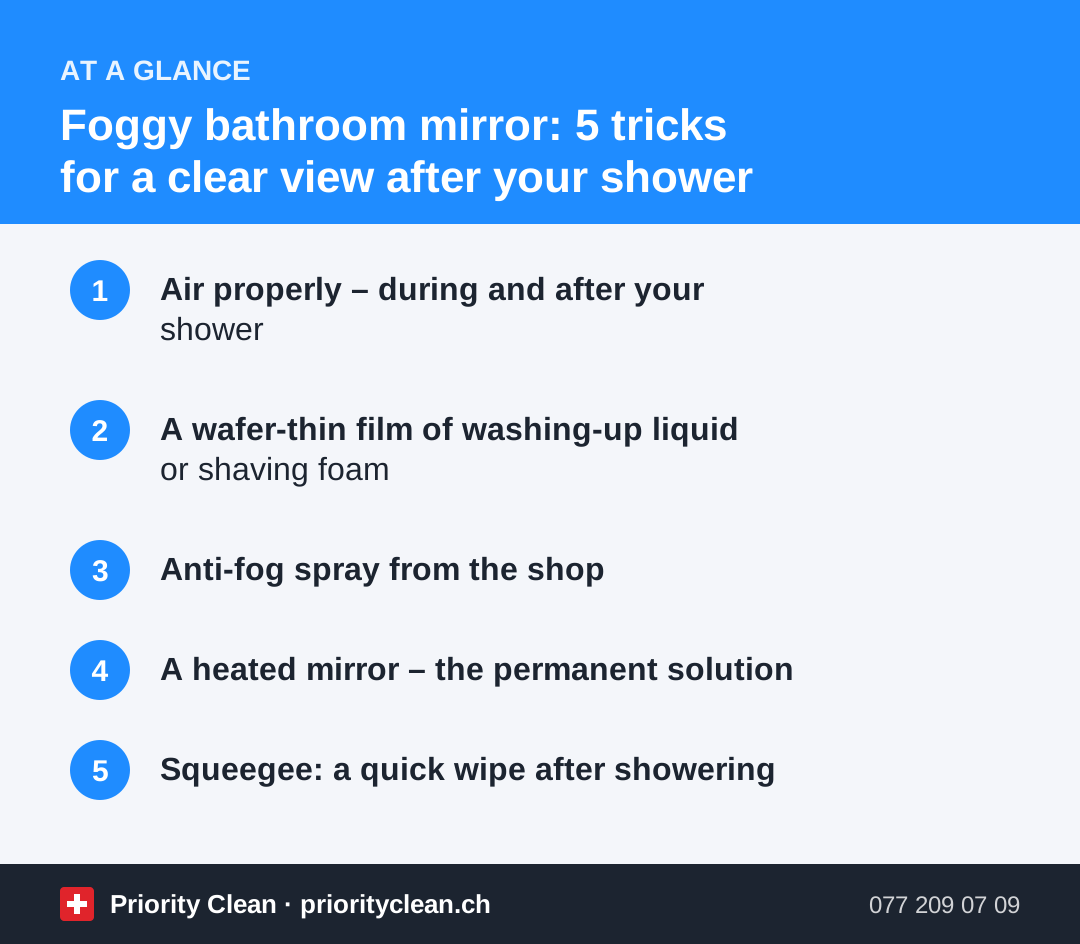
1. Air properly – during and after your shower
The most effective trick costs nothing. If your bathroom has a window, open it fully after showering rather than leaving it tilted for a long time. The Federal Office of Public Health recommends opening windows fully, cross-ventilating where possible and airing for at least five minutes in the heating season. The humid air escapes quickly and the glass visibly clears.
Without a window, the extractor fan takes over: switch it on while you shower and leave it running afterwards until the glass and tiles are dry. A dusty vent draws far less air; our guide to cleaning the bathroom extractor fan shows how to clean it. For more on moisture, read airing the bathroom after a shower.
Habits play a part too: a slightly cooler, slightly shorter shower produces less steam. An adequately heated bathroom has warmer surfaces, where less moisture condenses.
2. A wafer-thin film of washing-up liquid or shaving foam
A tried-and-tested home remedy is an invisible film on the glass. It makes the water spread out as an even, transparent layer instead of forming milky droplets.
- Clean and dry the mirror first, so that no limescale or soap residue is trapped underneath.
- Put a drop of washing-up liquid or a little shaving foam on a dry microfibre cloth.
- Spread a wafer-thin layer over the whole surface.
- Buff with a clean, dry microfibre cloth until no streaks are visible.
The effect lasts for a while and fades when the glass is cleaned or gets wet often. Then simply repeat. Use too little rather than too much: too much product leaves a greasy film. Our guide to streak-free glass tables and mirrors explains how to clean mirrors without smears.
3. Anti-fog spray from the shop
Shops sell anti-fog products for mirrors, glasses and visors. They work on a similar principle to the home remedy. Follow the instructions on the pack, test the product in a corner first and air the room while applying it. Like all household chemicals, keep it in its original packaging and out of children's reach.
If your mirror has a special coating or was sold as fog-free, skip additional products and ask the manufacturer if in doubt.
4. A heated mirror – the permanent solution
A heated mirror has a thin heating pad behind the glass. It keeps the glass slightly warmer than the room air, so hardly any moisture settles on it. Many mirror cabinets and illuminated mirrors now come with built-in heating, often linked to the light switch.
If you want to retrofit one, one rule applies: electrical work in the bathroom is not a DIY job. The Swiss Low-Voltage Installation Ordinance requires that anyone who creates or modifies electrical installations holds an installation permit. So call in a qualified electrician. In a rented flat, ask property management for permission first.
5. Squeegee: a quick wipe after showering
If the mirror has steamed up anyway, draw a small window or shower squeegee down it from top to bottom and dry the edge with a microfibre cloth. That is quicker than waiting and stops limescale spots being left behind as the drops dry. Use the same squeegee on the shower screen, and the whole bathroom stays clean for longer.
The most common mistakes
- Wiping with your hand or a towel: this spreads skin oil and fluff and leaves streaks.
- Keeping the window tilted all day: the moisture escapes slowly and the wall around the window cools down.
- Too much washing-up liquid: a thick film smears and makes the view worse, not better.
- Spraying cleaner straight onto the mirror: the liquid runs to the edges and can attack the reflective coating.
- Wiring a heated mirror yourself: electrical installations belong in professional hands.
Frequently asked questions
Why does my bathroom mirror fog up so quickly?
Because the warm, humid shower air cools down on the cooler glass and releases water. The more humid the air and the cooler the surface, the faster it fogs up.
Does shaving foam really stop a mirror steaming up?
A wafer-thin, well-buffed film of shaving foam or washing-up liquid prevents milky droplets from forming for a while. After that it needs renewing.
Can I install a heated mirror myself?
Connecting a heated mirror to the existing electrical installation is a job for a qualified electrician. In a rented flat, clear it with property management first.
Is a steamed-up mirror a sign of too much moisture?
Right after a shower it is normal. But if the mirror, windows and tiles stay wet for a long time, you need to air better, otherwise the risk of mould increases.
Thanks for your feedback! Feel free to share the guide.
Thanks! What was missing? Drop us a line – we will improve the guide. WhatsApp