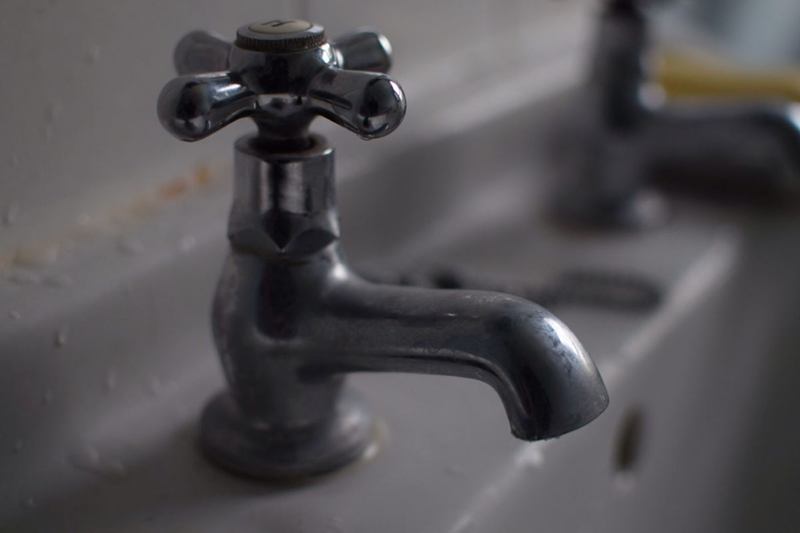
Matt black taps and shower heads look stylish in a new bathroom – until white dots, rings and fingerprints appear a few weeks later. If you want to clean black taps, you can't simply reach for your usual limescale remover: acids and abrasives that barely leave a mark on chrome can stain dark surfaces or polish them shiny.
The good news: with the right habits, limescale never gets the chance to build up. These five steps show how to care for black taps in the bathroom and kitchen, remove limescale gently and avoid the typical mistakes.
Why black taps show marks so quickly
On dark, matt surfaces everything shows that stays invisible on chrome: when a drop of water evaporates, the dissolved minerals remain as a white ring. On top of that come soap residue, toothpaste splashes and greasy fingerprints, which appear as shiny patches on matt black.
Black taps are usually made of brass or stainless steel with a dark finish. Depending on the manufacturer, this is a PVD coating, a powder coating or a lacquer. These layers are thin. Acids can attack or discolour them, and abrasives and rough sponges polish matt areas shiny. Once the finish is damaged, no amount of scrubbing will bring it back.
| What you see | Likely cause | What helps |
|---|---|---|
| White dots and rings | Limescale from evaporated drops of water | Wipe dry after use |
| Shiny, greasy patches | Fingerprints, skin oils, toiletries | Mild soapy water, soft cloth |
| Milky film | Soap and shower gel residue mixed with limescale | Wash regularly with soapy water, rinse with clear water |
| Lighter or shiny spots | Wear from abrasives or rough sponges | Can't be cleaned off – ask the manufacturer |
| Discolouration, dull spots after cleaning | Product too harsh or acidic | Rinse with water at once, stop using the product |
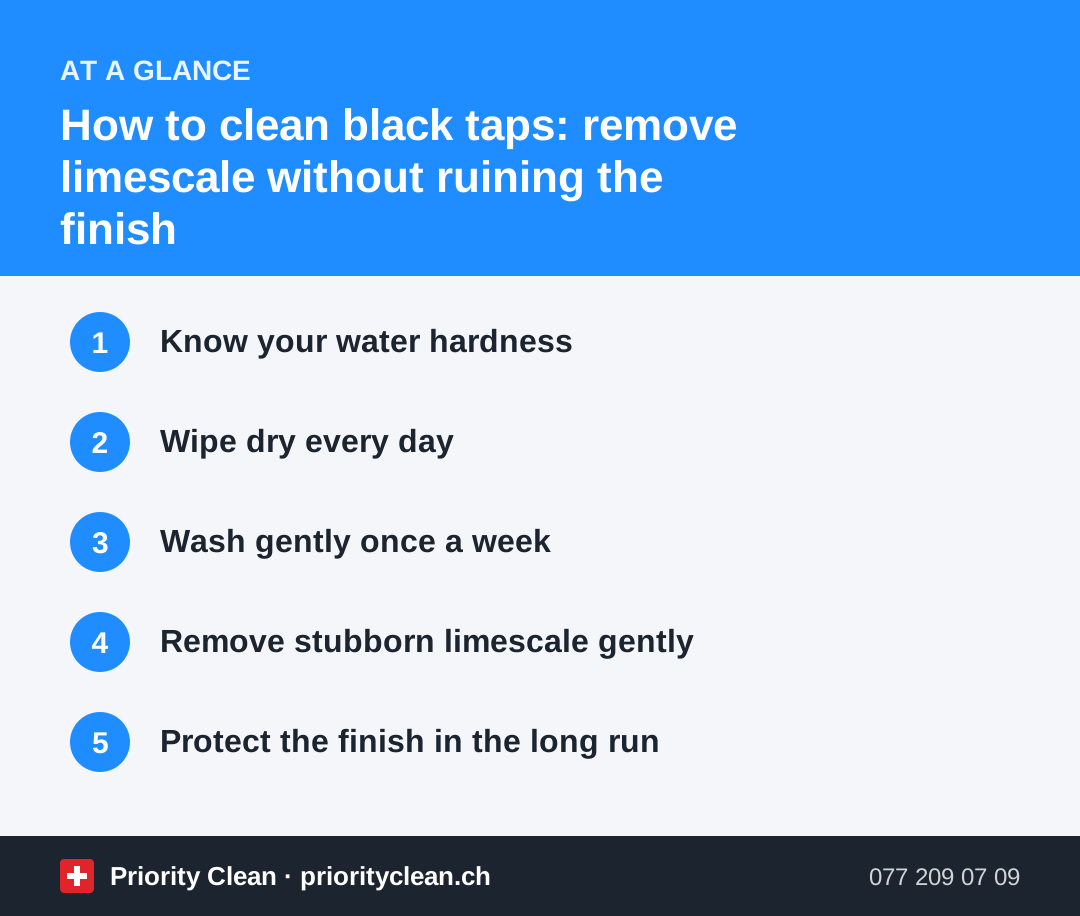
1. Know your water hardness
How quickly limescale forms depends on your water. You can look up the hardness for your area by postcode on the platform of the Swiss gas and water association SVGW. In Switzerland, hardness is given in French degrees. The Canton of Zurich's cantonal laboratory explains the scale, from soft (below 15 °fH) to very hard (above 42 °fH).
With soft water, washing the taps once a week is often enough. With hard water, as in many municipalities, daily wiping is all the more worthwhile. If your building has a water softener, ask the property management or caretaker about the hardness in the building.
2. Wipe dry every day
The most effective measure takes ten seconds: after washing your hands, brushing your teeth or showering, wipe the tap, lever and spout with a dry, soft microfibre cloth. No water drops, no limescale rings.
Hang a small cloth right next to the washbasin and in the shower for this. A squeegee helps for the shower wall and tiles; then give the shower mixer a quick wipe with the cloth. Wash the cloths regularly and without fabric softener so they stay absorbent.
3. Wash gently once a week
For a thorough clean you don't need special products:
- Mix lukewarm water with a few drops of mild washing-up liquid or pH-neutral soap.
- Dip a soft cloth or sponge into it and wring it out.
- Wipe the whole tap gently – with little pressure and without rubbing in circles on one spot.
- Go over it with a second cloth and clear water so that no soap residue remains.
- Dry immediately.
Around the lever and where the tap meets the basin, a soft toothbrush is handy. Then do the basin and shower tray: if bathroom cleaner runs over the tap, rinse it off straight away with clear water.
4. Remove stubborn limescale gently
If a limescale ring has already formed, work in stages – from the mildest option to the stronger one:
- Several rounds of warm soapy water: lay a warm cloth soaked in soapy water on the spot for a few minutes, then wipe gently. Light deposits often come away after a few rounds.
- Only with the manufacturer's approval: if the care guide permits a mild descaler, put it on a cloth rather than directly on the tap, leave it on only briefly, rinse thoroughly with clear water and dry.
- Descale the aerator separately: on many models the insert in the spout can be unscrewed, and you can descale the inner part in a container – so the black outer surface never comes into contact with the product.
General advice on limescale is in our guide on how to remove limescale from taps, and for the shower in descale a shower head. With black finishes, however, the manufacturer's instructions always come first.
5. Protect the finish in the long run
- Keep the care instructions: the manufacturer's guide says which products are allowed. If you have lost it, you can often find it on their website.
- No cosmetics on the tap: hairspray, perfume, nail polish remover or shaving foam can attack the surface. Wipe off splashes straight away.
- Keep the surroundings clear: soap dishes and wet toothbrush mugs placed against the tap leave rings.
- Report damage: if the coating is chipped or discoloured, cleaning won't help. In a rented flat, let the property management know.
The most common mistakes
- Bathroom cleaner on everything: what suits ceramics and chrome can discolour a black finish.
- Neat vinegar or citric acid: acids attack many coatings – use them only if the manufacturer allows it.
- Melamine sponges and scouring pads: they act like fine sandpaper and polish matt areas shiny.
- Leaving a product on and forgetting it: even an approved product must be rinsed off after a short time.
- Leaving the tap wet: every drop that dries becomes a limescale mark.
Frequently asked questions
What is the best way to clean black taps?
With lukewarm water, a few drops of mild washing-up liquid and a soft cloth. Then wipe with clear water and dry. Only use special products if the manufacturer allows them in its care instructions.
Can I use vinegar on black taps?
Many manufacturers advise against acidic products because they can attack the coating. Check the care instructions for your model. Without express approval, stick to mild soapy water.
How do I prevent limescale marks on matt black taps?
Wipe the tap with a dry microfibre cloth after every use. Without drops evaporating, limescale can't settle. With hard water this habit is particularly important.
Can scratches or shiny patches be polished out?
As a rule, no. A damaged coating can't be repaired with cleaning products, and polishing usually makes it worse. Ask the manufacturer or a plumber – in a rented flat, the property management first.
Thanks for your feedback! Feel free to share the guide.
Thanks! What was missing? Drop us a line – we will improve the guide. WhatsApp