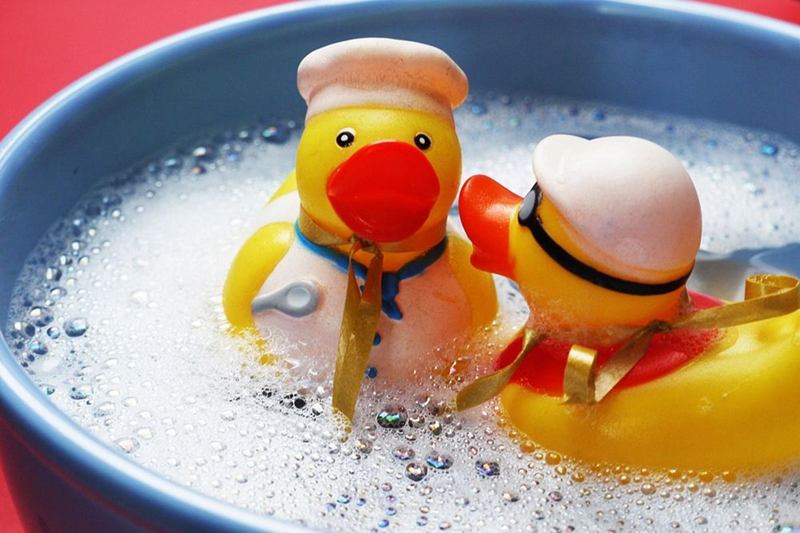
Your child squeezes the duck, and instead of water, black specks squirt into the bath. At that point it is obvious that something has moved in. Mouldy bath toys are extremely common, because rubber ducks, squirting fish and rubber animals suck in water at every bath – and hardly ever dry out on the inside.
Whether cleaning is worth it or the toy belongs in the rubbish bag depends on how bad the build-up is and how the toy is made. Here is how to spot mould in bath toys, remove it and prevent it in future.
Why bath toys go mouldy inside
Most squeaky toys have a small hole underneath. When a child squeezes them under water, they suck in bath water as they spring back. That water contains soap and shampoo residue, skin flakes and germs. In the dark, warm interior it sits for days, because hardly any air gets through the tiny hole.
A slimy layer forms on the inner wall – a biofilm of bacteria and fungi. Over time it turns dark and breaks off in flakes. The Swiss Federal Office of Public Health states that mould is unhealthy, should be removed quickly and the cause of the damp dealt with. With bath toys, the cause is simple: water that cannot get out again.
| Sign | What it means |
|---|---|
| Clear water comes out | Usually still fine – let it dry well |
| Cloudy water, musty smell | Build-up is starting – clean it now |
| Black or brown flakes | Mould is clearly established inside |
| Dark patches visible through the plastic | Heavy build-up, cleaning is hardly possible |
This guide cannot judge whether your child is reacting to mould. If you are worried about symptoms, ask your paediatrician.
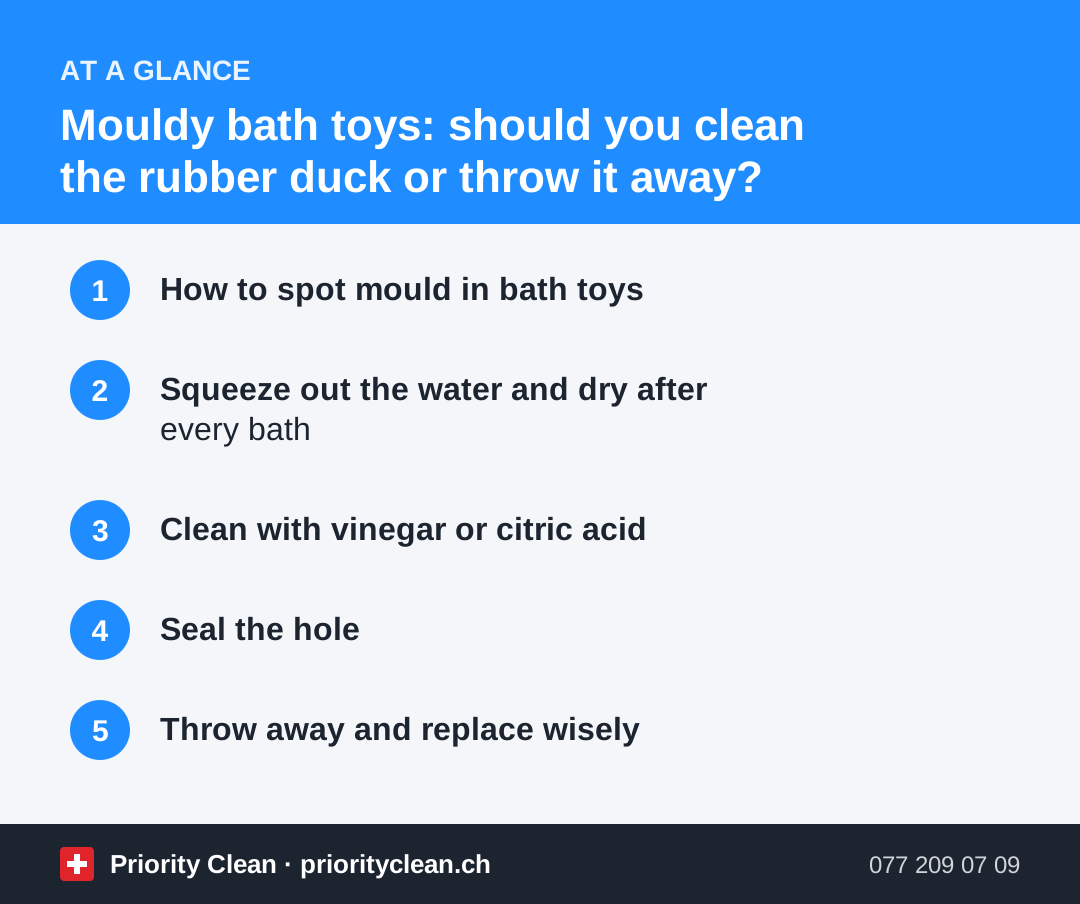
1. How to spot mould in bath toys
Check every toy with a hole about once a week. Squeeze it hard over a white washbasin or a sheet of kitchen roll. Clear water is a good sign. Cloudy water, dark particles or a musty smell show that something has formed inside.
Hold light-coloured, translucent toys up to the light: dark shadows on the inner wall give the build-up away. If you want to be sure, cut an old duck open with scissors. One look inside is usually enough to show why prevention matters.
2. Squeeze out the water and dry after every bath
The most effective measure takes just a minute:
- After the bath, squeeze each toy several times until no more drops come out.
- Rinse the outside with clean water and dry it with a cloth.
- Leave it to dry with the hole facing down in an airy spot, for example in a net or an open basket.
- Don't leave it in a closed box or in the wet bath.
The bathroom itself also needs to dry out properly after bath time. Our guide to airing the bathroom after a shower shows how to get rid of the moisture quickly.
3. Clean with vinegar or citric acid
If the build-up is light, it is worth trying to clean the toy. The Swiss consumer protection foundation Stiftung für Konsumentenschutz lists vinegar and citric acid as simple household remedies that can replace many special products. For bath toys, proceed as follows:
- Dilute household vinegar with warm water, or dissolve a little citric acid in warm water.
- Dip the toy in the solution, squeeze it and let it suck up the liquid.
- Shake it hard, leave it for a while, then squeeze it out. Repeat several times.
- Then suck up and squeeze out clean water several times until no more residue comes out.
- Let it dry completely with the hole facing down, ideally for a day or two.
Be realistic about the result: the biofilm sticks firmly to the inner wall, and no brush can reach it. Cleaning reduces the build-up but does not make the inside reliably clean.
Boiling the toy or putting it in the dishwasher is only an option if the manufacturer expressly says it is suitable. Many soft plastics lose their shape in the heat.
4. Seal the hole
New toys, or toys that have been cleaned thoroughly and are completely dry, can be sealed so that no more water gets in. Many parents use a drop of hot glue from a glue gun. Important:
- Only seal the hole when the inside is really dry – otherwise you trap the moisture.
- Hot glue is very hot. Work with no children nearby and let it cool completely.
- Check the seal regularly. A loose plug of glue does not belong in a child's hands, especially not with toddlers who put everything in their mouths.
The toy may squeak less or stop squeaking altogether. In return, it still floats and stays dry inside.
5. Throw away and replace wisely
Not every toy is worth saving. Throw it away if black flakes come out when you squeeze it, the inside is sticky, dark patches show through the plastic or the smell stays after cleaning. Plastic squeaky toys usually go in the household rubbish bag, unless your municipality says otherwise.
When buying new ones, look at how they are made:
- Toys without holes: they don't suck in water and stay clean inside.
- Toys that open: some bath toys come apart, so you can clean and dry the inside.
- Cups, boats and pouring toys: open shapes dry completely and are easy to rinse.
You will find more tips on caring for children's toys in our guide on how to clean toys.
The most common mistakes
- Leaving toys in the bath: they never dry completely and suck in fresh water at the next bath.
- A closed storage box: the moisture stays trapped and mould has an easy time.
- Sealing a wet toy: closing the hole before it has dried keeps the build-up growing inside.
- Combining several cleaners: vinegar and bleach must never come together.
- Hoping for too long: heavily mouldy squeaky toys cannot be saved.
Frequently asked questions
Is mould in bath toys dangerous?
The Federal Office of Public Health considers mould in the home unhealthy and recommends removing it quickly. A toy that squirts out black flakes should therefore no longer be used. For health questions, speak to your paediatrician.
Can you boil a rubber duck?
Only if the manufacturer expressly allows it. Many soft plastics lose their shape in the heat, and even boiling water does not reliably reach the build-up stuck to the inside.
How do you seal the hole in a bath toy?
The simplest way is a drop of hot glue once the inside is completely dry. Check the seal regularly so that the plug does not come loose.
How often should you clean bath toys?
Squeeze them out and let them dry after every bath, check them once a week and clean them at the first signs of build-up. Toys without holes just need a regular rinse with warm water.
Thanks for your feedback! Feel free to share the guide.
Thanks! What was missing? Drop us a line – we will improve the guide. WhatsApp