You take your favourite wool jumper out of the wardrobe for the first cold days of autumn – and find small, irregular holes. Clothes moths are behind it, or more precisely their larvae. The small, straw-coloured moths themselves are rarely seen, as they avoid light and prefer to run rather than fly.
Unlike pantry moths, clothes moths have nothing to do with food. They are after animal fibres. With a systematic approach, you can deal with most infestations yourself – here's how.
How to recognise clothes moths
The City of Zurich's fact sheet on clothes moths explains that the larvae feed on animal fibres and can badly damage woollen textiles and carpets. They like dark, undisturbed places – the back of the wardrobe, under the bed, behind furniture.
Typical signs:
- Irregular holes in wool, cashmere or silk, often in folds or under collars.
- Small, whitish larvae or silky tubes and cocoons in corners or on fabric.
- Fine crumbly droppings, often the same colour as the fabric.
- Bald patches along the edges of wool rugs.
- Small moths that run or flutter away when you move clothes.
Clothes that have been worn and stored unwashed are particularly attractive, as sweat and skin residue make fibres more appealing to larvae.
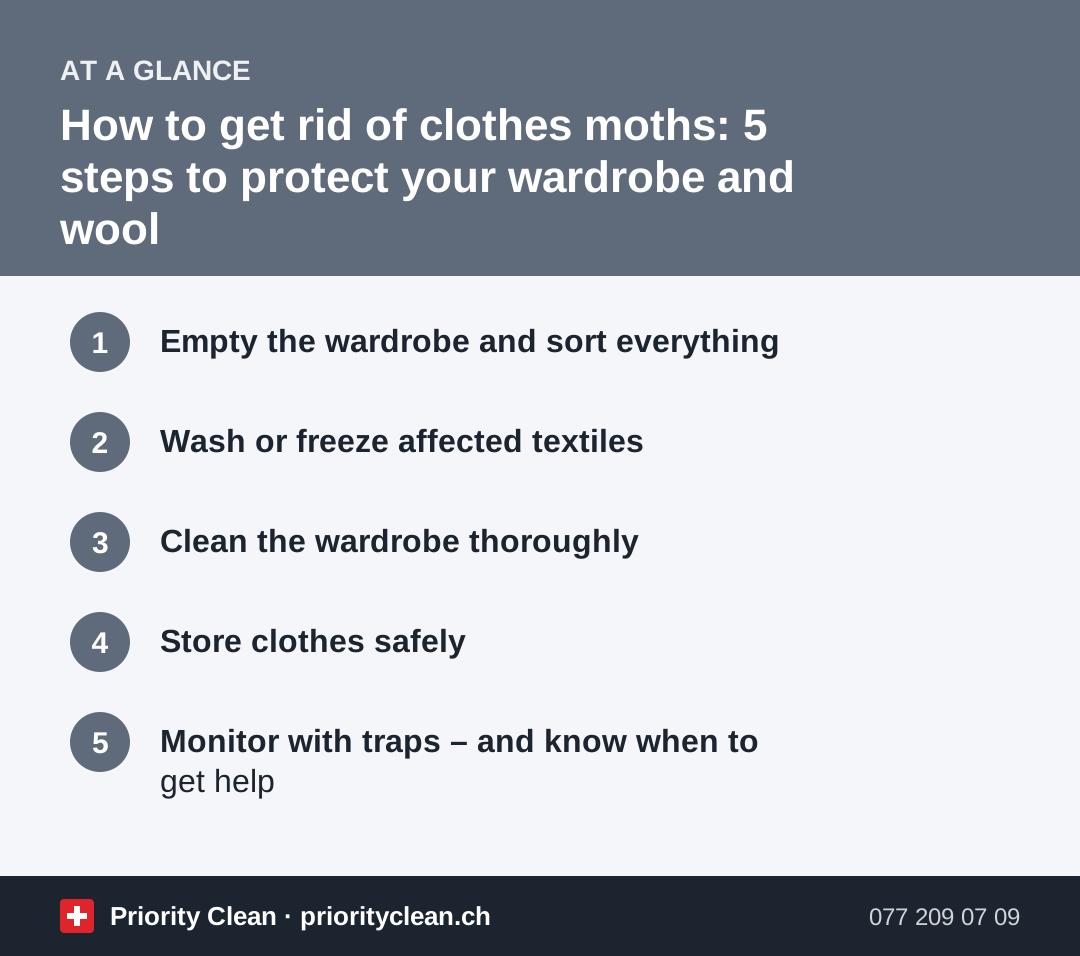
1. Empty the wardrobe and sort everything
Take out everything, not just the damaged item – larvae spread.
- Take clothes out piece by piece in good light, ideally outdoors or on the balcony.
- Shake out each item well and brush wool with a clothes brush.
- Sort into three piles: visibly damaged or affected, animal fibres without visible damage, and synthetics or cotton.
- Seal affected items in plastic bags immediately so larvae don't spread.
- Throw away items that are badly damaged or not worth saving.
2. Wash or freeze affected textiles
Heat and cold both work against eggs and larvae. Which method you choose depends on the care label.
| Method | Suitable for | How |
|---|---|---|
| Washing | Items that tolerate higher temperatures | As hot as the label allows |
| Wool programme | Wool and cashmere | Machine wool cycle, wool detergent – then freeze if unsure |
| Freezing | Delicate wool, silk, items that can't be washed | Sealed bag, several days in the freezer |
| Dry cleaning | Coats, suits, delicate items | Professional cleaner |
Most wool can't be washed hot, which is why freezing is so useful. Put the items in a sealed freezer bag to protect them from moisture, leave them for several days and let them come back to room temperature slowly in the bag.
EnergieSchweiz generally recommends low washing temperatures for everyday laundry – that remains true, but with a moth problem the aim is different, and the label still sets the limit.
3. Clean the wardrobe thoroughly
Eggs and larvae hide in joints and corners – a quick wipe is not enough.
- Vacuum the empty wardrobe carefully: shelves, corners, joints, shelf-pin holes, rails and drawers.
- Also vacuum the floor under and behind the wardrobe, skirting boards and carpet edges.
- Wipe everything with warm water and a little washing-up liquid, then let it dry completely.
- Empty the vacuum cleaner or dispose of the bag outside the flat straight away.
- Check other places with wool: rugs, felt pads, upholstered furniture with wool content, feather cushions.
4. Store clothes safely
Once everything is clean, prevention begins.
- Store only clean clothes: Wash or air items before putting them away for the season.
- Use sealed bags or boxes: Garment bags with zips and plastic boxes with lids keep moths out.
- Air the wardrobe: Open doors from time to time and move clothes around – moths dislike disturbance.
- Don't overfill: Tightly packed wardrobes are dark, still and ideal for larvae.
Lavender bags and cedar wood blocks smell pleasant and may deter moths a little. They are a supplement to good storage, not a solution for an existing infestation.
5. Monitor with traps – and know when to get help
- Pheromone traps: They attract male clothes moths and show whether the problem is still active. Replace them as the pack instructs.
- Parasitic wasps: Specialist suppliers sell tiny beneficial insects that target moth eggs. They are a biological option; follow the supplier's instructions.
- Regular checks: Look at wool items and rug edges every few weeks for a while.
If the infestation keeps returning or affects large areas such as fitted carpets, contact a professional pest control company.
Common mistakes with clothes moths
- Treating only the damaged jumper: Larvae are probably in neighbouring items too.
- Storing worn clothes unwashed: Sweat and skin residue attract larvae.
- Relying on lavender: It won't stop an infestation that has already started.
- Forgetting the rugs: Wool rugs and carpet edges are a common hidden source.
- Using traps as the only measure: They catch males but don't remove eggs or larvae.
Clothes moths and pantry moths are different species with different solutions – if the moths are in your kitchen cupboard, read our guide on getting rid of pantry moths.
Frequently asked questions
How do I get rid of clothes moths permanently?
Empty and inspect the wardrobe, wash or freeze affected items, vacuum and wipe the wardrobe thoroughly and store clean clothes in sealed bags. Monitor with pheromone traps for several weeks and repeat the cleaning if you still find moths.
Does freezing kill clothes moths?
Freezing affected items in a sealed bag for several days is a widely used method for textiles that can't be washed hot. Let the items return to room temperature slowly in the bag.
What attracts clothes moths?
Animal fibres such as wool, cashmere, silk and fur, especially when they are stored unwashed in dark, undisturbed places.
What is the difference between clothes moths and pantry moths?
Clothes moth larvae feed on animal fibres in textiles and rugs, while pantry moth larvae feed on dry foods such as flour, nuts or muesli. They are found in different places and need different measures.
Thanks for your feedback! Feel free to share the guide.
Thanks! What was missing? Drop us a line – we will improve the guide. WhatsApp