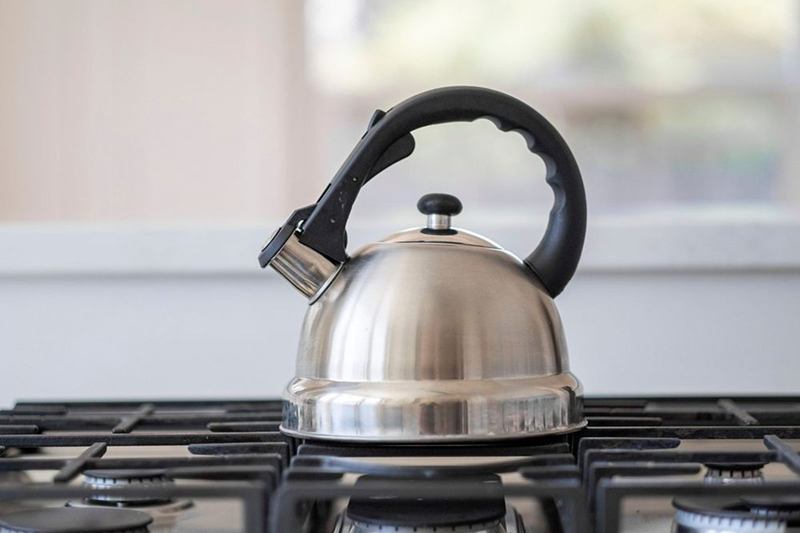
White crusts on the heating plate, little flakes floating in your tea, a kettle that rattles and takes longer to boil: in much of Switzerland, the tap water is hard enough to cover a kettle in limescale within weeks. If you want to descale your kettle, you have several options – but not all household tips are equally good.
Here are five methods, how to use them properly and which common advice you can safely ignore.
Why kettles scale up so fast in Switzerland
Limescale forms when water containing calcium and magnesium is heated. The harder the water, the faster the deposits grow. You can look up the hardness of your tap water by postcode on trinkwasser.ch, where local water suppliers publish their data.
Swiss water hardness is given in French degrees (°fH). The City of Zurich's explanation of water hardness ranges from soft (below 15 °fH) to very hard (above 42 °fH), and knowing your value helps you decide how often to descale. In regions with hard water, a monthly descale is often sensible; with soft water, much less frequently.
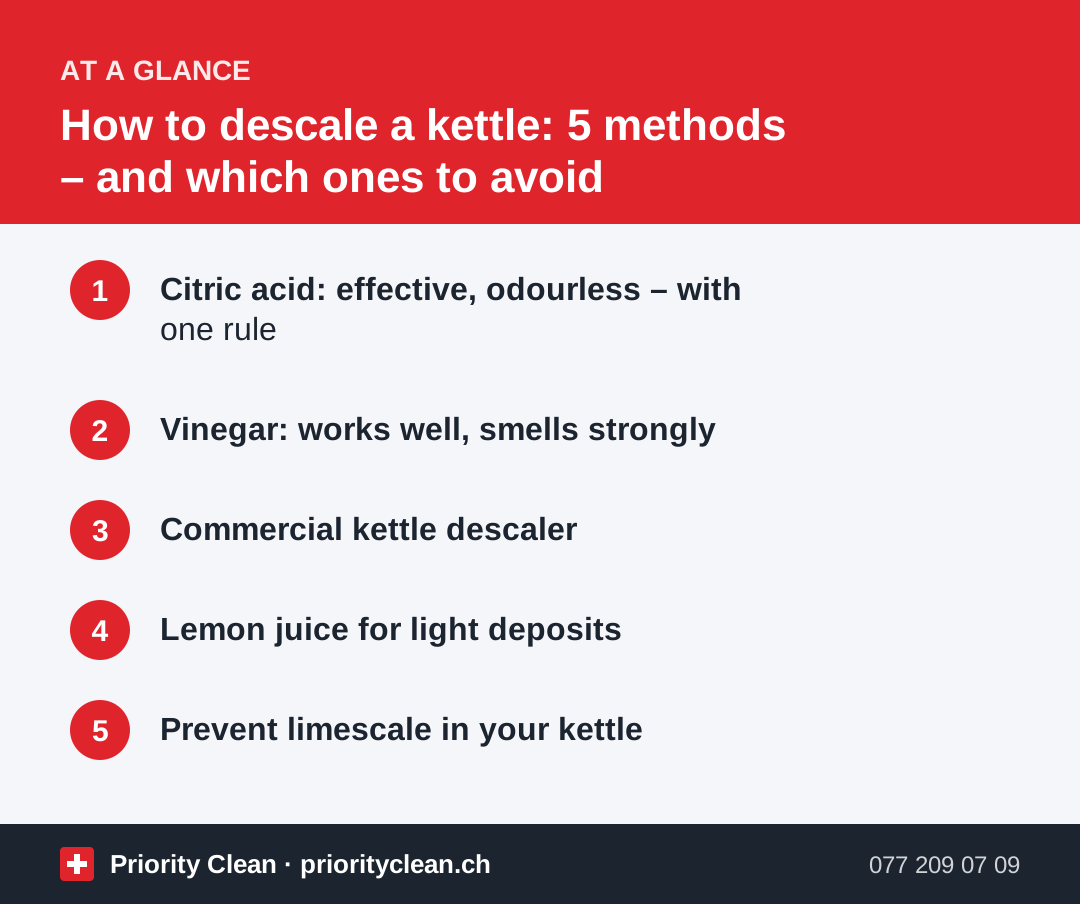
1. Citric acid: effective, odourless – with one rule
Citric acid powder from the supermarket or pharmacy is our favourite for kettles.
- Fill the kettle about halfway with water.
- Heat the water, but switch the kettle off before it boils – warm to hot is enough.
- Add 1–2 tablespoons of citric acid powder and stir.
- Leave for 15–30 minutes. For thick deposits, a little longer.
- Pour out, wipe the heating plate with a soft sponge, and rinse several times with clear water.
- Boil a full kettle of fresh water once and pour it away.
2. Vinegar: works well, smells strongly
Household vinegar dissolves limescale reliably and is in almost every kitchen.
- Fill the kettle with one part vinegar and one to two parts water, enough to cover the limescale.
- Bring briefly to the boil or heat it, then switch off.
- Leave for 30–60 minutes.
- Pour out and rinse very thoroughly – at least two or three times.
- Boil fresh water once or twice and pour it away to get rid of the smell.
Open the window while doing this. Undiluted vinegar essence is much stronger and should always be diluted.
3. Commercial kettle descaler
Descalers from the supermarket are designed for appliances and are easy to dose.
- Choose a product that is suitable for kettles and your kettle's material.
- Follow the dosage and contact time exactly.
- Rinse and boil fresh water afterwards, as instructed on the pack.
- Wear gloves if the label recommends it.
For appliances with a warranty, check whether the manufacturer recommends a specific product. Our guide to descaling a coffee machine covers the related appliance.
4. Lemon juice for light deposits
For very light limescale, lemon works too.
- Slice one or two lemons and put them in the half-filled kettle.
- Heat the water, switch off and leave for an hour.
- Rinse thoroughly and boil fresh water once.
Lemons are less concentrated than citric acid powder, so this is best for regular maintenance rather than heavy crusts.
5. Prevent limescale in your kettle
Descaling less often is easier than removing thick crusts.
- Empty after use: Don't leave water standing in the kettle.
- Boil only what you need: Less water means less limescale and saves energy.
- Rinse regularly: A quick rinse removes loose flakes.
- Use the filter: If your kettle has a limescale filter in the spout, rinse it from time to time.
- Descale early: Thin layers dissolve in minutes; old crusts take much longer.
Which method for which situation?
| Method | Best for | Downside |
|---|---|---|
| Citric acid | Regular descaling, most kettles | Must not boil |
| Vinegar | Heavy deposits | Strong smell, needs thorough rinsing |
| Commercial descaler | Heavy deposits, easy dosing | Costs more, read the label |
| Lemon | Light deposits, maintenance | Less effective |
| Baking soda | Not recommended for limescale | Doesn't dissolve limescale |
Methods you can skip
- Baking soda: It's alkaline and doesn't dissolve limescale. It may help with light discolouration, but not with crusts.
- Cola: Contains a little acid, but also sugar that you then have to rinse out. There are cleaner options.
- Scraping with metal: Scratches the heating element or stainless steel, giving new limescale more grip.
- Mixing products: Never combine descalers with other cleaning agents.
Common mistakes when descaling a kettle
- Boiling citric acid: Creates new, stubborn deposits.
- Not rinsing enough: Leaves an acidic taste in your next drink.
- Filling above the maximum mark: The solution can boil over.
- Immersing the kettle in water: The base and electronics must never get wet.
- Forgetting the filter: A scaled-up filter lets flakes through into your cup.
Limescale is a topic all over a Swiss home – from taps and aerators to the shower.
Frequently asked questions
What is the best way to descale a kettle?
Citric acid dissolved in warm – not boiling – water is effective and odourless. Leave it for 15–30 minutes, then rinse thoroughly and boil fresh water once before use.
Can I descale a kettle with vinegar?
Yes. Use one part vinegar to one or two parts water, heat it, leave it to work and then rinse very thoroughly. Boil fresh water once or twice to remove the smell.
How often should I descale my kettle?
It depends on your water hardness and how often you use the kettle. With hard water, roughly once a month is a good rhythm; with soft water, less often.
Is limescale in the kettle harmful?
Limescale consists mainly of calcium and magnesium and is generally not considered harmful, but it affects taste, looks unappealing and makes the kettle less efficient.
Thanks for your feedback! Feel free to share the guide.
Thanks! What was missing? Drop us a line – we will improve the guide. WhatsApp