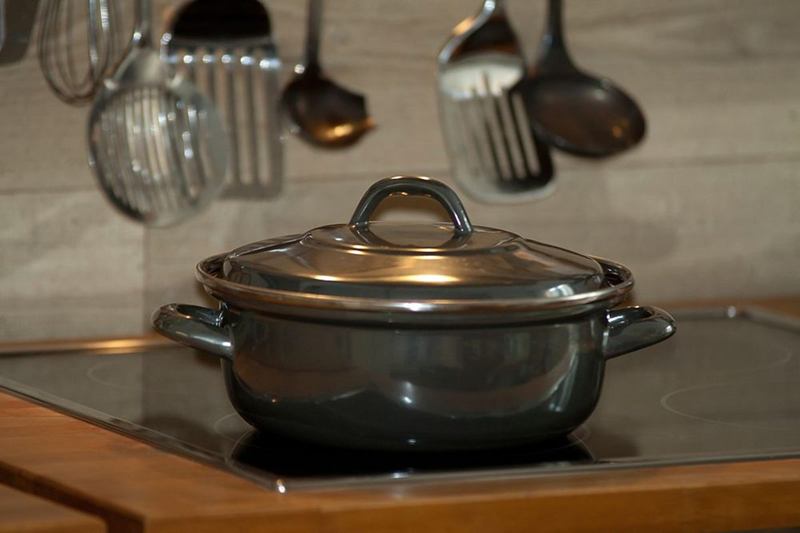
A black glass cooktop looks stylish on the first day. After a few weeks of cooking, it shows everything: burnt-on sauce, milk that boiled over, white rings from pan bases and a greasy film. Most flats in Switzerland have either a ceramic (radiant) hob or an induction hob, and both have the same glass-ceramic surface. If you want to clean a ceramic hob without scratching it, the trick is using the right tool in the right order.
Here are five methods, from everyday wiping to stubborn burnt-on residue.
Why stains burn in so quickly
Radiant ceramic hobs get very hot in the cooking zones, so anything that spills burns onto the glass almost immediately. Induction hobs heat the pan rather than the glass, so spills burn in less – but the glass still gets hot from the pan, and residue under the pan base bakes on over time.
The white or rainbow-coloured rings you see are often limescale from water droplets or residue from pan bases, not scratches. They can usually be removed.
1. Everyday cleaning after cooking
The best method is the one that prevents burnt-on residue in the first place.
- Wait until the hob is cool.
- Wipe with a damp microfibre cloth and a drop of washing-up liquid.
- Dry with a second cloth or a glass cloth to avoid streaks.
Doing this after every cooking session takes a minute and saves you a lot of scraping later.
2. The hob scraper for burnt-on residue
A glass-ceramic scraper with a razor blade is the professional's first choice. It sounds risky, but used correctly it is much gentler than any scouring pad.
- Apply a few drops of hob cleaner or soapy water to moisten the residue.
- Hold the scraper at a flat angle, around 30–45 degrees, to the glass.
- Push forward with light, even pressure – do not lever.
- Wipe away the loosened residue and clean the area with a damp cloth.
Use only scrapers made for glass-ceramic hobs, replace blunt or nicked blades and keep the blade covered when not in use.
3. Baking soda paste for stubborn stains
When residue is thin but stubborn, baking soda (bicarbonate of soda) works as a gentle abrasive.
- Mix two to three tablespoons of baking soda with a little water into a thick paste.
- Spread it over the stain and place a damp, warm cloth on top.
- Leave it for 15–20 minutes.
- Rub gently with the cloth in circular movements, then wipe off thoroughly.
- Dry and polish with a glass cloth.
4. Special hob cleaner for shine and protection
Hob cleaners from the supermarket usually contain very fine polishing agents and leave a thin protective film that makes the next cleaning easier.
- Apply a small amount to a cool hob.
- Spread with kitchen paper or a soft cloth.
- Buff until the surface is clear.
Read the label, keep the bottle in its original packaging and out of reach of children, as Tox Info Suisse recommends in its guide to preventing poisoning with household products.
5. Lemon or citric acid for limescale rings
White rings and dull spots from boiling water are often limescale, especially in regions with hard water.
- Put a few drops of lemon juice or a mild citric acid solution on a soft cloth.
- Wipe over the rings and leave for a few minutes.
- Wipe with clear water and dry.
Do not use acidic cleaners on the metal frame of some hobs or on natural stone worktops next to the hob – acids can damage both.
Which method for which problem?
| Problem | Best method | Avoid |
|---|---|---|
| Light grease, fingerprints | Microfibre cloth, washing-up liquid | Too much water |
| Burnt-on food | Hob scraper held flat | Steel wool, knives |
| Sugar or jam | Scraper while still warm | Waiting until cold |
| Thin stubborn film | Baking soda paste | Scouring sponges |
| Limescale rings | Lemon juice or citric acid | Vinegar essence undiluted |
| Metallic marks | Hob cleaner | Oven spray |
Common mistakes when cleaning glass cooktops
- Using the rough side of the sponge: It leaves fine scratches that collect dirt.
- Oven spray on the hob: These products are strongly alkaline and not made for glass-ceramic; they can damage the surface and frame.
- Cleaning on a hot hob: Cleaning products burn in, and there is a risk of burns.
- Dragging pans across the surface: Lift them instead – grit under the pan scratches.
- Using dirty cloths: Greasy cloths smear rather than clean.
And one rule for every product: never mix cleaners, and air the kitchen when using strong ones. If a product is swallowed or gets into the eyes, call Tox Info Suisse on 145.
Hob cleaning before moving out
At a Swiss flat handover, the hob is one of the first things inspectors look at, together with the oven and extractor hood. Burnt-on rings and limescale are typically noted. Plan the hob together with the oven – our guide on how to clean an oven covers the rest of the cooker.
Frequently asked questions
How do I clean a burnt ceramic hob?
Let it cool, moisten the residue, then remove it with a glass-ceramic scraper held flat. Finish with a hob cleaner or baking soda paste and polish dry with a soft cloth.
Can I use baking soda on an induction hob?
Yes. A paste of baking soda and water is a gentle abrasive that works on induction and ceramic hobs. Rub gently, wipe off thoroughly and polish dry.
Will a razor scraper scratch my hob?
Not if you use a scraper designed for glass-ceramic, keep the blade sharp and undamaged, and hold it flat against the glass. Scouring pads and steel wool are far more likely to cause scratches.
How do I remove white rings from an induction hob?
White rings are usually limescale or residue from pan bases. Wipe them with a little lemon juice or diluted citric acid, then clean with water and dry. A hob cleaner also helps.
Thanks for your feedback! Feel free to share the guide.
Thanks! What was missing? Drop us a line – we will improve the guide. WhatsApp