The dishwasher cleans everything else, so it is easy to forget that it needs cleaning too. Then one day the kitchen smells musty when you open the door, glasses come out cloudy or there are bits of food on "clean" plates. Knowing how to clean a dishwasher properly takes about half an hour, and most of the problems disappear. Here are the five steps we follow – plus the settings that matter in Switzerland's often hard water.
Why dishwashers start to smell
Every cycle washes food residue, grease and detergent into the machine. Most of it is pumped away, but some stays behind: in the filter, in the spray arms, along the rubber seal and in the corners of the door. In a warm, damp, closed appliance, this residue starts to smell.
Hard water adds to the problem. Limescale builds up on heating elements and in nozzles and leaves a white film on glasses. How hard your tap water is depends on where you live – you can look it up by postcode on the drinking water platform of the Swiss gas and water association.
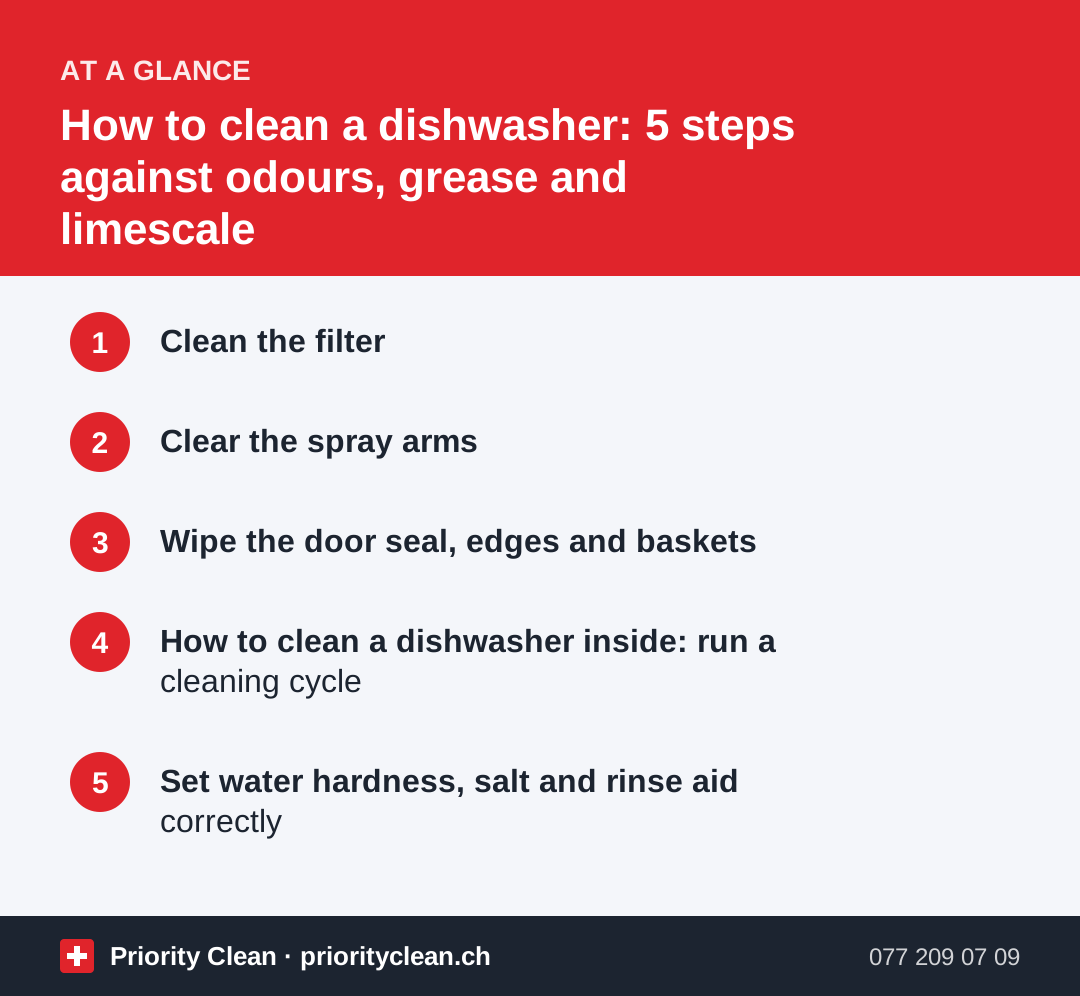
1. Clean the filter
The filter sits in the base of the machine, under the lower spray arm.
- Remove the lower basket.
- Twist the filter cylinder anticlockwise (check your manual) and lift it out with the flat fine filter.
- Tip food residue into the bin, not the sink.
- Rinse the parts under warm running water and scrub with a soft brush and a drop of washing-up liquid.
- Wipe out the filter opening with a damp cloth and put everything back until it clicks into place.
2. Clear the spray arms
If dishes on one level stay dirty, the spray arm nozzles are often blocked by limescale, lemon pips or glass fragments.
- Remove the spray arms as described in the manual (they usually unclip or unscrew).
- Rinse them under running water and shake out loose debris.
- Clear blocked holes gently with a toothpick or thin wooden skewer – not a metal needle, which can widen them.
- Check that they turn freely once refitted.
3. Wipe the door seal, edges and baskets
The rubber seal and the lower edge of the door never get sprayed directly, so grease collects there.
- Wipe the seal with a cloth dipped in warm water and washing-up liquid.
- Use an old toothbrush for the grooves and the hinges.
- Clean the lower edge of the door and the inside panel, including the detergent dispenser.
- Check the baskets for stuck food and loose plastic parts.
Dry the seal afterwards. Avoid solvents and abrasive sponges, which damage rubber.
4. How to clean a dishwasher inside: run a cleaning cycle
Once filter, arms and seals are clean, run an empty cycle to remove grease and limescale from the interior and pipes.
- Commercial machine cleaner: Follow the instructions on the pack; these products are designed for the appliance.
- Citric acid: Many people use a few tablespoons of citric acid powder in the empty machine on a hot programme. Check your manufacturer's instructions first, as not all manufacturers recommend home remedies.
- Avoid: Large amounts of vinegar on a regular basis, as acids can affect rubber seals over time, and never combine a descaling cycle with chlorine-based products.
Keep dishwasher tablets and machine cleaners in their original packaging, out of children's reach. Tox Info Suisse explains how to prevent poisoning with household products; the emergency number is 145.
5. Set water hardness, salt and rinse aid correctly
Most modern dishwashers have a water softener that needs regeneration salt. Many households never adjust it.
| Setting | Why it matters | What to do |
|---|---|---|
| Water hardness | Controls how much salt the softener uses | Set according to your local water hardness, as described in the manual |
| Regeneration salt | Prevents limescale on glasses and inside the machine | Top up when the indicator lights up; use dishwasher salt only |
| Rinse aid | Helps water run off and dishes dry without spots | Refill regularly; adjust the dose if glasses are streaky |
| Programme | Affects energy use and cleaning | Use the eco programme for normal loads |
Multi-function tablets often claim to replace salt and rinse aid. In areas with hard water, they may not be enough, so separate salt is usually still worthwhile.
Everyday habits that keep it clean
- Scrape plates into the bin instead of pre-rinsing under hot water.
- Run the machine when it is full, but do not overload it so water can reach everything. EnergieSchweiz also recommends eco programmes and full loads.
- Leave the door ajar for a while after the cycle so the interior can dry.
- Check the filter whenever you notice odours.
Common mistakes
- Never cleaning the filter: The number one cause of bad smells.
- Using washing-up liquid in the machine: Creates foam that can leak out and damage the appliance.
- Table salt instead of dishwasher salt: Can contain additives that harm the softener.
- Mixing cleaners: Never combine acidic descalers with chlorine products.
- Keeping the door shut after every cycle: Traps moisture and encourages odours.
Other appliances also need attention – read how to keep your washing machine clean and how to descale a coffee machine without damaging it.
Frequently asked questions
How often should I clean my dishwasher?
Rinse the filter every one to two weeks, wipe the seals monthly and run an empty cleaning cycle every few months. If you have very hard water or use the machine daily, clean more often.
Why does my dishwasher smell bad?
Usually food residue in the filter, grease on the door seal or standing water in the base. Clean the filter and seals, run a hot empty cycle and leave the door ajar afterwards.
Can I clean my dishwasher with citric acid?
Many people use citric acid in an empty hot cycle to remove limescale. Check your manufacturer's instructions first, and never combine it with chlorine-based cleaners.
Why are my glasses cloudy after the dishwasher?
Often the water hardness is set incorrectly or salt or rinse aid is missing. If the cloudiness cannot be wiped off, the glass surface itself may be etched, which cannot be reversed.
Thanks for your feedback! Feel free to share the guide.
Thanks! What was missing? Drop us a line – we will improve the guide. WhatsApp