
You take the washing out of the machine, hang it up – and when it is dry, it smells like an old cellar. When laundry smells musty after washing, most people reach for more detergent or fabric softener. That usually makes it worse. The smell is caused by bacteria and moulds that thrive in damp, warm conditions, and the solution lies in how you wash, how the machine is kept and above all how the laundry dries.
For expats in Switzerland there is an extra factor: many people share a laundry room (Waschküche) in the basement with fixed time slots, which changes how laundry is washed and dried.
Why laundry smells musty
Textiles are full of skin cells, sweat and body oils. If a little of this stays in the fibres and the fabric remains damp for hours, microorganisms multiply and produce the typical musty smell. Towels, sportswear and synthetic fabrics are particularly prone.
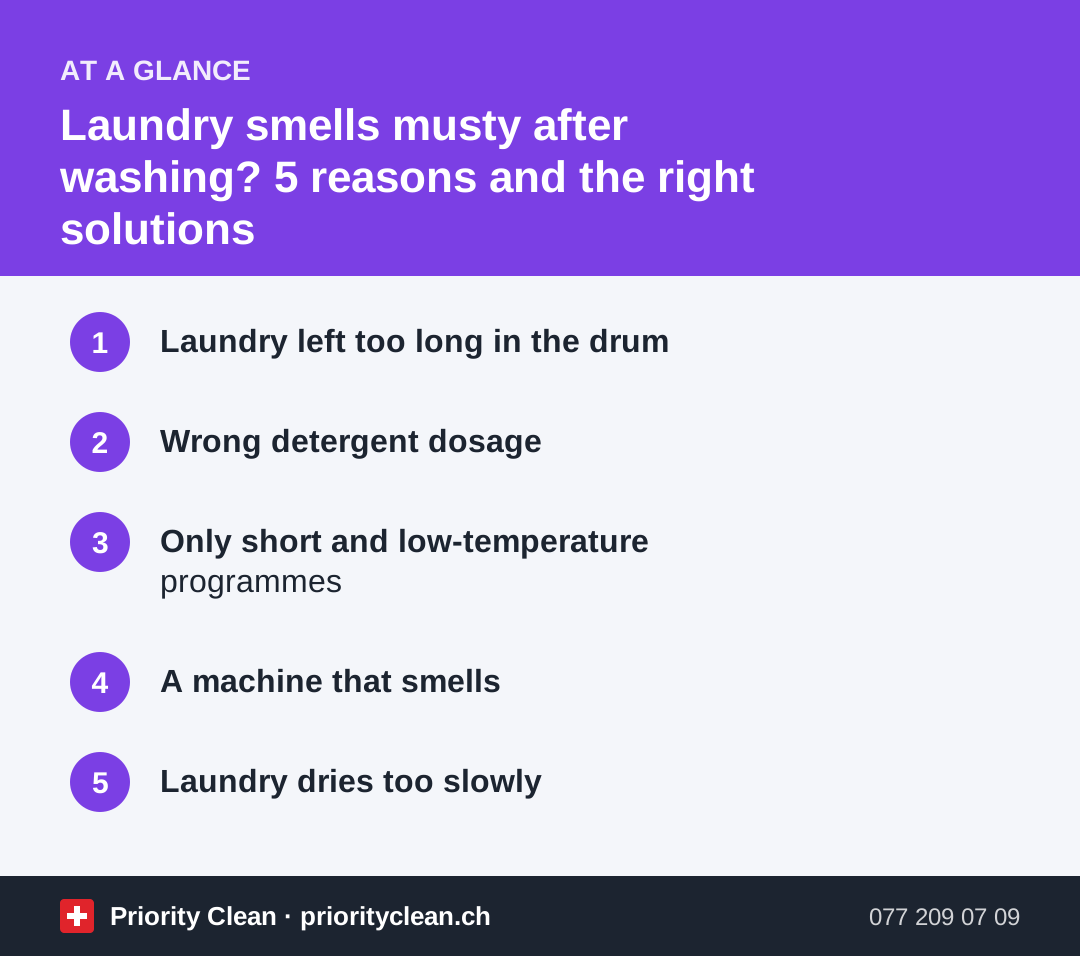
Five causes account for almost every case we hear about.
1. Laundry left too long in the drum
This is the most common reason. A few hours in a closed, warm drum is enough for wet textiles to start smelling – especially in the shared laundry room, where your slot may end before you can come back down.
The solution:
- Set a timer on your phone for the end of the programme.
- Use the delay start function so the wash finishes when you are home.
- If laundry has already started to smell, wash it again straight away rather than drying it.
2. Wrong detergent dosage
Too little detergent does not remove dirt and body oils properly. Too much leaves residue in the fibres and in the machine, which becomes food for bacteria.
- Dose according to the packaging, based on the water hardness in your area and how dirty the laundry is. Many Swiss regions have medium-hard to hard water, which affects dosage.
- Use less fabric softener or skip it for towels and sportswear – it coats fibres and can trap odours.
- EnergieSchweiz points out that you should not increase the detergent dose when washing at low temperatures.
3. Only short and low-temperature programmes
Washing at 20–30 °C saves energy and is gentle on clothes, and for lightly worn items it is perfectly fine. But if you only ever use quick, cold programmes, residue can build up in the machine over time.
A balanced approach:
- Use eco programmes and low temperatures for everyday clothes.
- Wash towels, bed linen and cleaning cloths at higher temperatures if the care label allows it.
- Run a hot empty wash occasionally to clean the machine itself.
4. A machine that smells
If the washing machine smells, the laundry will too. Odours come from places water collects:
- Door seal: Fold back the rubber and wipe out residue, hair and water with a cloth and soapy water.
- Detergent drawer: Remove it and scrub off slimy deposits.
- Drain filter: Usually behind a flap at the bottom front – put down a towel and a flat bowl before opening.
- Door and drawer: Leave them slightly open after washing so the drum can dry.
In a shared laundry room, the machine belongs to the building. If it smells persistently, tell the caretaker or property management. Our guide on cleaning a washing machine explains each step in detail.
5. Laundry dries too slowly
This is where many musty-smell problems in Swiss homes really start. In autumn and winter, laundry hung in a cool basement drying room or a poorly ventilated flat can stay damp for a day or longer.
- Space it out: Leave gaps between items so air can circulate.
- Use the drying room fan or dehumidifier if the building has one, and check the house rules on how drying rooms may be used.
- Air the room: In a flat, the Federal Office of Public Health recommends opening windows fully for a few minutes several times a day rather than leaving them tilted – this removes moist air far more effectively.
- Avoid drying in bedrooms or next to cold outside walls, where moisture settles.
How to rescue laundry that already smells
- Wash it again as soon as possible, at the highest temperature the care label allows.
- Use the normal dose of detergent, no fabric softener.
- For washable whites and colourfast items, an oxygen-based laundry booster from the supermarket can help – follow the label.
- Dry quickly: outdoors in dry weather, or in a well-ventilated room.
Common mistakes
- Adding more fabric softener: It masks the smell briefly but does not remove the cause.
- Overloading the drum: Laundry cannot be rinsed properly.
- Closing the machine door straight after washing: The drum stays damp.
- Folding laundry that is "almost dry": Residual moisture in the cupboard causes the smell to return.
Frequently asked questions
Why does my laundry smell musty after washing?
Usually because it stayed wet too long in the drum or dried too slowly, allowing bacteria to multiply. A dirty machine and the wrong detergent dose are other common causes.
How do I get the musty smell out of towels?
Wash them again at the highest temperature allowed on the label, with the normal detergent dose and no fabric softener, then dry them quickly in a well-ventilated place or outdoors.
Does vinegar help against musty laundry?
Some people add a little vinegar to the rinse, but it can affect rubber seals in the machine over time. Correct dosage, a clean machine and fast drying are more reliable solutions.
Can I dry laundry in my flat in Switzerland?
Often yes, but it depends on your lease and house rules. If you dry indoors, air the room thoroughly several times a day to avoid dampness and mould.
Thanks for your feedback! Feel free to share the guide.
Thanks! What was missing? Drop us a line – we will improve the guide. WhatsApp