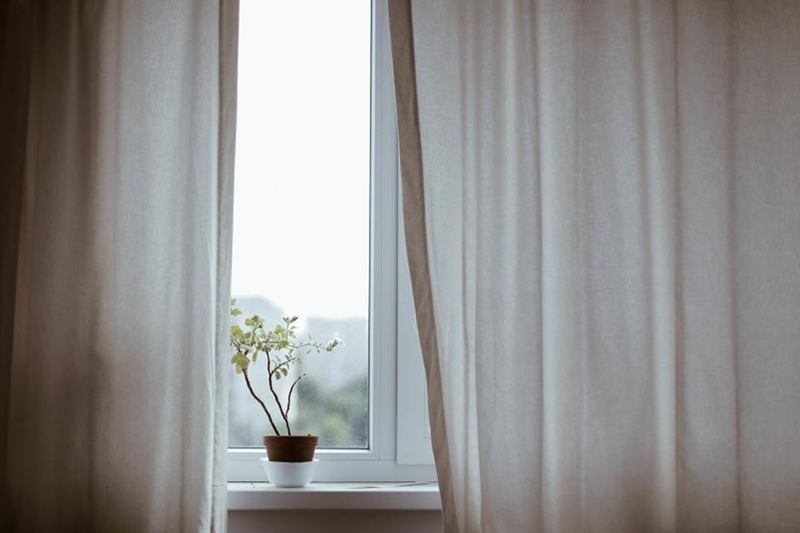
Curtains collect far more than you might think: dust from the street, kitchen grease, cigarette smoke from the neighbour's balcony and, in winter, moisture from the window. Many people only notice when the light filters through a grey haze. Knowing how to wash curtains properly makes all the difference – the wrong programme can shrink a made-to-measure pair by several centimetres or leave white sheers permanently yellow.
In Swiss flats, curtains are often supplied by the tenant rather than the landlord, so they move with you and have to fit new windows. That makes careful washing even more worthwhile. Here are the five rules we rely on.
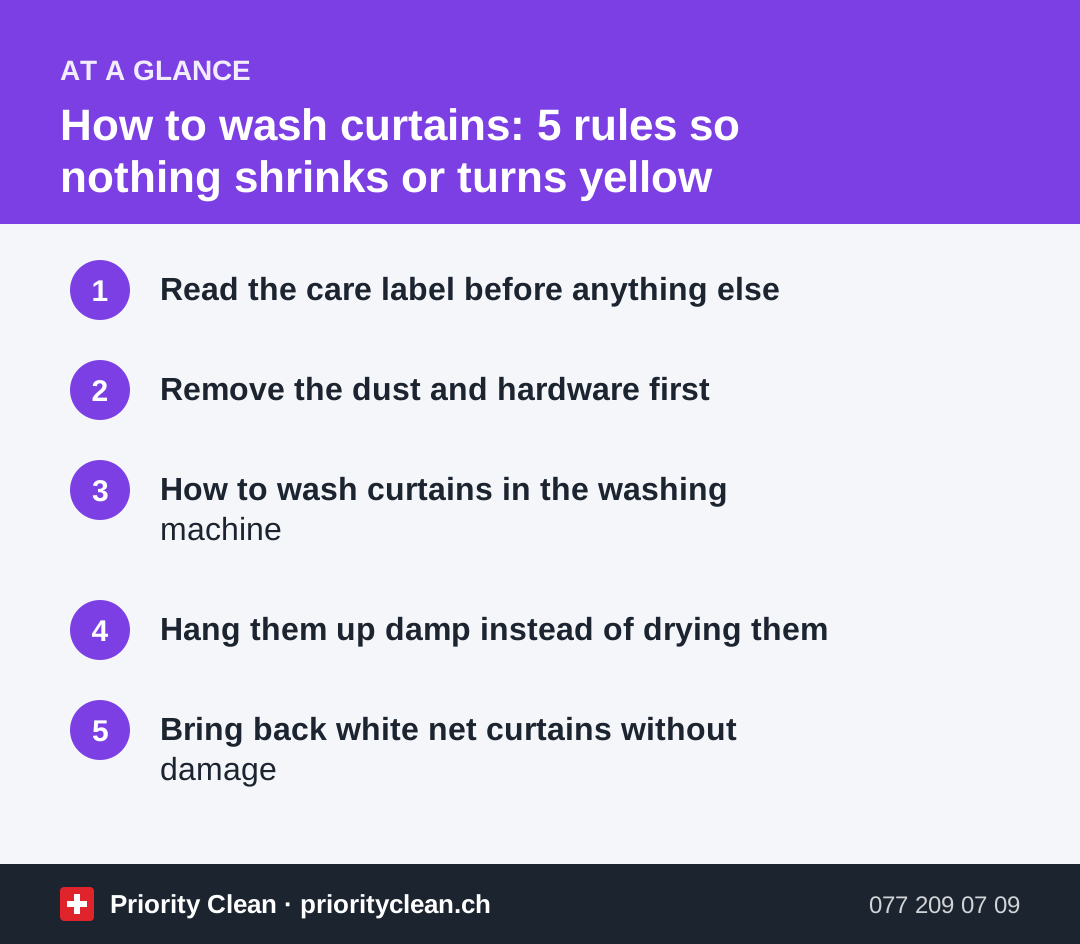
1. Read the care label before anything else
The label is sewn into a side hem or the heading tape. It tells you the maximum temperature, whether tumble drying is allowed and whether the fabric should be dry cleaned only. If the label has been cut off, treat the fabric as delicate: cold or 30 °C, gentle cycle, no dryer.
Some materials need special attention:
| Material | Typical approach | Watch out for |
|---|---|---|
| Polyester sheers and voiles | Gentle cycle, 30 °C, low spin | Creases set in hot water |
| Cotton | 30–40 °C if the label allows | Can shrink noticeably |
| Linen | Gentle cycle, low temperature | Shrinks and creases easily |
| Velvet, lined or blackout fabrics | Often dry clean only | Coating can crack in the machine |
| Flame-retardant fabrics | Strictly follow the label | Wrong washing can affect the treatment |
Low temperatures are usually enough here, and the EnergieSchweiz advice on energy-efficient washing points out that eco programmes and 20–30 °C save energy without needing more detergent.
2. Remove the dust and hardware first
Dust that goes into the drum turns grey in the water and redeposits on the fabric. Take everything down and shake it out well on the balcony, or vacuum them on the hanging rail with the upholstery nozzle beforehand.
- Remove hooks, gliders, weights and any clips. Plastic gliders can scratch the drum or break.
- Metal rings or eyelets that cannot be removed: put the panel in a large laundry bag or an old duvet cover.
- Loosen gathered heading tape so the fabric can move freely in the water.
- Check for stains and pre-treat them gently with a little liquid detergent – test on a hem first.
3. How to wash curtains in the washing machine
Most light fabrics can go into the machine. The key is space and gentle handling.
- Load: Fill the drum only about halfway. The fabric needs room to move, otherwise they crease badly and don't rinse properly.
- Programme: Choose a curtain, delicates or wool programme. Many Swiss machines have a dedicated curtain setting.
- Temperature: Stay at the temperature on the label – usually 30 °C for synthetics.
- Detergent: A mild liquid detergent or one for delicates. Use the dose for a light load and skip fabric softener on sheers, which can leave a film.
- Spin: Low, around 400–600 rpm, or the lowest your machine offers.
If you share a laundry room in your building, plan this wash for your own slot and take them out promptly – our guide to laundry room rules explains the typical house rules.
Heavy drapes that don't fit comfortably can also be hand-washed in the bath with lukewarm water and a little mild detergent. Rinse thoroughly and press the water out without wringing.
4. Hang them up damp instead of drying them
This is the step that saves you the ironing. Take them out immediately after the cycle ends, give them a gentle shake and hang them straight back on the rail while still slightly damp. The weight of the fabric pulls out most creases as it dries.
- Open the window a little or ventilate well so the moisture can escape.
- Protect wooden floors and window sills with a towel if the hem is still dripping.
- Never use the tumble dryer unless the label explicitly allows it – heat is the main cause of shrinking.
- Avoid drying them over a radiator, which can leave marks and uneven shrinkage.
5. Bring back white net curtains without damage
Net curtains often turn grey or yellow from dust, sunlight, cooking vapours or smoke. Regular washing prevents most of it.
- Soak them for an hour in lukewarm water with a little detergent before the main wash.
- Special net curtain whiteners from the supermarket can help – follow the dosage and label exactly.
- Wash whites separately from coloured laundry.
How often should you wash curtains?
There is no fixed rule, but these guidelines work well in practice:
For people with a house dust mite allergy, aha! Swiss Allergy Centre recommends reducing dust traps in the home – regularly washed soft furnishings are part of that. Speak to your doctor for personal advice.
Common mistakes when washing curtains
- Overfilling the drum: Leads to deep creases and grey patches where detergent wasn't rinsed out.
- Washing too hot: Cotton and linen shrink, synthetics crease permanently.
- Forgetting the hooks: They scratch the drum, snag the fabric or block the pump.
- High spin speed: Sets creases that are hard to iron out of long panels.
- Tumble drying: The quickest way to lose length.
- Washing blackout curtains in the machine without checking: The coating can crack or peel.
If the window itself is dirty, clean it while everything is down – our guide on cleaning windows without streaks shows how.
Frequently asked questions
Can I wash curtains in the washing machine?
Most light ones made of polyester or cotton can go in the machine on a gentle or curtain programme at the temperature on the label. Velvet, lined, blackout and some flame-retardant types are often dry clean only.
What temperature should I wash curtains at?
Usually 30 °C for synthetic sheers and up to 40 °C for cotton if the care label allows it. Low temperatures reduce the risk of shrinking and creasing.
How do I wash curtains with metal eyelets?
Put it in a large laundry bag or an old duvet cover so the eyelets don't hit the drum, use a gentle cycle and a low spin speed.
Why do my net curtains turn yellow?
Sunlight, dust, cooking vapours and smoke all contribute, and chlorine bleach can make synthetic fibres even more yellow. Regular gentle washing and a net curtain whitener used according to the label are the safer options.
Do I need to iron curtains after washing?
Usually not. Hang them back up while slightly damp and let their own weight pull out the creases.
Thanks for your feedback! Feel free to share the guide.
Thanks! What was missing? Drop us a line – we will improve the guide. WhatsApp