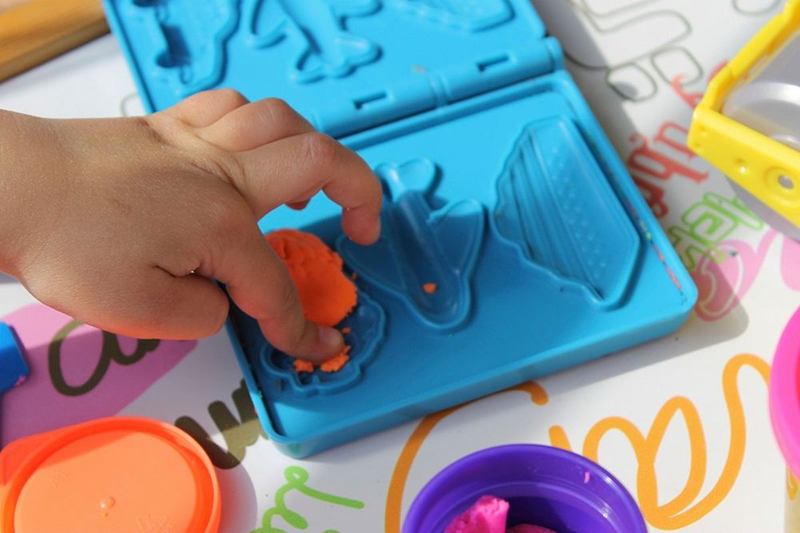
The children have been modelling all afternoon, and now there's a blue lump trodden into the carpet, slime stuck to the sofa cushion and colourful crumbs in the little ones' hair. Before you remove playdough, it helps to know which material you're dealing with, because flour-based playdough, plasticine and slime each need a different method.
With cold, a blunt knife, washing-up liquid and a little vinegar, most residue comes out again. These five steps show how to go about it without making the marks bigger.
Playdough, plasticine or slime? The material decides the method
Before you start, check the packaging or give it a quick squeeze. The three most common modelling materials behave very differently:
| Material | How to recognise it | How to remove it |
|---|---|---|
| Playdough (salt and flour) | Soft, dries hard and crumbly in the air | Let it dry, brush out, vacuum, wash out the colour |
| Plasticine (oil or wax based) | Stays soft, feels greasy | Cold, scrape, treat grease with washing-up liquid |
| Slime (glue based) | Stretchy, sticky, glossy | Pull off the bulk, dab on diluted vinegar |
Flour-based playdough is usually the easiest to remove. Plasticine is trickier because it leaves a greasy mark, and so is slime, because it works its way deep into fibres.
1. Harden with cold and scrape off
For plasticine and slime, cold is the first step. A hardened lump breaks away instead of smearing.
- Carefully lift off large pieces without pushing them further into the fabric.
- Put ice cubes in a freezer bag and lay it on the spot for 10 to 15 minutes. Small items can go into the freezer in a bag.
- Lift the hardened material with a blunt knife, a spoon or an old bank card.
- Vacuum up the crumbs immediately, before they soften again and get into the carpet.
There's no need to chill dried flour-based playdough: it hardens by itself. Loosen it with a dry brush and vacuum up the crumbs.
2. Remove playdough and plasticine from clothes
Once you've scraped off what you can, the mark left behind depends on the material:
- Flour-based playdough: rinse the colour out from the back with cold water, rub in a little ox-gall soap, leave it to work and wash according to the care label.
- Plasticine: the greasy mark needs a grease-cutting product. Put a few drops of washing-up liquid or liquid detergent on it, massage gently and leave for 15 minutes. Then wash as hot as the label allows.
- Coloured shadow: if a coloured ring remains, pre-treat it again before the next wash.
Only put the garment in the tumble dryer once the mark has completely gone, as heat can set wax and grease in the fabric. For more on greasy marks, see our guide on how to remove grease stains.
3. Playdough and slime in carpets and upholstery
Carpets and sofas don't fit in the washing machine, so work with very little liquid and always from the outside in, so the mark doesn't spread.
- Plasticine in the carpet: chill, scrape, then dissolve a drop of washing-up liquid in lukewarm water, dab it on with a light-coloured cloth and blot again with clean water.
- Playdough in the carpet: let it dry, loosen the pile with a brush and vacuum thoroughly. Dab any colour marks with a little soapy water.
- Slime in the carpet: pull off the bulk, dab on diluted vinegar, leave it briefly, lift the loosened slime with a cloth and blot with clean water.
Let the area dry thoroughly afterwards and brush up the pile. For delicate materials such as wool, silk or oriental rugs, it's better to ask a specialist. You'll find general care tips in our guide on how to clean a rug.
4. Dissolve slime with vinegar
Slime is usually made from craft glue and an activator. Acid makes the stretchy mass runnier again. Vinegar is one of the simple household remedies that the Swiss consumer protection foundation (SKS) recommends instead of many specialist cleaners.
- Pull off as much slime as possible by hand.
- Mix white household vinegar with water in roughly equal parts.
- Test the mixture on a hidden spot first, as acid can damage colours and delicate fibres.
- Apply, leave for five to ten minutes and work the slime loose with a soft brush or your fingers.
- Rinse or blot with clean water, then wash the garment as usual.
5. Get playdough and slime out of hair
With children's hair, patience pays off. Cutting is hardly ever necessary.
- Flour-based playdough: let it dry, then comb it out with a fine-toothed comb. Any remains come out when you wash the hair with warm water.
- Plasticine: massage in a little cooking oil or conditioner to soften the greasy material. Comb it out, then wash thoroughly with shampoo.
- Slime: work in conditioner or a little oil and comb the slime out strand by strand. Avoid vinegar near the face, as it stings the eyes.
Common mistakes when you remove playdough
- Hot water on plasticine: the wax melts and sinks even deeper into the fibres.
- Rubbing: playdough and slime spread and the mark gets bigger.
- Too much water in the carpet: a soaked carpet dries slowly and can start to smell.
- Using vinegar without a test: delicate colours and materials can be damaged.
- Mixing products: dangerous and completely unnecessary.
Frequently asked questions
How do I get dried playdough out of the carpet?
Loosen dried flour-based playdough with a brush and vacuum up the crumbs. Dab any colour marks with a little soapy water. Plasticine doesn't dry: chill it with ice, scrape it off and treat the greasy residue with washing-up liquid.
Does vinegar really dissolve slime?
For many kinds of slime, yes: the acid softens the stretchy mass so it comes away. Dilute the vinegar and test it on a hidden spot first.
What helps with plasticine on clothes?
Let it harden in the freezer or with ice, then scrape it off. Pre-treat the greasy mark that remains with washing-up liquid and wash as hot as the care label allows.
Do I have to cut playdough out of hair?
Almost never. Flour-based playdough can be combed out once dry, while plasticine and slime come loose with conditioner or a little cooking oil and a fine-toothed comb.

Thanks for your feedback! Feel free to share the guide.
Thanks! What was missing? Drop us a line – we will improve the guide. WhatsApp