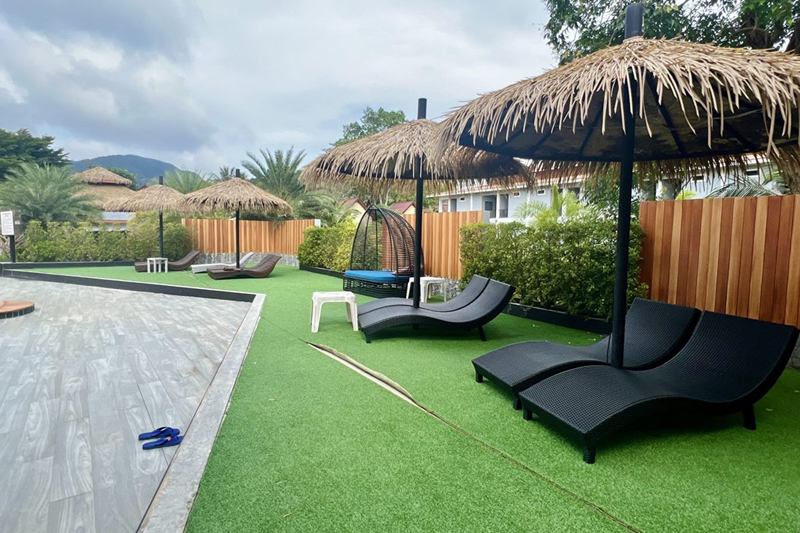
Artificial grass is considered low-maintenance – and it is, as long as you do not forget about it entirely. After the winter, leaves and pine needles sit between the blades, the fibres are flattened, moss grows in the shade, and wherever the dog does its business a smell rises on the first warm days. Effective artificial grass cleaning mainly takes a broom, a rake and water – but no chemicals.
April is the right time: the surface has dried out, and before the barbecue and balcony season everything can be done in an afternoon. Five steps get artificial grass in the garden, on the terrace or on the balcony looking fresh again.
Why regular artificial grass cleaning matters
Artificial grass does not grow, but it collects. Leaves, pollen, and soil from shoes and paws sink between the fibres and decompose there. Over time a thin layer of humus forms, on which moss, algae and even weeds take hold – especially in shady, damp spots and along the edges where water drains poorly.
Wear plays a part too: where people walk or play a lot, the fibres lie flat. Flattened fibres hold more dirt and dry more slowly. And pet urine may drain away, but it leaves residue in the backing and the base that smells when it gets warm.
| Soiling | Method | How often |
|---|---|---|
| Leaves, needles, blossom | Leaf blower or plastic rake | Weekly in autumn, otherwise as needed |
| Flattened fibres | Brush against the grain | Monthly, more often on walkways |
| Moss and algae | Scrape out, brush, fix the cause | Spring and autumn |
| Pet urine | Rinse at once with plenty of water | After every incident |
| Dust and pollen | Hose down | Every few weeks in dry spells |
1. Remove leaves and coarse dirt
Start dry. A leaf blower gently lifts leaves and needles out of the fibres without taking the infill with it, if your lawn is sand-filled. A fan broom or plastic rake works too. Metal rakes with pointed tines can pull out fibres and damage the backing.
Pick up twigs, pebbles and chewing gum at the same time. Chewing gum comes off more easily once you have hardened it with an ice cube.
2. Brush the fibres back up
With a stiff broom with synthetic bristles, brush the surface against the direction of the fibres. This makes them stand up again, brings dirt to the surface and gives the lawn a dense, even look. For larger areas there are powered sweepers suitable for artificial grass.
If your lawn has a quartz sand infill, check the distribution afterwards: on busy walkways the sand is often carried away. How much and which material to top up is specified by the manufacturer or the company that laid the lawn.
3. Remove moss, algae and weeds by hand
Moss and algae grow where organic dirt is left and the surface does not dry out. Scrape moss cushions out with a plastic scraper, brush the spot vigorously and pull weed seedlings out roots and all. More important than the one-off job is the cause: remove leaves regularly, keep drains clear, cut back overhanging branches.
You are better off avoiding chemical products. The Chemical Risk Reduction Ordinance bans herbicides and products against algae and moss on and along paths, squares, terraces, roofs and paved or gravel surfaces – for private individuals too. If your artificial grass is laid on a terrace, a balcony or paving, the ban applies directly. The alternative is mechanical removal.
4. Get rid of urine odours
Dog urine is the most common source of smells on artificial grass. Rinse affected spots immediately if you can, with plenty of water from a hose or watering can, so that the urine is diluted and washed out of the backing. Pick up solid waste with a dog bag and rinse the spot afterwards as well.
If the smell lingers, there are enzymatic odour removers sold specifically for artificial grass. Use only products the lawn manufacturer states are compatible, dose them as instructed and think about the drain: whatever you spray on will be washed on by the next rain. If possible, get the dog used to one spot that is easy to rinse.
5. Treat stains and look after it all year
For stains from drinks, ice cream or sun cream, lukewarm water with a little soap is usually enough: the Swiss consumer protection foundation shows that simple household remedies such as soap replace many specialist cleaners. Dab with a sponge, brush through and rinse with a little clean water. Blot grease or barbecue sauce with kitchen roll first.
Solvents such as acetone or turpentine are off limits: they attack the plastic fibres. Heat is just as dangerous: embers from the barbecue, hot charcoal, cigarettes or fireworks melt the fibres and leave holes that cannot be repaired. So never put the barbecue directly on the artificial grass. Only use a pressure washer if the manufacturer expressly allows it, and then from a good distance and at low pressure.
To get the rest of your outdoor space in shape, see our guides Balcony cleaning and Cleaning patio slabs.
The most common mistakes
- Leaving leaves lying: the resulting humus layer is the perfect breeding ground for moss and weeds.
- Using a metal rake: it pulls out fibres and damages the backing.
- Spraying moss killer: banned on terraces, paths and squares, and harmful to waters.
- Pressure washing up close: washes out the infill and can loosen the fibres.
- Putting the barbecue on the grass: melt marks are permanent.
Frequently asked questions
How often should artificial grass be cleaned?
Leaves and coarse dirt as needed, weekly in autumn. Brush it up about once a month, more often in busy areas. A thorough clean including moss removal is worthwhile in spring and autumn.
What helps against moss on artificial grass?
Scrape the moss out and brush the spot vigorously. Above all, fix the cause: remove leaves, make sure water drains away and reduce shade where possible. Algae and moss killers are banned on terraces, paths and squares.
How do I get dog urine smell out of artificial grass?
Rinse straight away with plenty of water to dilute and wash out the urine. If the smell persists, an enzymatic odour remover approved by the lawn manufacturer can help. Perfumed cleaners only mask the smell.
Can I clean artificial grass with a pressure washer?
Only if the manufacturer expressly allows it – and then from a good distance at low pressure. Too strong a jet washes out the infill and can loosen the fibres. A garden hose and a broom are usually enough.
Thanks for your feedback! Feel free to share the guide.
Thanks! What was missing? Drop us a line – we will improve the guide. WhatsApp