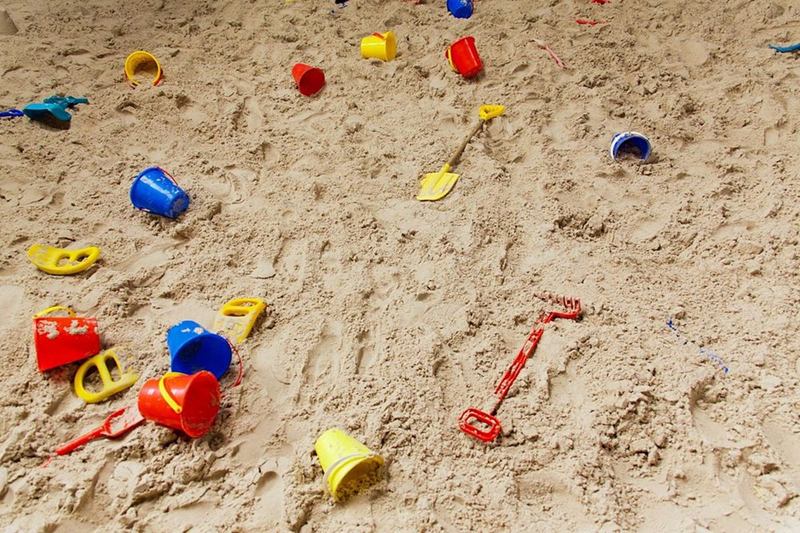
In spring the sandpit often looks sorry for itself: autumn leaves, a few twigs, clumped sand and sometimes traces of cats or foxes. Before the children start digging again, a thorough clean-up is worth it. When it comes to how to clean a sandpit, you mainly need four things: a sieve, a rake, a good lid and fresh sand now and then – no chemicals required.
Hygiene matters more than looks. Cat droppings in the sand can carry pathogens, and wet sand under a badly fitted tarpaulin soon turns musty. Five steps keep the sandpit in your garden or on the terrace clean all season.
Why a regular sandpit clean matters
An open sandpit attracts cats like a giant litter tray. That is not just unappetising: the Federal Office of Public Health explains that the cat is the final host of the parasite Toxoplasma gondii and excretes it in its faeces. For people with an intact immune system, infection is usually harmless, but a first infection during pregnancy can be passed on to the unborn child. The FOPH therefore recommends washing your hands after contact with sand or soil.
On top of that come leaves rotting in damp sand, snack leftovers that attract ants and wasps, and broken glass or nails blown in by the wind or dropped by passers-by.
| What ends up in the sand | Problem | What helps |
|---|---|---|
| Cat droppings | Pathogens, smell | Lid, remove plenty of the affected sand |
| Leaves and twigs | Rotting, musty smell | Rake and sieve, let the sand dry |
| Food scraps | Ants, wasps, mice | No snacks in the sandpit, clear leftovers at once |
| Glass, nails, bottle caps | Injuries | Sieve, check before every season |
| Standing water | Mosquitoes, mould | Pull the cover taut, tip out water |
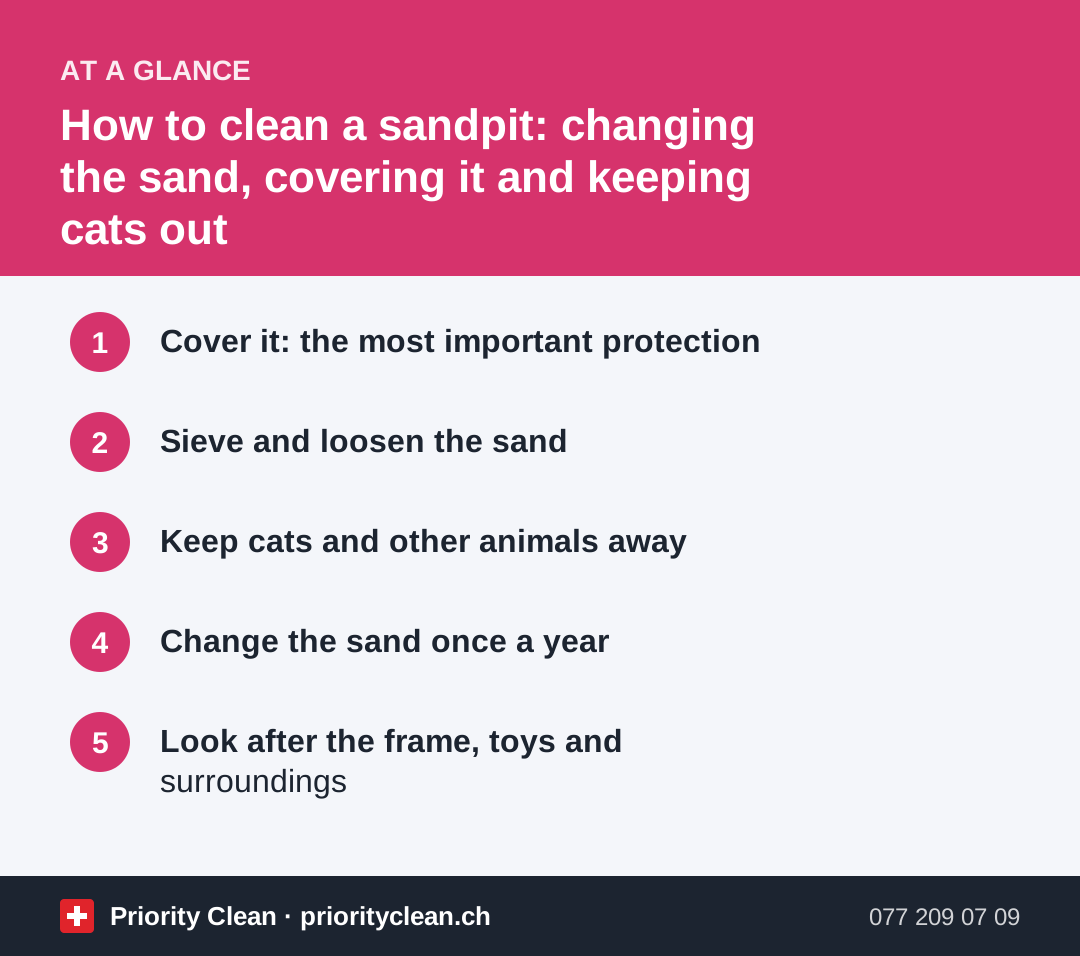
1. Cover it: the most important protection
The Federal Food Safety and Veterinary Office expressly advises covering sandpits so that cat faeces cannot get in. A rigid wooden or plastic lid resting on the frame works best. A tarpaulin is fine too, as long as it is pulled taut and weighted down or tied at the edges – otherwise cats slip underneath.
Cover the sandpit after every play session, not just in the evening. A breathable net is a good addition on hot days, when the sand would not dry out under a closed lid.
2. Sieve and loosen the sand
Once a week, more often if it gets a lot of use, a quick check is enough:
- Remove leaves, twigs and larger objects with a rake or by hand.
- Turn the sand over with a spade so the lower layers get air as well.
- Throw a corner through a coarse garden sieve – that is how you find glass, pebbles and bottle caps.
- On a sunny day, leave the sand uncovered so it can dry.
Damp, compacted sand eventually smells musty and can turn greenish on the surface. Loosening it helps but does not replace a sand change.
3. Keep cats and other animals away
The lid remains the key measure. It also helps to:
- Keep the sandpit away from hedges, which cats use as cover.
- Leave no food scraps, not even bird food nearby.
- Check before play: a quick look at the surface before the children climb in.
- Talk to the neighbours if their cat visits regularly – a solution can often be found together.
Avoid chemical repellents in or around the sand: children get it on their hands and in their mouths.
4. Change the sand once a year
Even well-kept sand becomes finer, dustier and dirtier over time. Change it completely once a year, ideally in spring before the season – and immediately if it is badly soiled or smells musty all the time.
- Choosing new sand: buy sand sold specifically as play sand. It is washed and has rounder grains than building sand, which can be sharp-edged and very dusty.
- Working out the quantity: measure length, width and the fill depth you want, and let a specialist shop calculate the amount.
- Disposing of old sand: clean sand can often be spread in the garden. For larger quantities, ask your commune or the municipal works yard.
Before filling, check the base: a permeable weed membrane stops sand and soil from mixing while letting rainwater drain away.
5. Look after the frame, toys and surroundings
The frame deserves attention at every sand change. Check the wood for splinters, loose boards and protruding screws. Sand down splinters and replace rotten boards. If you treat the wood, use only products the manufacturer approves for children's play equipment, and only on the outside, not on surfaces in contact with the sand.
Spades, moulds and buckets need cleaning too – our guide Cleaning toys explains how. And the sand that travels home in the pushchair is covered in Pushchair cleaning.
The most common mistakes
- Leaving it open: a single night without a lid is enough for cats to adopt the sandpit as a toilet.
- Airtight sheeting straight onto wet sand: the sand never dries and goes musty.
- Building sand instead of play sand: sharp, dusty and unsuitable for children's hands.
- Only removing droppings from the surface: always take plenty of the surrounding sand as well.
- Snacks in the sandpit: crumbs attract ants, wasps and mice.
Frequently asked questions
How often should the sand in a sandpit be changed?
Completely once a year, ideally in spring before the play season. If the sand is badly soiled, for example by droppings, or keeps smelling musty, change it straight away.
What should I do if a cat has used the sandpit?
Wearing gloves, remove the droppings and plenty of the sand around them with a spade and put everything in the rubbish bag. Then wash your hands thoroughly. If it happens again, improve the cover – a rigid lid is the safest solution.
Which sand is best for a sandpit?
Sand sold specifically as play sand: washed, round-grained and low in dust. Building sand from the DIY store is often sharp-edged and less suitable for children.
Can I disinfect the sandpit?
We advise against it. Children get the sand on their hands and in their mouths, and residues stay in the sand. A lid, regular sieving, generous removal of soiling and a yearly sand change work better.
Thanks for your feedback! Feel free to share the guide.
Thanks! What was missing? Drop us a line – we will improve the guide. WhatsApp