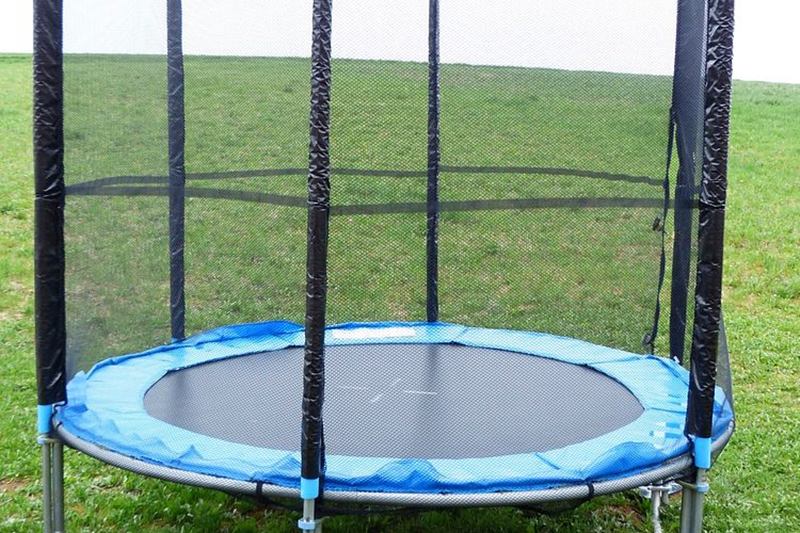
As soon as it gets warmer, children want to get back on the trampoline. But after winter the jumping mat is covered in leaves, pine needles and bird droppings, the net has turned grey and the springs may be showing their first rust. To clean a trampoline you mainly need a broom, mild soap, the garden hose and a careful eye.
The spring clean is also the best moment for a safety check. These five steps show how to get the jumping mat, net, frame pad and frame clean and ready for the season.
Why you should clean a trampoline regularly
A garden trampoline stays outdoors all year round. Leaves and needles hold moisture, algae and green deposits form underneath, and bird droppings attack the fabric. A slippery, dirty mat is neither pleasant nor safe to jump on.
The technical check matters just as much. The Swiss Council for Accident Prevention (BFU) recommends checking the jumping mat, net and padding before every use, along with the space underneath, the other parts weekly to monthly, and giving it a general check at the end of the season. A spring clean covers both.
| Part | How to clean | What to check |
|---|---|---|
| Jumping mat | Broom, mild soap, soft brush, garden hose | Tears, loose stitching, faded patches |
| Safety net | Soapy water, sponge, dry thoroughly | Holes, fastenings, entrance closure |
| Frame pad | Damp sponge, mild soap | Fully covers springs and frame |
| Frame and springs | Damp cloth, dry off | Rust, cracks, missing or overstretched springs |
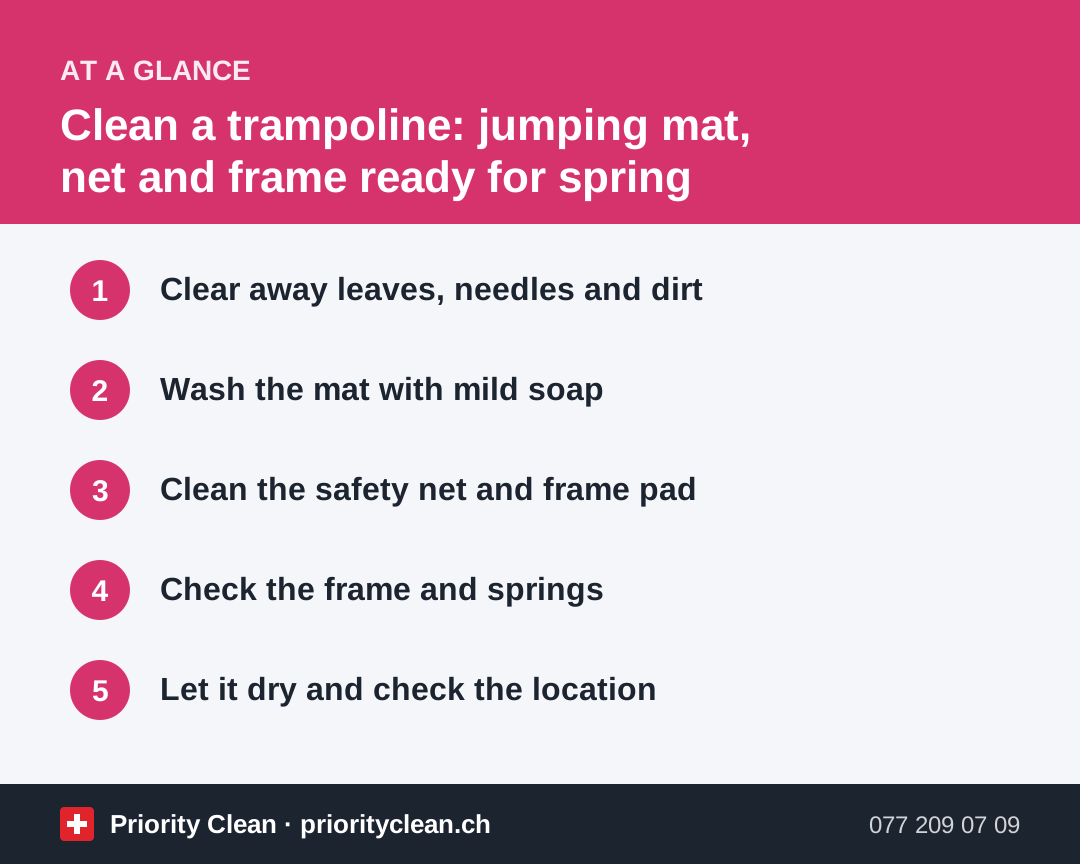
1. Clear away leaves, needles and dirt
Start dry. Sweep the mat with a soft broom or vacuum it with a wet-and-dry vacuum cleaner. Hard rakes and pointed tools are off limits, as they can damage the fabric. Also pick out the leaves caught between the springs and the frame pad.
Then check the space under the trampoline: toys, garden tools or branches do not belong there. When the mat dips under a jump, it must not hit anything.
2. Wash the mat with mild soap
For the mat, lukewarm water with a little mild soap is enough. The Swiss consumer protection foundation shows that simple household products such as curd soap can replace many specialist cleaners. Apply the solution with a soft brush or a soft-bristled deck brush, work in strips and rinse thoroughly with the garden hose.
- No bleach, no solvents and no harsh all-purpose cleaners.
- Better to skip the pressure washer, or only use it as the manufacturer allows and from a good distance – the hard jet can damage fabric and seams.
- Brush green deposits gently several times rather than treating them with chemicals.
For tips on using the machine, see our guide on whether to rent or buy a pressure washer.
3. Clean the safety net and frame pad
The net is best washed while it is still on the frame: wipe it from top to bottom with a sponge and soapy water, then rinse with clean water. If the manual allows you to take it down, you can also soak it in a tub. While you are at it, check that no mesh is torn, the entrance closes securely and all fastenings hold.
Wipe the pad that covers the springs and frame with a damp sponge and mild soap. Make sure it sits fully and securely in place afterwards – it stops anyone landing on the springs or metal.
4. Check the frame and springs
Wipe the frame and legs with a damp cloth and dry them well. Check welds and joints for cracks and rust. Treat light surface rust as the manufacturer recommends; if parts are badly rusted, bent or broken, replace them.
Count the springs too: if one is missing, overstretched or rusty, the mat is put under uneven strain. Wear gloves when working on the springs so you do not trap your fingers.
5. Let it dry and check the location
After cleaning, let the trampoline dry completely in the sun before anyone uses it – a wet mat is slippery.
Check the location too: according to the BFU, a trampoline belongs on level, non-slip ground such as lawn, at least two metres from any obstacle. To secure it against wind, use ground anchors or weighted bags – not bricks. After winter, check that the anchors are still firmly in place.
Common mistakes
- Using harsh cleaners: bleach and solvents attack the fabric and coating.
- Aiming the pressure washer straight at the mat: seams and fibres can be damaged.
- Cleaning without checking: loose springs or a torn net go unnoticed.
- Jumping on a wet mat: it is slippery.
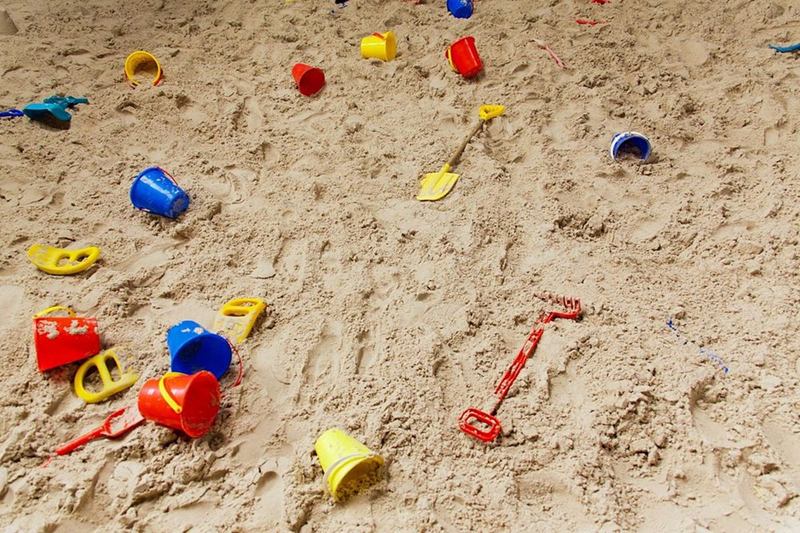
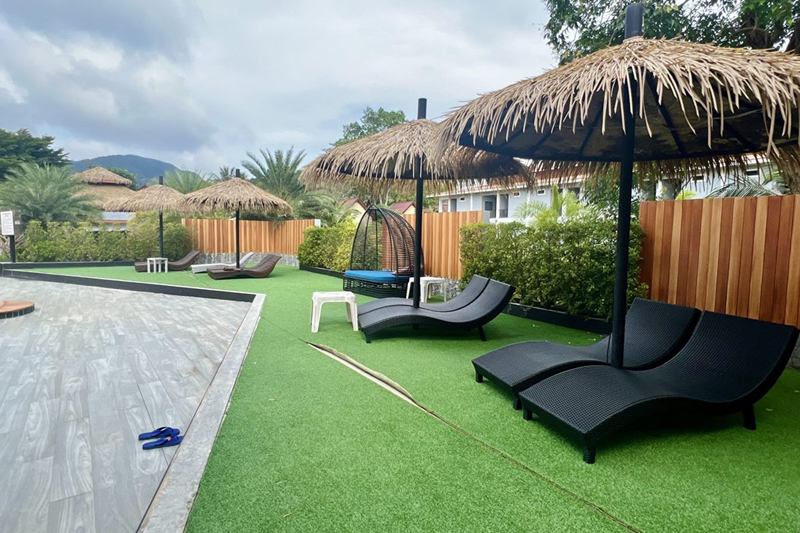
While you are out in the garden, carry on with the sandpit and the garden furniture.
Frequently asked questions
What is the best way to clean a trampoline?
Use lukewarm water, mild soap and a soft brush, then rinse with the garden hose. Bleach, solvents and harsh cleaners can damage the mat and net.
Can I clean a trampoline with a pressure washer?
Better not – the hard jet can damage fabric and seams. If you use one anyway, only do so as the manufacturer allows, from a good distance and at low pressure.
How often should I check the trampoline?
According to the BFU, check the mat, net, frame pad and the space underneath before every use, the other parts weekly to monthly, and give it a thorough check at the end of the season.
What should I do about rusty springs?
Treat light rust as the manufacturer advises. Replace badly rusted, overstretched or broken springs with suitable original parts so the mat stays evenly tensioned.
Thanks for your feedback! Feel free to share the guide.
Thanks! What was missing? Drop us a line – we will improve the guide. WhatsApp