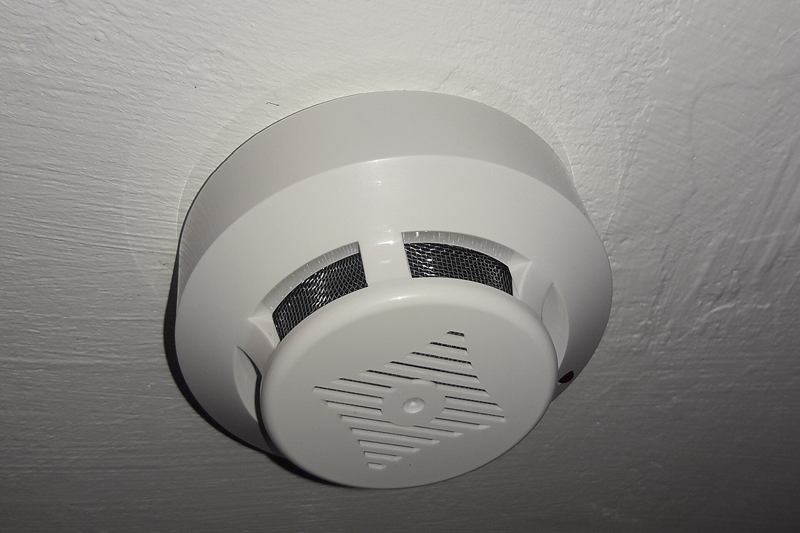
During spring cleaning we rarely look up – yet up there hangs a device that can save lives in a fire. To clean a smoke detector you need no cleaning products and no water, just a vacuum cleaner, a soft brush and a few minutes. And the test afterwards is just as important.
Dust, cobwebs and small insects can clog the openings. The alarm then responds less well or goes off for no reason. These five steps show how to keep your smoke alarms clean and ready.
Why you should clean a smoke detector and test it
A smoke detector senses smoke in a small chamber behind the grille. If dust, fibres or insects build up there, it may react too late or give a false alarm. The Swiss fire prevention advice centre (BFB) therefore recommends testing the detector monthly with the test button, keeping the smoke openings clear and vacuuming dust off and out of the device.
A figure from the Swiss Council for Accident Prevention shows why this matters: according to the BFU, 20 to 30 people die in fires in Switzerland each year, most of them from smoke. Smoke alarms are not a legal requirement in Switzerland, but they are recommended in every home – and they only help if they work.
| Signal | Meaning | What to do |
|---|---|---|
| No sound when testing | Battery flat or unit faulty | Change the battery, otherwise replace the alarm |
| Short, regular beep | Battery low | Change the battery; sealed battery: replace the unit |
| Alarm without smoke | Dust, insects, steam or cooking fumes | Clean it, check the location |
| Indicator light no longer flashes | Power or unit fault | Check the manual, change the battery |
1. Press the test button every month
Hold the test button down until the alarm sounds. This can take a few seconds – and it is loud, so keep your ear at a distance. Also check that the indicator light flashes as described in the manual.
If the alarm stays silent, the BFB advises changing the battery first. If the unit still does not work, replace it. The easiest way is to pick a fixed day, such as the first Saturday of the month, or add the test to your cleaning schedule.
2. Vacuum the dust off the grille
Dust and cobwebs are best removed dry. Use the brush attachment of your vacuum cleaner on a low setting and go all the way round the openings. Loosen stubborn dust in the slots first with a soft, dry brush.
- Do not press too hard, so the unit does not come away from its mount.
- Never push anything pointed into the openings.
- After dusty jobs such as sanding or drilling, vacuum the alarm particularly thoroughly.
If you need to take the unit down to clean it, follow the manufacturer's instructions. Many models twist off their base and go back on the same way.
3. Wipe the casing dry – never clean it wet
A smoke detector is an electronic device. Water, glass cleaner or sprays can get into the sensing chamber and damage the electronics. Only wipe the casing with a dry or, at most, barely damp microfibre cloth, and make sure no moisture runs into the openings.
Just as important: the BFB explicitly warns never to paint over smoke detectors. When painting the ceiling, take the alarm down or cover it only briefly and remove the cover straight afterwards. Taping it up to stop false alarms is also out of the question.
4. Check the battery and replacement date
If the unit gives a short beep at regular intervals, the battery is almost always low. Replace it with the type specified in the manual. For alarms with a sealed battery, the BFB says the whole unit is replaced.
Newer models with a long-life lithium battery last up to ten years, according to the BFU. The BFB recommends replacing smoke detectors every ten years. The manufacturing or replacement date is usually printed on the back or the edge. When buying a new one, choose a device tested to the EN 14604 standard.
5. Prevent false alarms in the kitchen and bathroom
Many false alarms are caused not by dust but by location. Steam from the shower and cooking fumes set off sensitive units. The BFB recommends fitting smoke alarms on the ceiling in the hallway and every bedroom, one per 60 m², and at least two metres from the cooker, oven and steam oven. In the kitchen, a heat detector is the better choice.
If an alarm in the hallway outside the bathroom goes off often, airing the room after showering with the bathroom door closed usually helps. If you rent and the property management fitted the alarms, check with them before moving any.
Common mistakes
- Cleaning with water or spray: moisture can damage the electronics.
- Painting over or covering the alarm: smoke can no longer reach the sensing chamber.
- Removing the battery to stop false alarms: without it the alarm no longer protects you – find the cause instead.
- Keeping units older than ten years: replace them when they are due, even if the test still works.
The smoke alarm takes five minutes. For everything else, use our spring cleaning checklist.
Frequently asked questions
How often should you clean a smoke detector?
Check it for dust and cobwebs every time you do the monthly test and vacuum it when needed. Clean it again after renovation or sanding work.
Can I wipe a smoke alarm with a damp cloth?
Only the casing, and only with a barely damp cloth. No moisture should get into the openings, and sprays are off limits. Remove dust from the grille dry, with a vacuum cleaner and brush.
Why does my smoke alarm beep every few minutes?
A short, regular beep usually signals a low battery. Change it; if the battery is sealed, replace the whole unit. If that does not help, look up the signal in the manual.
When does a smoke detector need replacing?
According to the BFB, every ten years – and immediately if the test does not trigger the alarm even with a new battery. The date is usually printed on the back of the unit.
Thanks for your feedback! Feel free to share the guide.
Thanks! What was missing? Drop us a line – we will improve the guide. WhatsApp