A new flat, moving costs, maybe a new sofa – and then the property management asks for a deposit of up to three months' rent. At that point many people wonder whether rent deposit insurance is a better option than the classic cash deposit in a blocked account. The answer depends on how long you plan to stay, how much cash you have available and what your property management accepts.
This guide compares both options, shows the hidden costs and explains what happens when you move out. It provides general information and is neither legal nor financial advice: your rental agreement and the provider's terms are what count.
How a rent deposit and deposit insurance work
A deposit is not owed automatically: according to ch.ch, you only have to provide one if it is agreed in the rental agreement. For a flat, it is capped at three months' rent.
Cash deposit in a blocked account: under Art. 257e CO, the landlord places a cash deposit with a bank in a savings or deposit account in the tenant's name. The bank only releases the money with the consent of both parties, or on the basis of a final payment order or court judgment. If the landlord has not taken legal action on any claim within one year of the tenancy ending, you can ask the bank to pay the money back directly.
Rent deposit insurance: instead of depositing money, you sign a contract with a provider, who guarantees the agreed amount to the landlord. In return you pay a premium, which usually depends on the size of the deposit and is due every year for as long as the guarantee exists.
| Criterion | Cash deposit | Rent deposit insurance |
|---|---|---|
| Money needed when moving in | The whole deposit at once | Only the first premium, sometimes plus fees |
| Ongoing costs | None | Annual premium |
| When you move out | The money comes back, unless there are claims | The premiums are gone |
| If there is a claim | It is paid from the deposit | The provider pays and reclaims the money from you |
| Property management's consent | Standard option | Must be accepted |
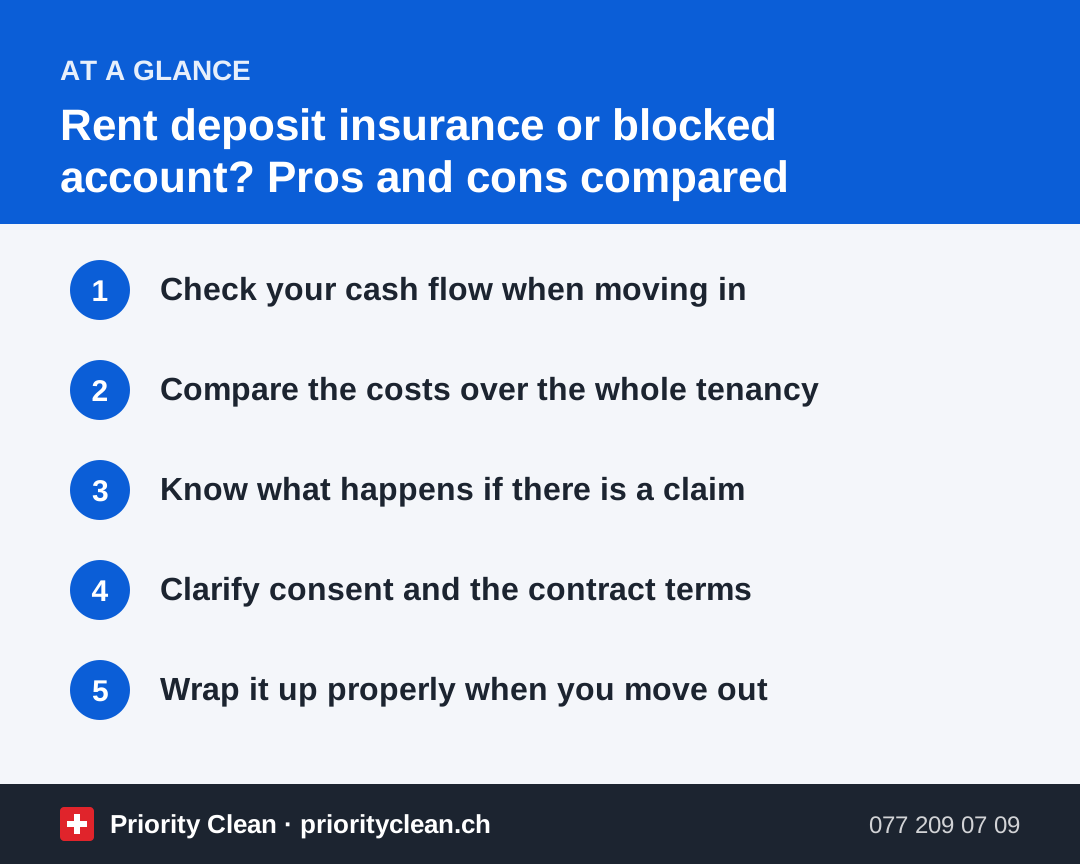
1. Check your cash flow when moving in
The main advantage of rent deposit insurance: you don't have to find the whole deposit at once. This can help if, during the move, the deposit for your old flat is still blocked while you wait for the final statement, or if the move and new furniture are already stretching your budget.
Ask yourself honestly: is this a short-term squeeze, or is the money missing for good? For a temporary gap, insurance can act as a bridge. If the reserve is missing long term, look closely at your budget, because the premium comes on top of rent and ancillary costs every year.
2. Compare the costs over the whole tenancy
A cash deposit costs you nothing apart from the tied-up money you cannot use during the tenancy. With insurance, on the other hand, the premiums add up year after year. So calculate with the length of time you expect to stay:
Total cost = annual premium × expected years in the flat + any fees
Compare this sum with the benefit of keeping your money available. For a short tenancy, the numbers look different than for a flat where you plan to stay ten years.
3. Know what happens if there is a claim
A common misunderstanding: rent deposit insurance does not insure your damage. It is a guarantee for the landlord. If the landlord asks for money after you move out – for extra cleaning, say, or for damage beyond normal wear and tear – the provider pays and then usually reclaims the amount from you.
So check every claim as carefully as you would with a cash deposit. The tenants' association for German-speaking Switzerland (Mieterinnen- und Mieterverband) recommends comparing the final statement with the handover report. According to the association, repair costs are only owed if they were agreed in the report and the item's lifespan has not expired. Without a signed report, the landlord must report damage within two to three working days.
4. Clarify consent and the contract terms
Replacing the deposit with insurance is not your decision alone: what counts is the security agreed in the rental agreement. So ask the property management before signing up whether it accepts rent deposit insurance, and get this confirmed in writing. For the other points to check in the contract, see our guide on the rental agreement in Switzerland.
Read the provider's terms carefully too:
- How high are the annual premium and one-off fees?
- How long does the contract run, and how can it be ended?
- What applies after you move out, until the landlord releases the guarantee?
- How, and within what period, does the provider reclaim amounts it has paid?
5. Wrap it up properly when you move out
Cash deposit: after the handover, both parties sign the release and the bank pays out the money. Check the final statement first. Our guide on how to get your rent deposit back explains the steps.
Rent deposit insurance: after the handover, ask the property management for a written release of the guarantee and pass it on to the provider. Depending on the terms, the premiums may otherwise keep running. In both cases, the best basis for a quick release is the same: a clean handover in line with the contract, with no open points in the apartment handover protocol.
Common mistakes
- Looking only at the first premium: what counts is the cost over the whole tenancy.
- Treating the insurance as protection: if there is a claim, you end up paying.
- Signing up without the property management's consent: the contract is then of no use to you.
- Forgetting the release when you move out: without it, premiums may keep running.
Frequently asked questions
What is rent deposit insurance?
An alternative to a cash deposit: instead of paying the deposit into a blocked account, you sign a contract with a provider that guarantees the amount to the landlord. In return, you pay an annual premium.
Do I get the premium back?
No. The premium is the price of the guarantee and stays with the provider, even if everything is in order when you move out. With a cash deposit, by contrast, you get the money back unless there are justified claims.
Does the property management have to accept rent deposit insurance?
Not automatically. What counts is the security agreed in the rental agreement. Ask before you sign up and get the consent in writing.
How high can a rent deposit be?
For a flat, three months' rent at most, as Art. 257e CO sets out. A cash deposit must be held in an account or deposit in your name.
Thanks for your feedback! Feel free to share the guide.
Thanks! What was missing? Drop us a line – we will improve the guide. WhatsApp