The property management has finally said yes to your new flat, and the contract is already on the table – often with a request to send it back signed as soon as possible. Take the time to read it anyway: before you sign a rental agreement in Switzerland, five points deserve your full attention. Once it is signed, what is written in it applies.
This guide covers rent, ancillary costs, the deposit, notice, house rules and the condition of the flat. It provides general information, not legal advice; if anything is unclear, the tenants' association or the conciliation authority can help.
Why check your rental agreement before signing
In Switzerland, a rental agreement usually consists of several documents. According to the brochure Living in Switzerland by the Federal Office for Housing (FOH), it normally includes general conditions and the house rules. That is often where the rules that matter day to day are found: cleaning, the laundry room, pets, maintenance.
Once signed, the contract binds you. Anything you clarify beforehand won't need to be renegotiated later. So ask if something is unclear, and have any promises from the property management – a repair before you move in, for example – confirmed in writing.
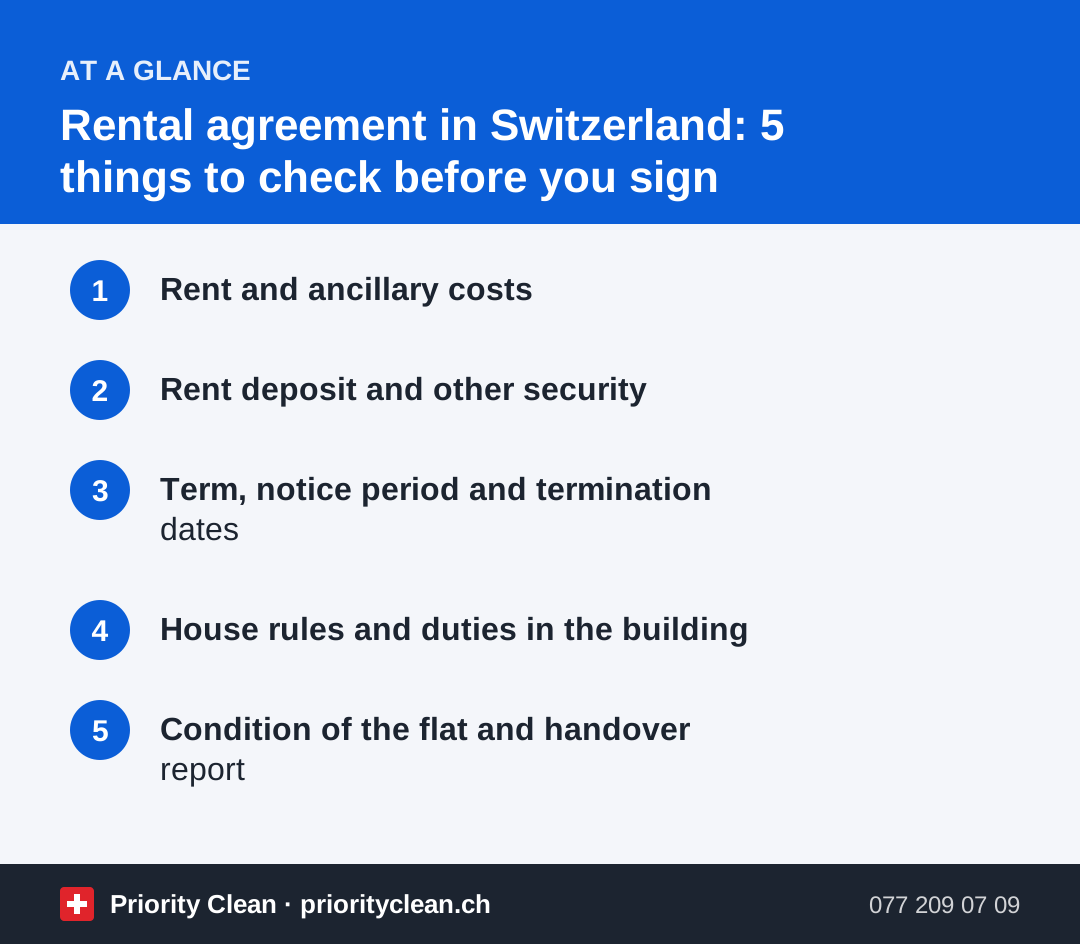
1. Rent and ancillary costs
Look closely at how the amount you will transfer each month is made up:
| Point | What to check |
|---|---|
| Net rent | Does it match the advert? Are a parking space or storage room listed separately? |
| Ancillary costs | Which items are listed individually, such as heating, hot water or caretaking? |
| On account or flat rate | With payments on account you receive a statement – according to the FOH, a detailed one at least once a year. |
| Due date | By when does the rent have to be paid each month? |
A flat rate is not settled with a statement: there are no additional payments, but no refunds either. With payments on account, the annual statement may ask for extra money. So add net rent and ancillary costs together and check that the total fits your budget with some margin.
2. Rent deposit and other security
Most landlords ask for security. The rules are set out in Art. 257e CO:
- For a flat, the security may not exceed three months' rent.
- A cash deposit is placed with a bank in a savings or deposit account in the tenant's name.
- The bank only releases the money with the consent of both parties, or on the basis of a final payment order or court judgment.
Some property managers accept rent deposit insurance instead of a cash deposit. Our guide on rent deposit insurance or a blocked account weighs up the pros and cons.
3. Term, notice period and termination dates
The contract states when the tenancy begins, any fixed minimum term, and the notice period and termination dates. Check:
- Start date: from when do you pay rent, and when do you get the keys?
- Minimum term: is there a fixed period before which you cannot give ordinary notice?
- Notice and dates: with how much notice, and for which dates, can you terminate?
- Form: how must notice be given, for example by registered letter?
These details decide how flexible you will be the next time you move. How notice periods and dates work in Switzerland is explained in our guide on the apartment notice period.
4. House rules and duties in the building
The house rules govern living together: quiet hours, the laundry room, the stairwell, bike storage, pets. According to the tenants' association for German-speaking Switzerland (Mieterinnen- und Mieterverband), however, they only bind you if they are part of the rental agreement. Ask for them before you sign and read them in full.
Pay particular attention to cleaning duties. According to the same association, tenants only clean the stairwell if the rental agreement says so; otherwise the landlord keeps it reasonably clean. For more, see who is responsible for stairwell cleaning.
The FOH brochure lists other typical rules: night-time quiet usually from 10 pm to 7 am, a midday break from 12 to 1 pm, consideration on Sundays and public holidays, and shared areas such as the entrance, stairwell and laundry room kept clear and clean. Tenants also carry out and pay for simple repairs and cleaning themselves, such as the cooker hood filter, the baking tray or the shower hose.
5. Condition of the flat and handover report
According to the FOH, you are entitled to move into a clean, usable flat. Defects are recorded jointly in a handover report, including minor damage. To prepare well:
- View the flat in daylight before signing and look closely at the kitchen appliances, bathroom, windows and blinds.
- Ask which work will still be done before you move in, and have it confirmed in writing.
- At the handover, note every scratch, stain and defect, and take photos.
Anything not in the report is harder to prove when you move out. Our guide to the defect list for your new apartment shows how to draw up a complete one.
Common mistakes
- Signing in a rush: take the time to read the attachments too.
- Skipping the general conditions: that is often where the key duties are.
- Trusting verbal promises: what isn't in writing is hard to prove later.
- Paying the deposit into a private account: a cash deposit belongs in an account in your name.
Frequently asked questions
What should I check in a rental agreement in Switzerland?
Above all the rent and ancillary costs, the rent deposit, the minimum term, the notice period and termination dates, the house rules with any cleaning duties, and the condition of the flat. Also read the general conditions, which are often part of the contract.
How high can the rent deposit be?
For a flat, three months' rent at most (Art. 257e CO). A cash deposit is paid into an account or deposit in your name at a bank.
Do the house rules apply automatically?
No. According to the tenants' association for German-speaking Switzerland, house rules only bind tenants if they are part of the rental agreement. Ask to receive them before you sign.
Where can I get a rental agreement checked in Switzerland?
Tenants' associations or the conciliation authority for tenancy matters in your canton can advise you. Bring the contract with all its attachments.
Thanks for your feedback! Feel free to share the guide.
Thanks! What was missing? Drop us a line – we will improve the guide. WhatsApp