In many Swiss cantons, the new school year starts in mid-August. Along with new pencils and a school bag comes the question of what to do with the water bottle and snack box (the famous Znüni box) that spent the summer holidays at the back of a cupboard – maybe with a little juice still inside. If you want to clean a water bottle properly, a quick rinse isn't enough: the lid, straw and seals are where smells and slime develop.
These five methods help you clean water bottles and snack boxes hygienically before the first school day – and keep them fresh through the term.
Why water bottles and snack boxes get grubby
A water bottle is warm, damp and regularly in contact with the mouth – ideal conditions for bacteria and moulds to settle, especially in seals, threads and straws. Juice, cordial or milk leave sugar and protein residue that makes the problem worse. Snack boxes collect crumbs, fruit juice and fat from cheese or sausage in corners and silicone rims.
The Federal Food Safety and Veterinary Office (BLV) explains that germs are spread via utensils, cloths and hands, and recommends cleaning utensils with hot water and soap. That applies to school bottles and lunch boxes as much as to chopping boards.
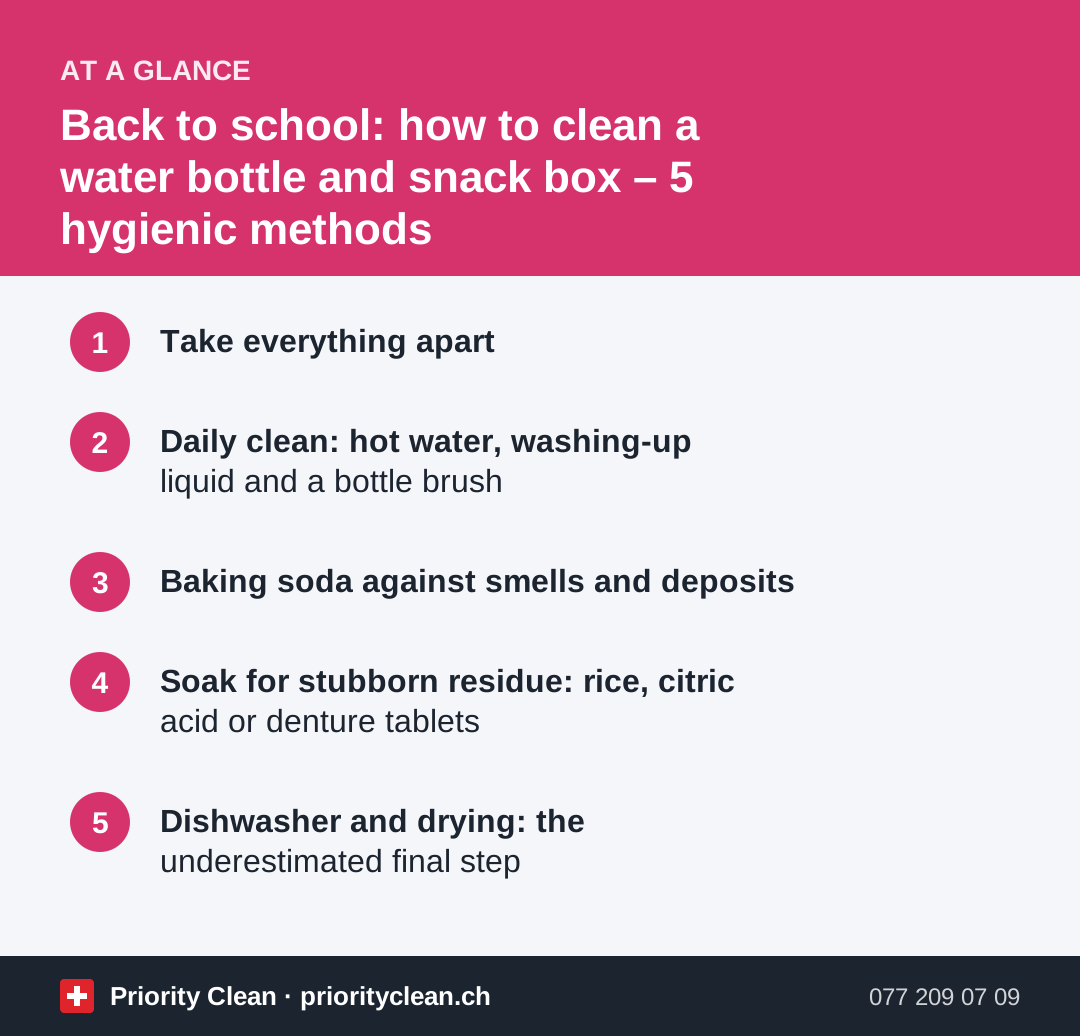
1. Take everything apart
Most hygiene problems hide in places you can't see when everything is assembled.
- Unscrew the lid and remove the mouthpiece or straw.
- Pull out the silicone seal from the lid – often with a blunt butter knife or toothpick.
- Remove removable dividers and rubber rims from the snack box.
- Look at each part in good light: black or pink spots, a slimy feel or a sour smell show you where to focus.
If a part can't be taken apart and has visible mould inside, replacing it is often the most sensible choice.
2. Daily clean: hot water, washing-up liquid and a bottle brush
A short routine after every school day prevents most problems.
- Fill the bottle with hot tap water and a drop of washing-up liquid, close it and shake.
- Scrub the inside and the base with a bottle brush.
- Clean the thread, lid and drinking spout with a small brush or old toothbrush.
- Pull a thin straw brush through the straw several times.
- Rinse all parts thoroughly with clear water.
For snack boxes, wash the box, lid and rubber seal with a sponge and hot soapy water, paying attention to corners.
3. Baking soda against smells and deposits
If a smell remains even after washing, baking soda helps.
- Put 1–2 teaspoons of baking soda into the bottle.
- Fill with warm water, close and shake well.
- Leave overnight.
- Scrub with the brush the next morning and rinse thoroughly.
For stubborn smells in snack boxes, sprinkle baking soda inside, add a little water, close the box and leave it overnight. Tomato sauce stains on plastic are another story – see our guide on discoloured plastic containers.
4. Soak for stubborn residue: rice, citric acid or denture tablets
For thin or narrow bottles where the brush doesn't reach:
- Rice and water: Add a tablespoon of uncooked rice with a little warm water and washing-up liquid, close and shake vigorously. The grains scrub the inside mechanically.
- Citric acid: For limescale deposits in stainless steel or glass bottles, fill with a solution of 1 teaspoon citric acid in warm water, leave for an hour, rinse thoroughly.
- Denture cleaning tablets: Some parents use them to loosen deposits. Follow the pack instructions and rinse very thoroughly afterwards.
5. Dishwasher and drying: the underestimated final step
Many bottles and snack boxes are dishwasher-safe – but not all of them. Check the symbol underneath or the manufacturer's instructions:
| Material | Dishwasher | Watch out for |
|---|---|---|
| Stainless steel (insulated) | Usually hand wash only | Heat can damage the vacuum insulation and exterior coating |
| Hard plastic | Often top rack | Warping at high temperatures |
| Glass with silicone sleeve | Often yes | Remove the sleeve and wash separately |
| Silicone seals and straws | Often yes | Small parts slip through – use a cutlery basket |
| Snack boxes with printed lids | Check the label | Prints can fade |
Drying is just as important as cleaning. Let all parts dry separately upside down on a rack or clean tea towel, and only reassemble them when completely dry. A closed, damp bottle in a school bag overnight is a typical cause of smells.
Back-to-school hygiene checklist
Common mistakes
- Only rinsing with water: Doesn't remove the biofilm in the lid and straw.
- Forgetting the seal: It's a favourite hiding spot for black mould.
- Filling with juice or cordial every day: Sugar residue encourages growth – water is easiest to keep clean.
- Closing the bottle while damp: Moisture and warmth create smells overnight.
- Hot dishwasher cycles for insulated bottles: Can damage the insulation.
Toys and school items also benefit from regular cleaning – see our guide to cleaning toys.
Frequently asked questions
How do I clean a water bottle that smells?
Take it apart, wash all parts with hot soapy water and a bottle brush, then fill it with warm water and a teaspoon or two of baking soda and leave it overnight. Rinse thoroughly and let it dry completely before closing.
How do I clean the lid and straw of a water bottle?
Remove the silicone seal, mouthpiece and straw. Clean each part with a small brush and hot soapy water, pull a straw brush through the straw several times and let all parts dry separately.
Can I put a stainless steel water bottle in the dishwasher?
Many insulated stainless steel bottles are hand wash only, because heat can damage the insulation or coating. Check the symbol on the base or the manufacturer's instructions.
How often should school water bottles be cleaned?
Ideally every day after school with hot soapy water and a brush. A deeper clean with baking soda or a soak is sensible once a week or when a smell appears.
Thanks for your feedback! Feel free to share the guide.
Thanks! What was missing? Drop us a line – we will improve the guide. WhatsApp