A summer outdoors leaves its mark: pollen, soot, bird droppings and, in shady corners, a greenish film. When people want to clean a shade sail, they often reach straight for the pressure washer – and risk destroying the very coating that makes the fabric water-repellent and UV-resistant.
With a soft brush, mild soap and enough time to dry, the sail will look bright again. Five steps show how to do it, what helps against mildew spots and how to store the fabric over the winter.
Why you should clean your shade sail regularly
A shade sail hangs outside for months and catches everything that comes out of the air: dust, pollen, soot, leaves and bird droppings. Where water collects in dips or the fabric stays damp in the shade for a long time, algae and mould settle in. They show up as a green film or as grey to black dots – mildew spots.
These deposits are not just unsightly. Dirt holds moisture in the fabric and encourages further growth. Bird droppings can bleach colours if they bake in the sun for a long time. And according to the Federal Office of Public Health, mould should always be removed quickly, and the cause of the damp fixed as well – for a shade sail, that means standing water and putting it away damp.
The right care depends on the material. Always check the manufacturer's instructions first, usually on a sewn-in label or in the manual.
| Material | Properties | Cleaning |
|---|---|---|
| HDPE mesh (breathable) | Tough, dries quickly, not waterproof | Brush and soapy water, rinse well |
| Coated polyester | Water-repellent, delicate coating | Brush gently only, no solvents |
| Acrylic or awning fabric | Colourfast, often impregnated | As for awning fabric, re-proof if needed |
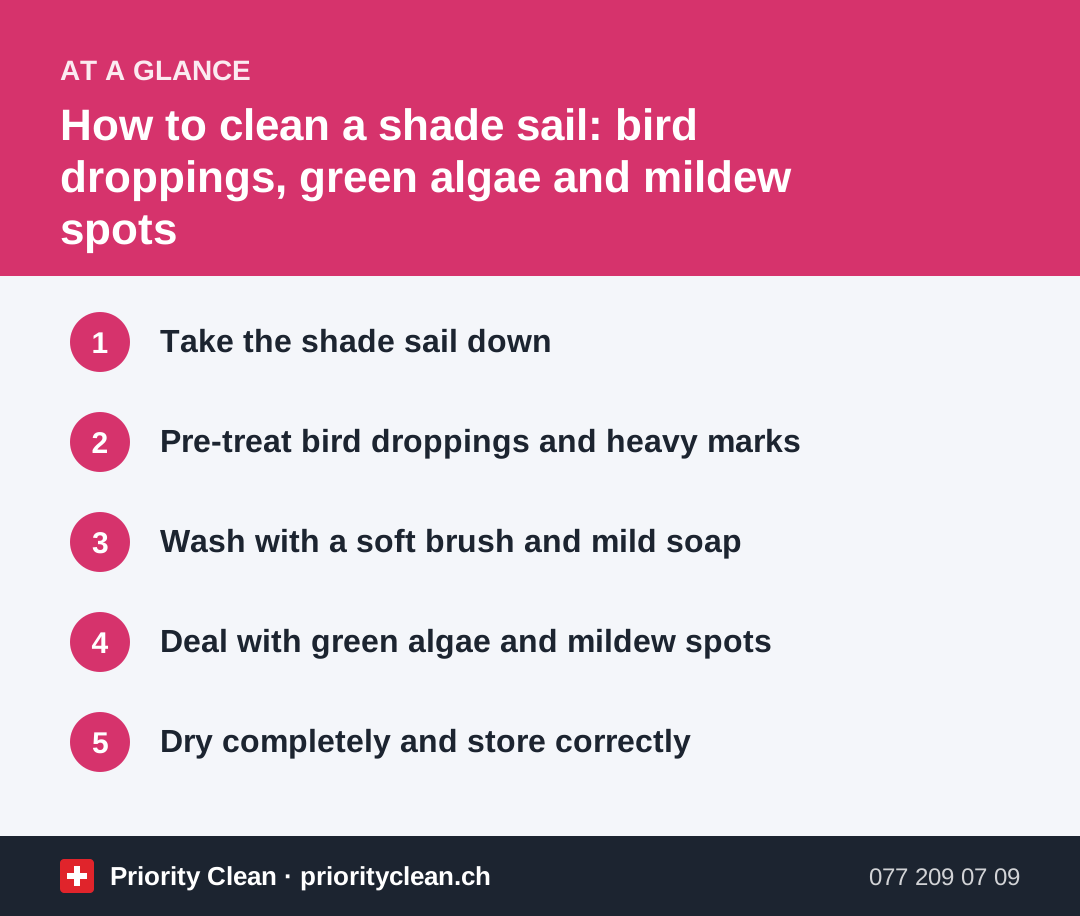
1. Take the shade sail down
Taken down, the fabric can be cleaned far more thoroughly and safely than when it is stretched overhead. Release the ropes or tensioners one corner at a time and do not just let the sail drop, so it does not drag across rough ground.
If the sail hangs high up, you need a safe way to reach it. The Swiss Council for Accident Prevention (BFU) recommends step ladders with deep, grooved non-slip treads, non-slip feet and a lock that stops them folding. Set the ladder on level ground, do not lean over the balcony railing, and in windy weather work in pairs or choose another day.
Then shake the fabric out vigorously outdoors and sweep off leaves, cobwebs and loose dirt with a soft broom. If the sail is permanently fixed and cannot be taken down, clean it in place from below with a soft brush on a telescopic handle.
2. Pre-treat bird droppings and heavy marks
Bird droppings are among the most stubborn stains. Rubbed off dry, they are pushed into the fabric and can scratch the coating.
- Soak a cloth in lukewarm water and lay it on the stain for a few minutes.
- Lift the softened droppings off with a plastic scraper or kitchen paper.
- Carefully brush out the residue with soapy water and a soft brush.
Wear gloves and wash your hands thoroughly afterwards. Tree resin often comes off with a little alcohol on a cloth – but test it on an inconspicuous spot first, because alcohol attacks some coatings.
3. Wash with a soft brush and mild soap
Spread the sail out on a clean surface, such as the lawn or a tarpaulin on the terrace. The Swiss consumer protection foundation (Stiftung für Konsumentenschutz) recommends simple household remedies such as curd soap instead of specialist cleaners for many jobs – and a mild soap solution is exactly right for a shade sail.
- Mix lukewarm water with a little curd soap or mild detergent for delicates.
- Clean the fabric section by section with a soft brush in circular movements, on the back too.
- Rinse thoroughly with a garden hose at low pressure until no more foam comes out.
Some small polyester sails can go in the washing machine according to the manufacturer, usually on a delicate cycle at low temperature and without spinning. Only do this if the label explicitly allows it – otherwise the coating, eyelets and seams may suffer.
4. Deal with green algae and mildew spots
A green film is mostly algae and sits on the surface. It usually comes off well with soapy water and a little more patience when brushing – better to wash twice than to scrub hard.
Mildew spots are harder, because the mould has settled into the fibres. Fresh, pale spots often fade after several washes with soapy water and drying in the sun. Old, dark spots often cannot be removed completely from coated fabrics. Special cleaners for awning and outdoor fabrics can help – follow the instructions exactly and test on a hidden spot first. Our guide on how to remove mildew from fabric explains which methods suit which material.
5. Dry completely and store correctly
Drying decides whether the shade sail comes out of the cellar clean or spotted next spring. After cleaning, stretch the fabric back up or hang it loosely over a line so air can circulate on both sides. Eyelets, hems and double layers take longest.
For the winter break:
- Only put the fabric away when it is bone-dry – check eyelets and hems too.
- Roll it loosely rather than folding it tightly, so the coating does not crease.
- Store it in a dry, airy room, such as the attic or a dry cellar, not in an airtight plastic bag.
- Check ropes, carabiners and fixings for rust and wear.
Take the sail down before autumn storms or snowfall: wet snow and strong winds put heavy strain on the fabric and fixings. Your parasol will also appreciate a clean before winter, as described in our guide on how to clean a patio umbrella.
The most common mistakes
- Pressure washer: damages the coating and seams – the fabric then gets dirty faster and lets water through.
- Abrasives and hard brushes: roughen the surface, so dirt sticks better.
- Storing it damp: the surest route to mildew spots and a musty smell.
- Leaving the sail up over winter: snow and storms can damage the fabric and fixings.
Frequently asked questions
Can you wash a shade sail in the washing machine?
Only if the manufacturer explicitly allows it, usually on a delicate cycle at low temperature and without spinning. Large or coated sails are better cleaned by hand with a soft brush and mild soap.
How do I get mildew spots out of a shade sail?
Fresh spots often fade after several washes with soapy water and drying in the sun. For older spots, a special cleaner for outdoor fabrics may help – test it on a hidden spot first. Very dark spots often remain visible on coated fabrics.
Can I use a pressure washer?
Better not. The powerful jet damages the coating, drives dirt into the fabric and can tear seams. A garden hose at low pressure is enough for rinsing.
How often should I clean my shade sail?
At least once a season, ideally before storing it in autumn. Remove bird droppings and resin as soon as possible.
Thanks for your feedback! Feel free to share the guide.
Thanks! What was missing? Drop us a line – we will improve the guide. WhatsApp