Water collects at the bottom of the glass door, soap residue settles in the rubber strip, and sooner or later black dots or a hard white crust appear. Anyone who wants to clean a shower door seal quickly finds that a cloth alone does not reach into the grooves – and that not every cleaning product suits the soft material.
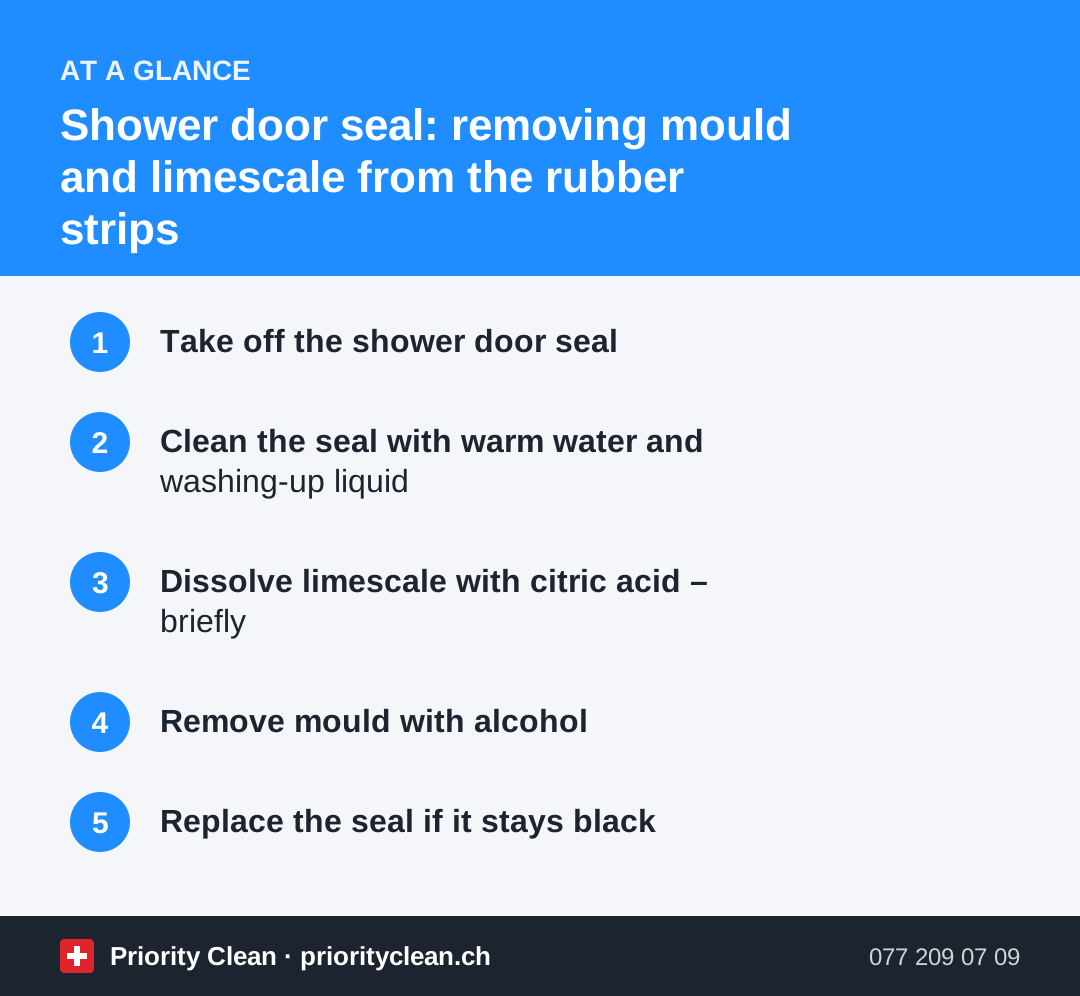
The good news: most strips can be taken off. Five steps show how to remove limescale and mould gently, and when replacing the seal is the better option.
Why the shower seal gets dirty so fast
The seals on a shower door hold back splashes, so they are wet almost all the time. Water stands in the grooves, joined by soap residue, skin flakes and hair – ideal conditions for mould, which shows up as black or grey dots.
At the same time, water dries on the edges and leaves limescale behind. How much depends on where you live: in Switzerland, water hardness varies from one municipality to the next, and you can look up your water hardness by postcode. With hard water, crusts form much faster, and dirt clings better to these rough deposits.
Mould is not just a cosmetic problem. The Federal Office of Public Health states that mould is unhealthy, should be removed quickly and the cause of the damp must be fixed. For the shower seal, that means cleaning it and making sure it can dry between showers.
| Deposit | Typical appearance | What helps |
|---|---|---|
| Soap residue | Grey, greasy film | Washing-up liquid and a brush |
| Limescale | Hard white crusts on the strip and edge | Citric acid, short contact time |
| Surface mould | Black dots that wipe off | Alcohol, then dry |
| Deep mould | Black stains in the material, won't wipe off | Replace the profile |
1. Take off the shower door seal
Most seals on glass doors are clip-on profiles: they are simply pushed onto the edge of the glass. At the bottom there is often a profile with a drip deflector, on the side a magnetic strip or a soft lip.
- Take a photo of the seal first so you know which way round it goes back on.
- Open the door and carefully pull the profile off, starting from one end, without tugging.
- If it is very tight or glued in place, leave it on and clean it directly on the door.
Magnetic profiles are often slotted into a groove. Pulling the strip out a little is usually enough to reach the back as well. If your shower glass has a coating, follow the manufacturer's instructions for removal and cleaning – see also our guide to coated shower glass.
2. Clean the seal with warm water and washing-up liquid
Place the removed seal in a basin or the shower tray with warm water and a squirt of washing-up liquid. After about ten minutes, soap residue comes off much more easily.
- Brush out the grooves and lips with an old toothbrush.
- Go over stubborn spots with a soft sponge – no scouring cream and no steel wool.
- Rinse well with clean water and rub dry with a cloth.
Often the shower seal is already clean at this point. Anything that stays white or black is limescale or mould.
3. Dissolve limescale with citric acid – briefly
Acids work against limescale. Citric acid is a good choice because it smells mild and is easy to dose. Dissolve about a tablespoon of powder in half a litre of warm water, apply the solution to the deposits with a sponge and leave it for a few minutes. Then brush and rinse thoroughly with clean water.
Soft PVC and rubber do not tolerate acid indefinitely. So do not leave the solution on for hours or overnight. Vinegar is often recommended too; used frequently, however, it can attack soft seals and rubber lips. If in doubt, follow the shower manufacturer's care instructions.
4. Remove mould with alcohol
If the black dots are only on the surface, treat them with alcohol, for example isopropyl alcohol from the chemist. Apply it with a cloth, leave it briefly and wipe off. Ventilate well and keep alcohol away from open flames, as it is highly flammable. Our guide removing mould with alcohol, chlorine or peroxide compares the different mould removers.
Chlorine-based mould removers work too, but they are harsh and can make rubber brittle over time. If you use them, never in the same session as citric acid or any other descaler.
5. Replace the seal if it stays black
If mould has eaten into the soft material, black stains stay visible even after thorough cleaning. Replacing the seal is then the more hygienic and often the simpler solution. You also need a new profile if the seal is brittle, cracked or deformed and no longer holds back water.
- Measure the glass thickness and length, and take the old profile along as a sample.
- Replacement profiles are available from DIY stores, sanitary specialists or the shower manufacturer.
- Cut the new profile to length with a fine saw or a craft knife and push it on.
In a rented flat, first ask the property management or caretaker who pays for the replacement. At the handover, black seals get noticed. If the silicone joints are affected too, see our guide to black mould on shower silicone.
The most common mistakes
- Long acid baths: vinegar or descaler overnight makes rubber and soft PVC brittle.
- Abrasives and hard sponges: they roughen the surface, so limescale and dirt cling even better.
- Combining chlorine and acid: dangerous and unnecessary – see the warning above.
- Leaving the seal wet: door always shut and no airing after showering, and the mould soon returns. Our guide on how to ventilate the bathroom after a shower explains how to do it right.
Frequently asked questions
Can I clean a shower seal with vinegar?
Occasionally, yes – but diluted and only briefly. Used often, vinegar can attack rubber and soft plastics. Citric acid with a short contact time or, for light limescale, warm water with washing-up liquid are gentler.
How do I get black mould out of a rubber shower strip?
Surface mould comes off with alcohol and a soft brush. If the stains are still visible afterwards, the mould is inside the material. Then only a new profile will help, which you can usually fit yourself.
How often should I clean the shower seal?
A thorough clean once a month is usually enough, more often with hard water. More important is squeegeeing and wiping the seal dry after every shower.
Can I replace the seal myself in a rented flat?
Pushing on a matching profile is technically easy. But check with the property management first who pays and whether a specific replacement part is required.
Thanks for your feedback! Feel free to share the guide.
Thanks! What was missing? Drop us a line – we will improve the guide. WhatsApp