Many expats notice it within weeks of moving to Switzerland: the glass shower screen turns milky, taps get a white crust and the tiles feel rough. The reason is the tap water, which is medium-hard to hard in many regions. Limescale in the shower is not a sign of poor cleaning – it's chemistry. But with the right method for each surface, it comes off without scratching, and a small daily habit keeps it away.
Here are the five methods that work best in our day-to-day cleaning work, and the materials where you need to be careful.
Why Swiss showers get limescale so quickly
Limescale forms when water evaporates and leaves behind dissolved minerals, mainly calcium and magnesium. The harder your water, the faster the white film appears. You can check the hardness of your tap water by postcode on trinkwasser.ch, where local water suppliers publish their data.
Water collects longest on glass screens, around taps, on the shower head and in the lower rows of tiles. Fresh water spots wipe off easily, but when they stay, they combine with soap residue and body oils into a stubborn layer. The sooner you deal with limescale in the shower, the less effort it takes.
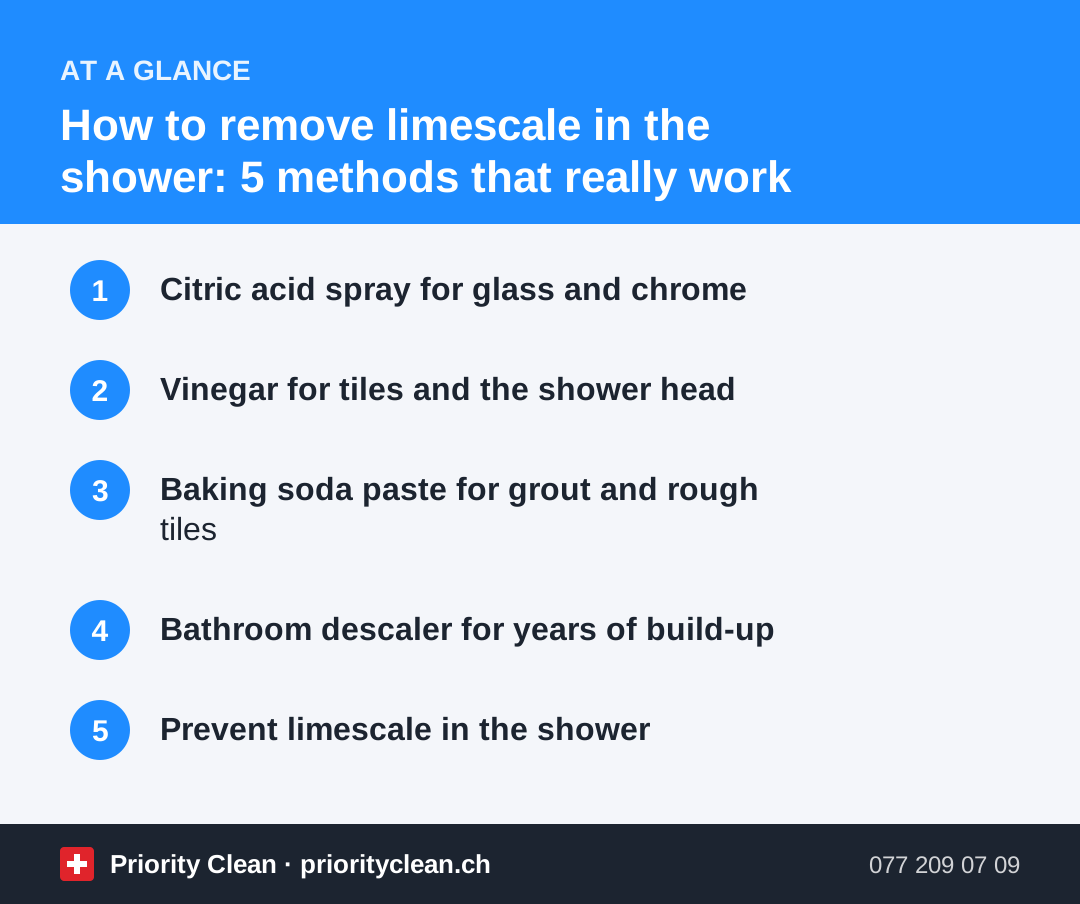
1. Citric acid spray for glass and chrome
Citric acid is odourless, effective and easy to dose, which makes it our first choice for shower screens and taps.
- Dissolve 2 tablespoons of citric acid powder in 500 ml of cold or lukewarm water. Avoid hot water, which can lead to residues.
- Fill a spray bottle and spray glass and taps evenly.
- Leave for 10–15 minutes, without letting it dry.
- Wipe with a soft sponge, rinse thoroughly with clear water and squeegee dry.
2. Vinegar for tiles and the shower head
Household vinegar is in almost every kitchen and works much like citric acid. It's especially useful for ceramic tiles and shower heads.
- Tiles and glass: Mix vinegar and water 1:1, spray on, leave for 10 minutes, rinse and dry.
- Shower head: Unscrew it and soak it overnight in undiluted household vinegar. If it can't be removed, fill a freezer bag with vinegar, pull it over the head and secure it with a rubber band.
- Nozzles: Rub rubber nozzles with your thumb afterwards to push out loosened limescale.
The smell disappears quickly with ventilation. Vinegar essence is much stronger: always dilute it, and don't use it frequently on rubber seals, which can become brittle. For more on shower heads, see our guide to descaling a shower head.
3. Baking soda paste for grout and rough tiles
Baking soda doesn't dissolve limescale chemically, but as a gentle abrasive it's excellent for soap scum on tiles and in grout lines.
- Mix 3 tablespoons of baking soda with a little water into a spreadable paste.
- Apply to tiles and grout with an old toothbrush or soft sponge.
- Work in small circles and rinse thoroughly.
A popular myth is to combine baking soda and vinegar. The fizz looks impressive, but the two neutralise each other and lose most of their effect. Use them one after the other, rinsing in between, rather than together.
4. Bathroom descaler for years of build-up
When layers have built up for years – for example in a flat you just moved into – home remedies may not be enough. A commercial bathroom descaler from the supermarket can help.
- Check the label: is it suitable for glass, chrome, enamel and your tiles?
- Wear rubber gloves and keep the window open or the fan running.
- Apply, observe the maximum contact time and rinse thoroughly.
- Store it in its original bottle, out of children's reach.
5. Prevent limescale in the shower
Removing limescale is one thing; stopping it from building up is where you really save time.
- Squeegee after every shower: It takes 30 seconds and removes most of the water before it can evaporate.
- Dry the taps: A quick rub with a microfibre cloth keeps chrome shiny.
- Ventilate: A dry bathroom also helps prevent mould on silicone joints – see our guide on black mould on silicone.
- Weekly quick spray: Spray the citric acid solution once a week and rinse – thick crusts never form.
Which method for which surface?
| Surface | Best method | Avoid |
|---|---|---|
| Glass shower screen | Citric acid spray, squeegee | Scouring pads, steel wool |
| Chrome taps | Citric acid, soaked kitchen paper | Abrasive creams |
| Ceramic tiles | Vinegar solution, baking soda paste | Hard wire brushes |
| Natural stone | pH-neutral stone cleaner | Any acid |
| Shower head | Vinegar soak | Hot vinegar |
Common mistakes when removing limescale
- Scouring sponges on glass and chrome: Fine scratches give new limescale more grip.
- Acid on natural stone: Leaves dull, rough patches that can't be polished back easily.
- Scrubbing immediately: Without contact time you need twice the effort.
- Not rinsing: Acid residue slowly attacks grout and seals.
Frequently asked questions
What is the best way to remove limescale from a shower screen?
A solution of citric acid and cold water is very reliable: spray it on, leave it for 10–15 minutes, wipe, rinse and squeegee dry. Vinegar also works but smells stronger.
Can I use vinegar on natural stone in the shower?
No. Acids etch marble, limestone and travertine. Use only pH-neutral cleaners designed for stone.
How often should I descale my shower?
If you squeegee after every shower, a short weekly treatment is usually enough. Without a squeegee, a thorough clean every one to two weeks is sensible, depending on your water hardness.
Does a water softener prevent limescale in the shower?
A softening system can reduce limescale, but in a rented flat it's up to the landlord whether one is installed. Squeegeeing and regular light cleaning remain the most practical solution for tenants.
Thanks for your feedback! Feel free to share the guide.
Thanks! What was missing? Drop us a line – we will improve the guide. WhatsApp