A brownish ring at the waterline, rough grey deposits in the bowl and crusts under the rim that the toilet brush never reaches – you'll find this in almost every Swiss bathroom sooner or later. It's a mix of limescale from hard water and urine scale, and ordinary toilet cleaner often can't shift it. To remove limescale from a toilet you need an acid, time to let it work and a little patience – but no aggressive chemicals.
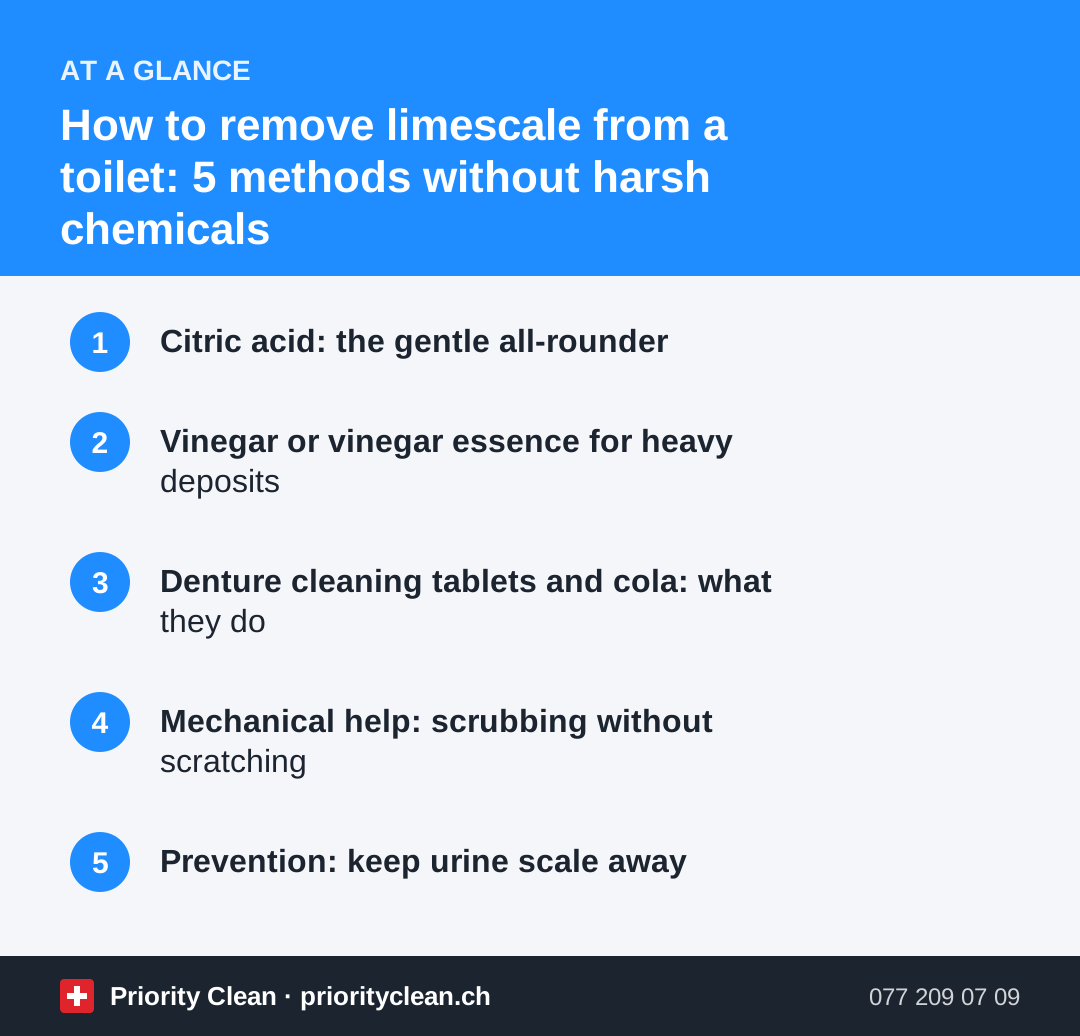
Here are five methods that work, from everyday care to stubborn deposits, and the safety rules you should never ignore.
What urine scale and limescale are
Limescale forms when hard water evaporates and leaves calcium and magnesium behind – you can look up the hardness of your tap water by postcode on trinkwasser.ch. Urine scale develops when minerals from urine combine with limescale and settle on the ceramic. The result is a hard, porous layer that turns yellow or brown and holds bacteria and odours.
The deposits are often thickest at the waterline, where water stands, and under the rim, where each flush leaves a thin film. The good news: both are mineral deposits that dissolve with mild acids.
1. Citric acid: the gentle all-rounder
Citric acid is our first choice for toilets: effective, odourless and gentle on ceramic.
- Lower the water level: push the water down the outlet with a few firm strokes of the toilet brush, or scoop it out with an old cup.
- Dissolve 3–4 tablespoons of citric acid powder in about half a litre of lukewarm water.
- Pour it over the deposits, including under the rim.
- Leave for at least an hour – overnight for thick layers.
- Scrub with the toilet brush and flush.
Repeat for very old deposits: each round removes another layer.
2. Vinegar or vinegar essence for heavy deposits
Household vinegar works similarly and is always at hand. For thicker crusts, vinegar essence is stronger – but always dilute it according to the label.
- Lower the water level in the bowl as described above.
- Pour vinegar over the stained areas, or soak toilet paper in vinegar and lay it directly on the deposits so the acid stays in place.
- Leave it overnight, then scrub and flush.
Vinegar smells strongly, so ventilate the bathroom. Don't use concentrated vinegar essence regularly: rubber seals in the cistern and flush mechanism can become brittle over time.
3. Denture cleaning tablets and cola: what they do
Two home remedies are often mentioned online.
- Denture cleaning tablets: Drop two or three tablets into the bowl with lowered water level, let them dissolve and work overnight, then scrub. They loosen light deposits and discoloration, but on thick crusts they're weaker than citric acid.
- Cola: Many colas contain phosphoric acid – and sugar. It can loosen light deposits, but it leaves sticky residue and is less effective than a proper acid. There are better options.
4. Mechanical help: scrubbing without scratching
After the acid has softened the deposits, some mechanical help finishes the job.
| Tool | Good for | Avoid |
|---|---|---|
| Toilet brush with firm bristles | Everyday cleaning after acid treatment | – |
| Rim brush (curved) | Under the rim | – |
| Pumice stone (wet) | Stubborn remaining crust on ceramic | Plastic seats, enamel, dry use |
| Plastic scraper | Thick crusts that have been softened | Metal scrapers that scratch |
| Steel wool | Nothing in the toilet | Scratches attract new deposits |
Pumice stone should be used only on standard glazed ceramic, always wet and with light pressure – test on a small hidden area first. Scratched glaze makes it easier for deposits to return.
5. Prevention: keep urine scale away
Once the toilet is clean, a short routine keeps it that way.
- Brush daily or every few days, especially the waterline and under the rim.
- Weekly acid treatment: A splash of citric acid solution or vinegar in the bowl once a week, left for an hour, prevents new crusts.
- Close the lid when flushing to reduce splashes.
- Check the cistern: A constantly running cistern leaves limescale streaks in the bowl. Our guide on descaling the cistern explains how to fix it.
Common mistakes when removing toilet limescale
- Not lowering the water level: The acid is diluted and barely works.
- Too short contact time: Deposits need hours, not minutes.
- Mixing products: Dangerous gases, especially acid and chlorine.
- Steel wool or metal scrapers: Scratched glaze, which gets dirty faster.
- Ignoring the rim: Deposits under the rim cause smells and new streaks.
A spotless toilet is the first thing guests notice – see our tips for a clean guest WC. And if the shower has the same problem, read our guide on limescale in the shower.
Frequently asked questions
How do I remove limescale from a toilet bowl?
Lower the water level in the bowl, apply a citric acid solution or vinegar to the deposits and leave it for at least an hour, or overnight for thick layers. Then scrub with the toilet brush and flush. Repeat if necessary.
How do I remove urine scale under the toilet rim?
Use a gel descaler with a nozzle or press toilet paper soaked in citric acid solution under the rim so the acid stays in place. Leave it overnight, then scrub with a curved rim brush.
Does vinegar remove limescale from toilets?
Yes, vinegar dissolves limescale and urine scale, especially with a long contact time and lowered water level. Vinegar essence is stronger but should be diluted and not used too often because of rubber seals.
Can I use a pumice stone on my toilet?
On standard glazed ceramic, a wet pumice stone used with light pressure can remove remaining crusts. Test on a hidden spot first, and never use it dry or on plastic or enamel surfaces.
Thanks for your feedback! Feel free to share the guide.
Thanks! What was missing? Drop us a line – we will improve the guide. WhatsApp