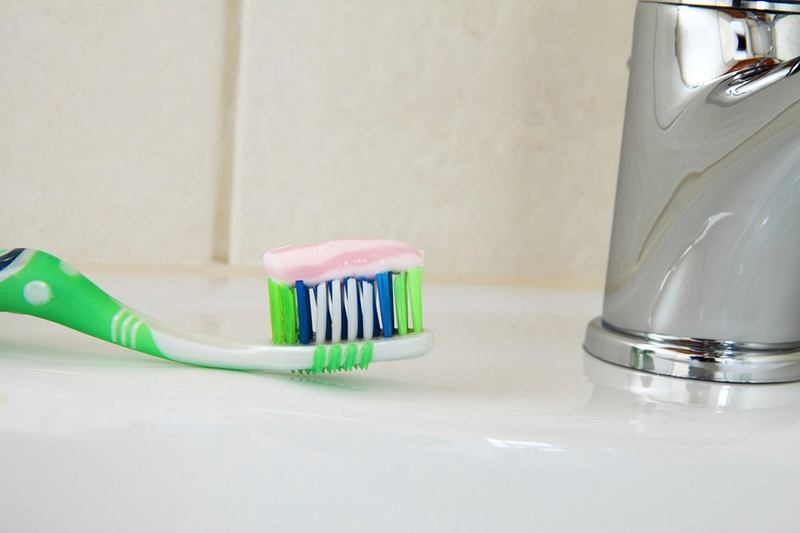
In videos and forums, the tube from the bathroom is often sold as an all-purpose weapon: it supposedly makes silver shine, clears yellowed headlights and gets trainers looking brand new. Before cleaning with toothpaste, though, it is worth knowing how it works – and where it does more damage than good.
We have looked honestly at five popular hacks. The short version: sometimes the paste really helps, often there is something better, and on glasses and screens you should leave it well alone.
Why cleaning with toothpaste works – and why it scratches
Toothpaste contains fine abrasive particles, such as silica or calcium carbonate depending on the product. They scrub plaque off tooth enamel, the hardest substance in the human body. On softer materials like silver, plastic or varnish, the same particles act like extremely fine sandpaper: the dirt goes, but the surface ends up duller or scratched.
On top of that come surfactants that dissolve grease, flavourings, colourings and, depending on the type, activated charcoal or bleaching agents. Whitening pastes are often particularly abrasive, gel pastes hardly at all – but they also clean less well. For household experiments, a cheap, white standard paste is the most predictable choice.
The Swiss consumer protection foundation (Stiftung für Konsumentenschutz) recommends getting by with a few proven household remedies such as vinegar, citric acid, soda crystals, bicarbonate of soda and curd soap rather than buying a separate product for every surface. Toothpaste is not part of that basic kit – it is a stopgap for small spots, not a cleaning product.
| Use | Verdict | Better alternative |
|---|---|---|
| Rubber soles of trainers | Works well | Melamine sponge, soapy water |
| Pale water rings on varnished wood | Sometimes, test carefully | Gentle heat, furniture polish |
| Silver cutlery and jewellery | Rather harmful, fine scratches | Silver cloth, bicarbonate and foil bath |
| Yellowed plastic headlights | Short-term, then worse | Restoration kit with UV sealant |
| Glasses, screens, watch glasses | Harmful | Microfibre cloth, dedicated cleaner |
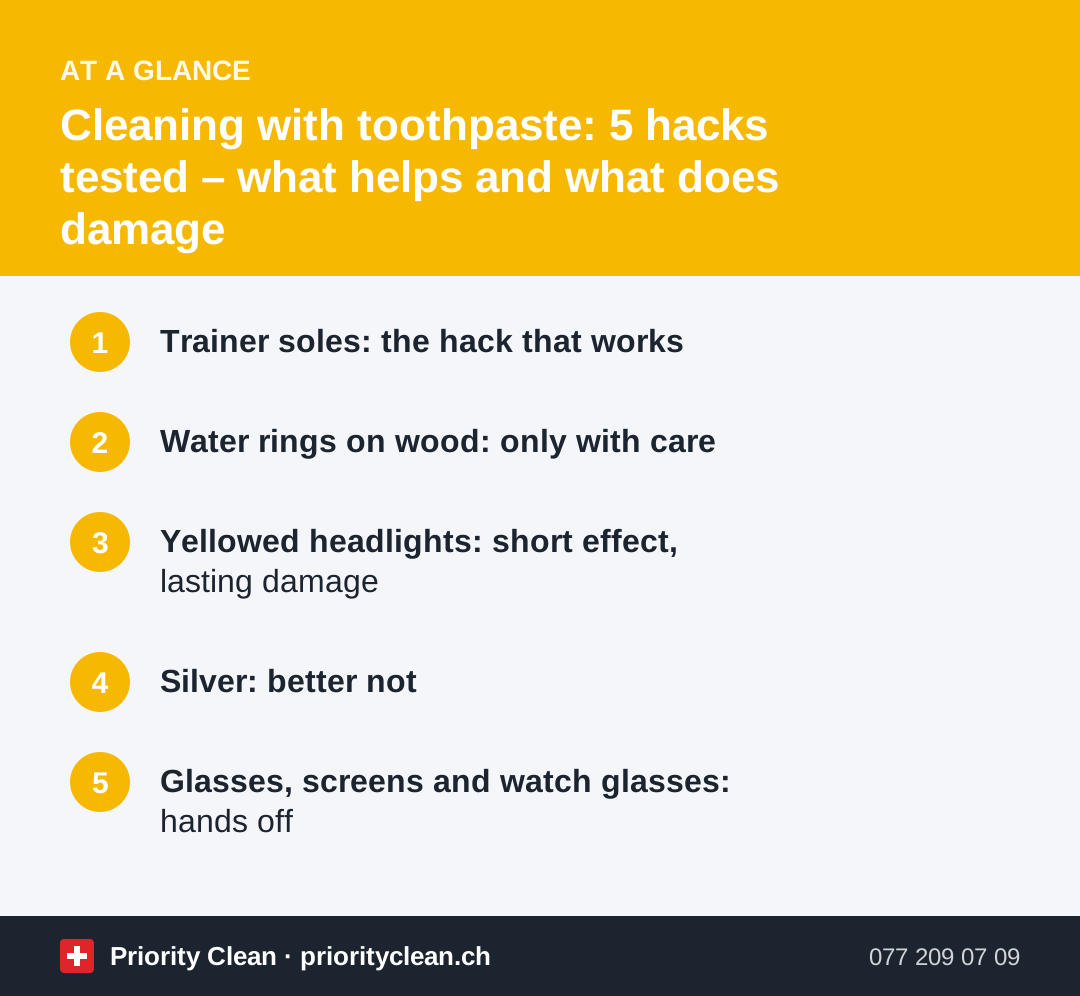
1. Trainer soles: the hack that works
White rubber soles and side walls of trainers are the classic case where toothpaste delivers. Rubber is tough, and the fine particles lift grey scuffs and street grime out of its rough surface.
- Brush off loose dirt with a dry brush.
- Put a pea-sized amount of white paste on an old toothbrush.
- Scrub the sole in small circles, adding a little water if needed.
- Wipe with a damp cloth and leave to dry.
Do not spread the paste over leather, suede or mesh uppers: white residue settles in pores and fabric. Our guide to cleaning white trainers explains how to clean the whole shoe.
2. Water rings on wood: only with care
A glass put down without a coaster often leaves a pale, milky ring on a varnished or waxed table. The moisture is trapped in the top finish, not in the wood itself. A little white paste on a soft cotton cloth, rubbed gently along the grain, can sometimes fade these rings.
The risk: the particles also sand the varnish. The water ring then turns into a dull patch that is more noticeable than the original mark. So always test on a hidden spot first, rub for a few seconds only and check the result against the light. On oiled or untreated wood, and with dark rings, toothpaste does not help – dark marks sit deeper in the wood. Gentler methods are in our guide to water stains on wood.
3. Yellowed headlights: short effect, lasting damage
The lenses of modern car headlights are made of plastic with a UV-protective coating. When this coating turns cloudy and yellow, toothpaste really does polish off the top layer – and the headlight looks clearer.
But the rest of the protection goes too. Without a new sealant, the plastic often yellows faster than before. For a lasting result, use a restoration kit with several sanding grades and a final UV sealant, or have the headlights checked by a garage. If the lenses are badly scratched, replacement makes more sense than any polish.
4. Silver: better not
Silver is a soft metal. Toothpaste does remove the dark tarnish, but it leaves fine scratches that dull the shine over time. Silver-plated items are particularly delicate: the thin silver layer can wear through on edges and patterns until the base metal shows.
For cutlery and jewellery, a silver cloth or a bath of hot water with aluminium foil and bicarbonate of soda works much better, because it converts the tarnish chemically instead of sanding it off. Jewellery with stones, pearls or a deliberate patina belongs with a specialist. Our guide to cleaning silver takes you through it step by step.
5. Glasses, screens and watch glasses: hands off
Spectacle lenses today almost always have anti-reflective, scratch-resistant or blue-light coatings. Smartphone and laptop screens have a grease-repellent layer, as do many watch glasses. Toothpaste sands these layers away – often invisibly the first time, but with lasting smears and micro-scratches. The widely shared trick of "polishing" scratches out of a phone screen with toothpaste usually makes things worse.
Clean lenses instead with lukewarm water, a drop of washing-up liquid and a clean microfibre cloth, and screens as the manufacturer recommends. More in our guide to cleaning glasses.
The most common mistakes
- Pressing hard: scrubbing vigorously sands where there is no dirt at all. Toothpaste works through its particles, not through force.
- Whitening or charcoal paste: often rougher, and it can turn light grout and fabrics grey.
- Large areas: for the basin, tiles or taps, toothpaste is too expensive and too fiddly. A mild cleaner, or citric acid against limescale, works better.
- Leaving residue: dried paste leaves a white film and binds dust.
Frequently asked questions
Which toothpaste is best for cleaning?
A plain white standard paste without gel, coloured stripes, activated charcoal or whitening granules. It cleans gently and leaves no colour residue. Gel pastes contain hardly any abrasives and achieve little.
Can you clean silver with toothpaste?
You can, but it is not recommended. The particles leave fine scratches on the soft metal, and the layer on silver-plated items can wear through. A silver cloth or a bicarbonate and foil bath is kinder to the material.
Does toothpaste remove scratches from a phone screen?
No. It strips the grease-repellent coating and creates new micro-scratches. Deep scratches remain, and shallow ones often just look different. A screen protector or a screen replacement are the safe options.
Is toothpaste a good cleaner for the whole bathroom?
Not really. For the basin, tiles and taps, a mild all-purpose cleaner, citric acid for limescale or bicarbonate of soda are cheaper and more effective. Toothpaste is only suitable for small, robust spots.
Thanks for your feedback! Feel free to share the guide.
Thanks! What was missing? Drop us a line – we will improve the guide. WhatsApp