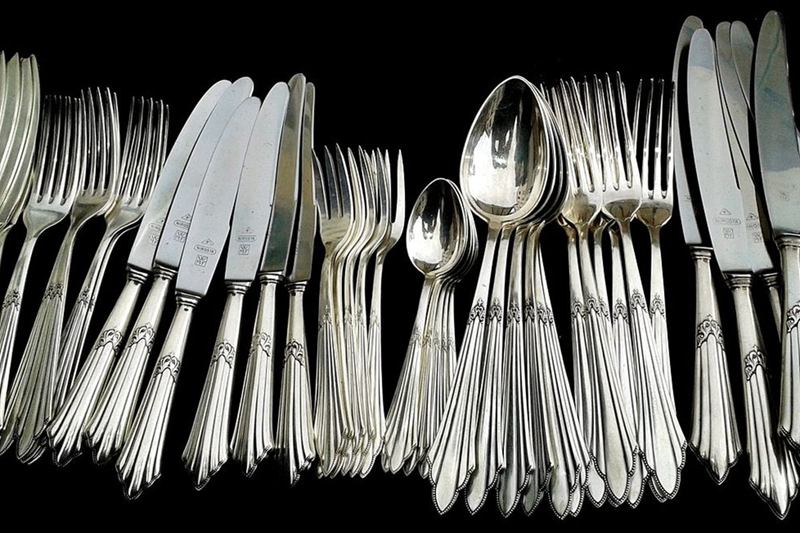
The festive season is approaching, and the silver cutlery that was a wedding present or inherited from grandparents comes out of the drawer – dark, spotty and dull. Rings and necklaces tarnish too, especially when they're not worn for a while. The good news: you can clean silver at home with simple means. The bad news: some popular tips cause more damage than tarnish ever could.
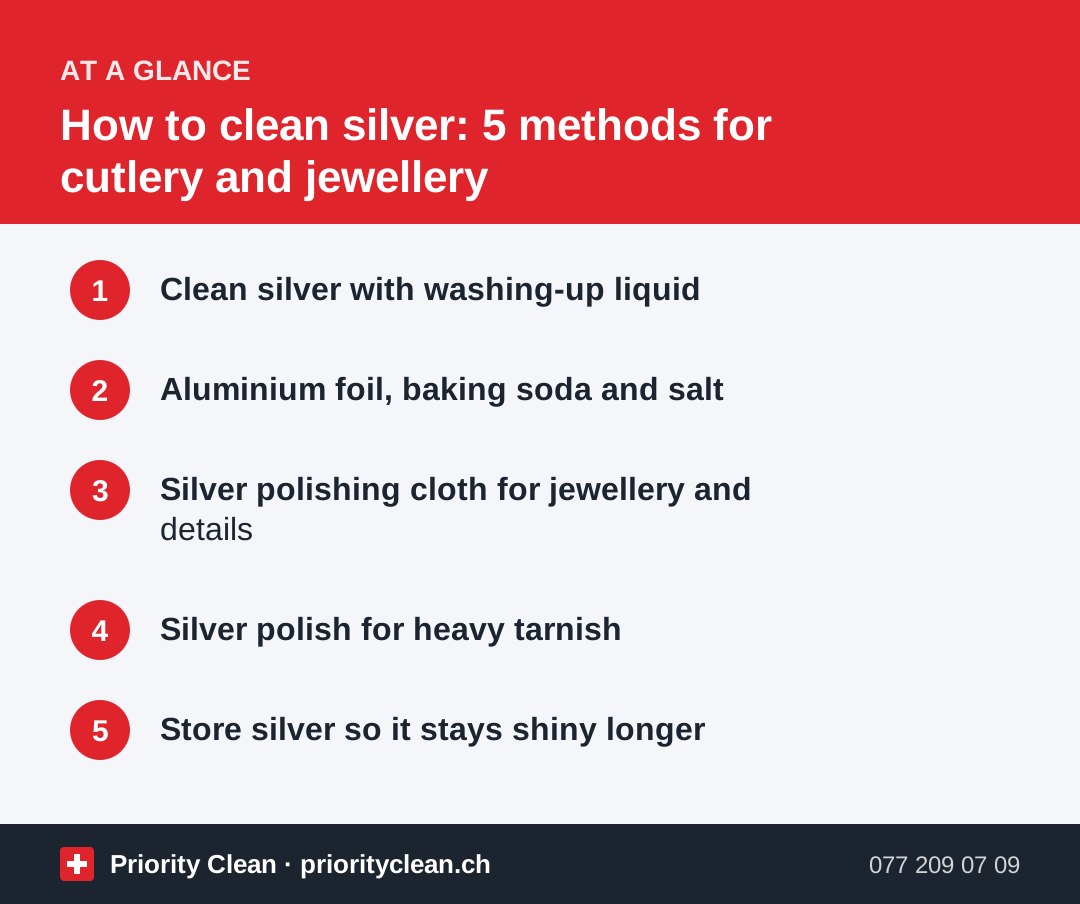
Here are five methods, from the gentlest to the most thorough, and what to consider before you start.
Why silver turns dark
Silver reacts with sulphur compounds in the air, forming a thin dark layer of silver sulphide. Eggs, mustard, onions, some rubber materials and wool felt accelerate the process. Humidity and air pollution play a role too.
Tarnish doesn't mean the metal is damaged – it's a surface layer that can be removed. The question is how gently.
Before you start: solid or plated?
| Type | How to recognise it | Care |
|---|---|---|
| Solid silver | Hallmarks such as "925" or "800" | Tolerates most gentle methods |
| Silver-plated | Plating marks from the manufacturer, often a number or letters such as "EPNS" | Thin layer – avoid abrasives, polish gently |
| Jewellery with stones or pearls | Set stones, glued parts | No immersion baths; polishing cloth only |
| Antiques and oxidised decoration | Intentionally darkened details | Ask a jeweller or silversmith |
If you're unsure, start with the gentlest method and test on an inconspicuous piece or spot.
1. Clean silver with washing-up liquid
Often, a simple wash is enough for pieces used regularly.
- Wash the pieces in warm water with a little washing-up liquid.
- Use a soft sponge or cloth.
- Rinse with clear water.
- Dry immediately and thoroughly with a soft cotton or microfibre cloth – water spots and residue promote new tarnish.
This removes grease and fresh discolouration and is the basis for all other methods.
2. Aluminium foil, baking soda and salt
This method uses a chemical reaction: the silver sulphide is converted back without abrasion.
- Line a heat-resistant glass or plastic bowl (not metal) with aluminium foil, shiny side up.
- Place the pieces on the foil so that each piece touches it.
- Sprinkle with 1–2 tablespoons of baking soda and 1 tablespoon of salt per litre of water.
- Pour over hot (not boiling) water until everything is covered.
- Leave for a few minutes – you may notice a slight sulphur smell as the tarnish disappears.
- Remove the pieces carefully (they're hot), rinse with clear water and polish dry with a soft cloth.
Consumer advocates list baking soda and salt among the simple household remedies that replace many special products.
3. Silver polishing cloth for jewellery and details
A special silver polishing cloth, impregnated with a mild cleaning agent, is available in jewellery shops and department stores.
- Rub with gentle strokes, not circles, following the shape.
- Use a clean part of the cloth as it darkens.
- Don't wash the cloth – it would lose its effect.
- Ideal for rings, chains, bracelets and cutlery with fine patterns.
For jewellery with stones, use only the cloth and carefully avoid the setting.
4. Silver polish for heavy tarnish
For very dark, neglected pieces, a commercial silver polish or silver dip can help.
- Choose a product suitable for your type of metal (solid or plated).
- Follow the instructions exactly, especially the contact time for dips.
- Wear gloves and ventilate.
- Rinse thoroughly and dry immediately.
- Don't use dips on jewellery with stones, pearls or glued parts.
5. Store silver so it stays shiny longer
Prevention saves polishing.
- Airtight storage: Zip bags or anti-tarnish bags reduce contact with air.
- Anti-tarnish strips or cloths: Absorb sulphur compounds in drawers and jewellery boxes.
- Avoid rubber and wool felt: Rubber bands and some felt linings accelerate tarnish.
- Use it: Cutlery that's used and washed regularly tarnishes less.
- Dry thoroughly: Never put damp pieces away.
The toothpaste myth – and other mistakes
- Toothpaste: Many contain abrasive particles that leave fine scratches, especially on polished and plated silver.
- Scouring pads and abrasive creams: Scratch and wear down plating.
- Dishwasher with stainless steel: Silver and stainless steel items in the same basket can cause dark spots. Many manufacturers advise washing it by hand.
- Leaving pieces wet: Water spots and faster tarnish.
- Foil bath for everything: Damages stones, pearls and oxidised details.
Stainless steel cutlery needs different care – see our guide on cleaning stainless steel.
Frequently asked questions
What is the best way to clean silver at home?
For light tarnish, wash with washing-up liquid and polish with a silver cloth. For darker tarnish on solid silver cutlery, the aluminium foil bath with baking soda and salt works well without rubbing.
Does toothpaste clean silver?
It can remove tarnish, but many toothpastes contain abrasive particles that leave fine scratches. A silver polishing cloth or the foil method is gentler.
Can I clean silver-plated cutlery with baking soda and foil?
Often yes, carefully, if the plating is intact. Worn plating can react unevenly, so test on one piece first and avoid abrasives.
How do I clean silver jewellery with stones?
Use only a silver polishing cloth and avoid the stones and settings. Don't use immersion baths or dips; for valuable pieces, ask a jeweller.
Thanks for your feedback! Feel free to share the guide.
Thanks! What was missing? Drop us a line – we will improve the guide. WhatsApp