A phone call, a child calling from the other room, and suddenly the risotto has turned into a black crust. Almost everyone has rescued a burnt pan at some point – and many have made it worse by attacking it with steel wool. The right method depends on the material: what works wonders on stainless steel ruins a non-stick coating, and cast iron needs its own treatment.
Here are five methods, sorted by material, and what to avoid.
First: identify your pan
| Material | How to recognise it | Most important rule |
|---|---|---|
| Stainless steel | Shiny silver, often marked "18/10" | Baking soda is fine; avoid steel wool on polished surfaces |
| Cast iron | Heavy, black, matt | No long soaking, dry immediately |
| Carbon steel | Lighter than cast iron, darkens with use | Treat like cast iron |
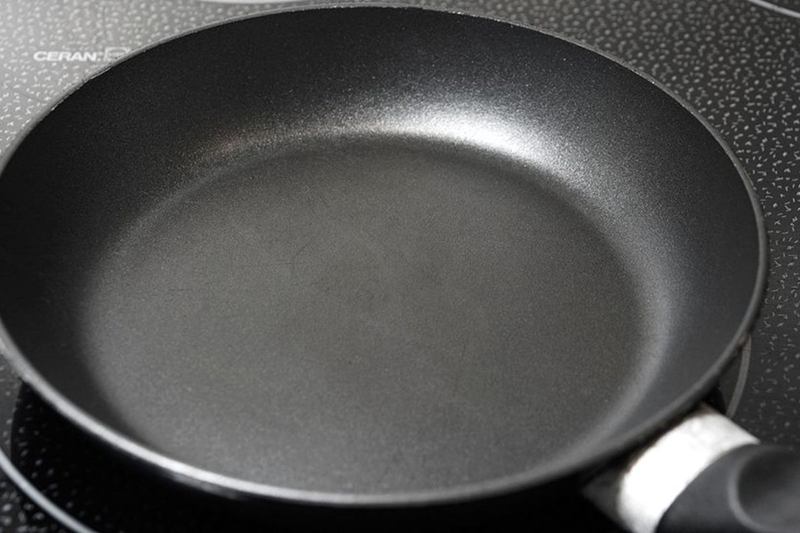
| Non-stick | Dark coating inside | Soft sponges only |
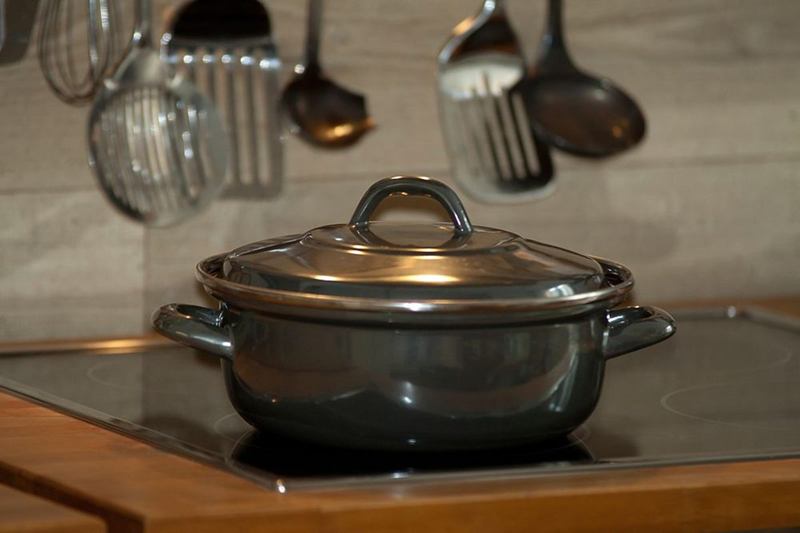
| Enamel | Coloured, glossy coating | No metal tools, avoid thermal shock |
| Aluminium (uncoated) | Light, matt silver | Baking soda can darken it |
Before anything else: let the pan cool down. Pouring cold water into a hot pan can warp it or crack enamel.
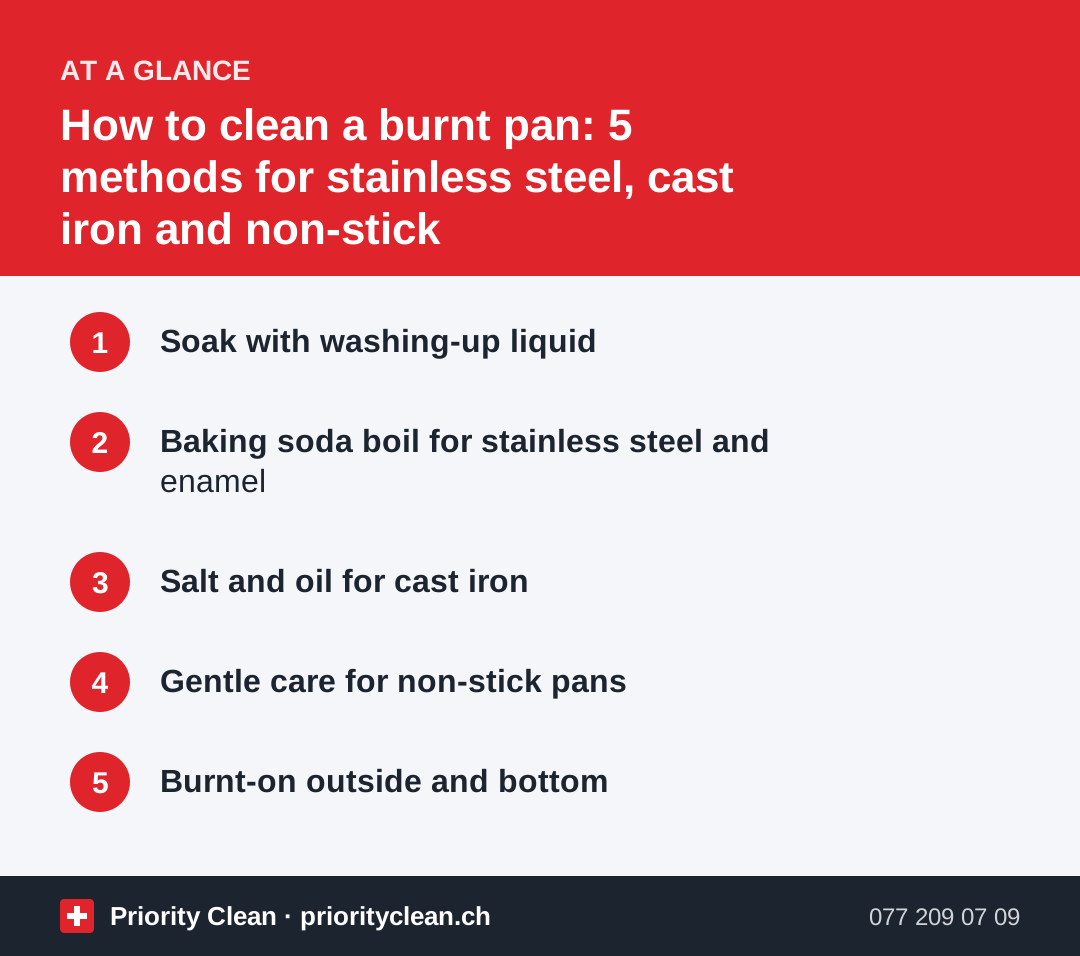
1. Soak with washing-up liquid
This is the first step for every material except cast iron and carbon steel.
- Let the pan cool until it's warm, not hot.
- Fill with warm water and a good squirt of washing-up liquid, enough to cover the burnt area.
- Leave for 30 minutes to a few hours.
- Loosen the softened residue with a wooden or silicone spatula.
- Wash as usual with a soft sponge.
Often, that's all it takes for light burns.
2. Baking soda boil for stainless steel and enamel
For thicker crusts on stainless steel or enamel pans.
- Cover the burnt area with water.
- Add 2–3 tablespoons of baking soda.
- Bring to the boil and simmer gently for about 10 minutes. Stay in the kitchen.
- Switch off, let it cool slightly, then scrape with a wooden spatula.
- For remaining spots, make a paste of baking soda and a little water, rub with a soft sponge and rinse.
Consumer advocates list baking soda among the household remedies that replace many special cleaning products.
3. Salt and oil for cast iron
Cast iron is robust but doesn't like water or detergent for long.
- While the pan is still warm (not hot), pour in a generous handful of coarse salt.
- Add a splash of cooking oil.
- Scrub with a folded kitchen towel or a stiff brush – the salt acts as a gentle abrasive.
- Tip out the salt and rinse briefly with hot water.
- Dry immediately and thoroughly, ideally on the hob over low heat.
- Rub in a thin layer of oil.
If the seasoning is damaged or the pan shows rust, re-season it: clean, dry, oil very thinly and heat in the oven or on the hob according to the manufacturer's instructions. Rust spots can be treated as described in our guide on removing rust.
4. Gentle care for non-stick pans
The coating is the pan's value – protect it.
- Let the pan cool completely.
- Fill with warm water and washing-up liquid and soak for an hour or longer.
- Wipe out with a soft sponge or cloth.
- For stubborn residue, gently heat water in the pan (don't boil it dry), then wipe again.
- If needed, use a soft paste of baking soda and water – very gently and without pressure.
Never use steel wool, scouring pads, scouring powder or metal utensils. If the coating is scratched or peeling, it's time for a new pan.
5. Burnt-on outside and bottom
The outside and base of pans get brown, greasy stains over time.
- Stainless steel: Apply baking soda paste, leave for 15–20 minutes, rub with a soft sponge and rinse.
- Enamel: Baking soda paste and a soft sponge; no abrasive pads.
- Non-stick outside: Warm soapy water and a soft sponge only.
- Aluminium: Washing-up liquid and a soft sponge; a little diluted vinegar for discolouration – rinse well.
Common mistakes with a burnt pan
- Steel wool on non-stick or polished steel: Leaves deep scratches.
- Cold water in a hot pan: Can warp the base or crack enamel.
- Soaking cast iron overnight: Causes rust.
- Boiling out and walking away: Water evaporates and the pan burns again – or worse.
- Dishwasher for everything: Cast iron, some non-stick pans and wooden handles aren't dishwasher-safe.
Stainless steel appliances need similar care – see our guide on cleaning stainless steel.
Frequently asked questions
How do you clean a badly burnt pan?
For stainless steel or enamel, cover the burnt area with water, add baking soda and simmer for about 10 minutes, then scrape with a wooden spatula. For non-stick, soak and use soft sponges only.
Can I use baking soda on a non-stick pan?
Yes, as a gentle paste with water and without pressure, after soaking. Avoid scouring powder and abrasive pads, which damage the coating.
How do I clean a burnt cast iron pan?
Scrub with coarse salt and a little oil, rinse briefly with hot water, dry immediately and oil lightly. Re-season the pan if the coating is damaged.
Should I throw away a burnt non-stick pan?
If the coating is scratched, flaking or peeling, it's generally time to replace the pan. If only food residue is burnt on, soaking and gentle cleaning usually work.
Thanks for your feedback! Feel free to share the guide.
Thanks! What was missing? Drop us a line – we will improve the guide. WhatsApp