Autumn is when many of us put the garden tools away, bring the bike into the cellar and notice the orange spots that summer rain has left behind. Knowing how to remove rust with what is already in your kitchen cupboard saves you a trip to the DIY store – as long as you match the method to the material. Acids that work wonders on steel can permanently damage natural stone or cement. Here are five methods we trust, and when to leave rust alone.
Why rust forms – and why it spreads
Rust is iron oxide. It appears when iron or steel is exposed to water and oxygen, and salt speeds it up. That is why road salt in winter, damp cellars and tools left outside are classic rust sources.
Rust is porous and holds moisture, so it keeps eating into the metal once it has started. Removing it early and drying and protecting the surface afterwards is more effective than dealing with deep corrosion later. Rust stains on tiles, stone or textiles are a different matter: here the rust has been transferred from a metal object, and the challenge is protecting the surface.
Which method for which surface?
| Surface | Suitable methods | Avoid |
|---|---|---|
| Steel tools, screws | Citric acid, vinegar soak, then oil | Leaving them wet afterwards |
| Chrome (bike, taps) | Aluminium foil and water, mild soap | Steel wool, strong acids |
| Stainless steel sinks | Baking soda paste | Scouring pads, chlorine |
| Glazed ceramic tiles | Citric acid solution briefly, rinse well | Long soaking on cement grout |
| Marble, limestone, concrete | pH-neutral cleaner, specialist advice | Any acids |
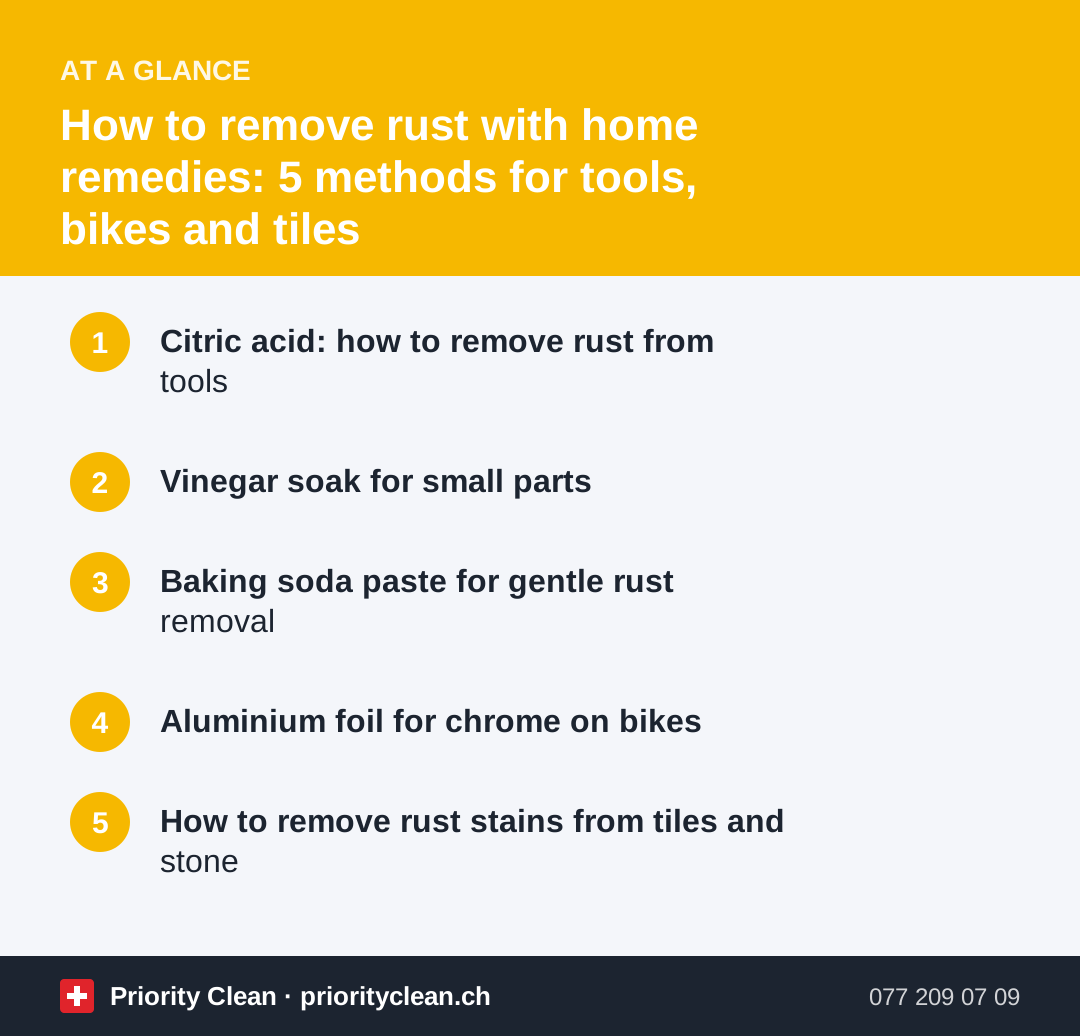
1. Citric acid: how to remove rust from tools
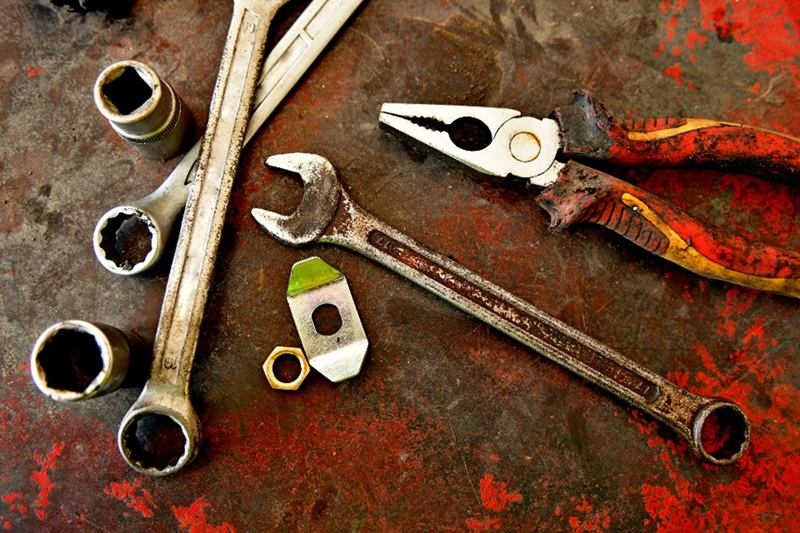
Citric acid powder is our first choice for rusty steel tools because it works well and does not smell.
- Dissolve 2–3 tablespoons of citric acid in about a litre of lukewarm water in a plastic tub.
- Put the rusty tools in so the rust is fully covered.
- Leave them for a few hours, checking in between; heavier rust may need longer.
- Scrub off loosened rust with an old brush or a plastic scouring pad.
- Rinse, dry thoroughly and apply a thin film of oil to prevent new rust.
Do not leave tools in the solution for days: bare steel can darken and become rough.
2. Vinegar soak for small parts
Household vinegar works in a similar way and is handy for screws, nuts and small hand tools.
- Place the parts in a glass jar and cover them with vinegar.
- Leave overnight, then brush off the rust.
- Rinse with water, dry immediately and oil lightly.
Keep vinegar and citric acid away from rubber and plastic handles where possible, and never combine acids with chlorine-based products.
3. Baking soda paste for gentle rust removal
Baking soda (bicarbonate of soda, sold as Natron in Swiss shops) does not dissolve rust chemically like an acid, but it works as a mild abrasive. That makes it suitable for sinks, painted metal and objects where acids would be too harsh.
- Mix baking soda with a little water to a thick paste.
- Spread it over the rust spot and leave it for about 30 minutes.
- Rub with a soft brush or sponge in small circles.
- Rinse and dry.
On stainless steel, rub in the direction of the grain to avoid visible marks.
4. Aluminium foil for chrome on bikes
Chrome-plated handlebars, rims or old bike bells often show small rust spots. Here, a crumpled ball of aluminium foil dipped in water acts as a very fine polishing tool.
- Clean the part with soapy water first and dry it.
- Dip crumpled foil in water and rub the rust spots gently.
- Wipe off the grey residue with a cloth and dry thoroughly.
- Protect with a little oil or wax.
This works on light surface rust on real chrome. If the chrome is flaking, the rust is underneath, and only a specialist or replacement will help.
5. How to remove rust stains from tiles and stone
Rust rings from plant pots, garden furniture or metal tins on balcony and bathroom tiles need extra care.
- Glazed ceramic tiles: Apply a citric acid solution briefly, rub with a soft brush and rinse thoroughly with plenty of water. Keep contact with cement grout short.
- Natural stone and concrete: Acids etch calcareous surfaces such as marble, limestone and many concrete slabs, leaving dull patches. Use only products specifically labelled as suitable for the stone, and ask a specialist if in doubt.
- Always test first on a hidden spot and rinse well.
Commercial rust removers can be very effective, but they often contain strong acids. Read the label, wear gloves and keep them in their original packaging – Tox Info Suisse recommends this to prevent poisoning at home.
Common mistakes when removing rust
- Steel wool on chrome or stainless steel: Leaves scratches and can deposit particles that rust again.
- Acid on natural stone: Causes permanent dull marks.
- Not drying and protecting afterwards: Bare metal rusts again within days.
- Soaking too long: Can roughen and darken steel.
- Storing products in drinks bottles: A serious poisoning risk, especially with children in the home. Store them high and locked, as cheminfo.ch recommends.
Now you know how to remove rust from the most common household items. For taps and shower walls, the problem is usually limescale rather than rust – our guide on removing limescale in the shower covers that. Stainless steel appliances have their own rules, explained in our article on cleaning stainless steel.
Frequently asked questions
What is the best home remedy to remove rust?
For steel tools, citric acid dissolved in water is very effective and odour-free. For delicate or painted surfaces, a baking soda paste is gentler. Always dry and oil metal afterwards.
How do I remove rust stains from tiles?
On glazed ceramic tiles, apply a citric acid solution briefly, brush gently and rinse thoroughly. On natural stone or concrete, avoid acids and use a product labelled for that stone, testing on a hidden spot first.
Does vinegar remove rust?
Yes, household vinegar dissolves light rust on small steel parts when they soak for several hours or overnight. Rinse, dry and oil the parts afterwards so they do not rust again.
Can I use aluminium foil to remove rust from a bike?
On chrome-plated parts with light surface rust, crumpled aluminium foil dipped in water works well as a gentle polish. It is not suitable for painted frames or for deep rust.
Thanks for your feedback! Feel free to share the guide.
Thanks! What was missing? Drop us a line – we will improve the guide. WhatsApp