Many expats are surprised when they learn that paying someone privately to clean for a few hours a week makes them an employer under Swiss law. Hiring a cleaning lady in Switzerland is common and perfectly legal – but it comes with obligations that do not depend on how small the job is. This guide explains the five duties in plain English. It is general information, not legal or tax advice: the authorities linked below and your cantonal compensation office have the final word.
When a cleaning lady in Switzerland makes you an employer
If you pay a person directly to clean your home regularly – whether weekly or monthly, by the hour or with a fixed amount – you are usually their employer. It does not matter whether the cleaner also works for other households or calls themselves self-employed. Genuine self-employment is recognised by the compensation office only in specific cases.
The situation is different if you book a cleaning company. Then the company employs, insures and pays its staff, and you simply pay an invoice.
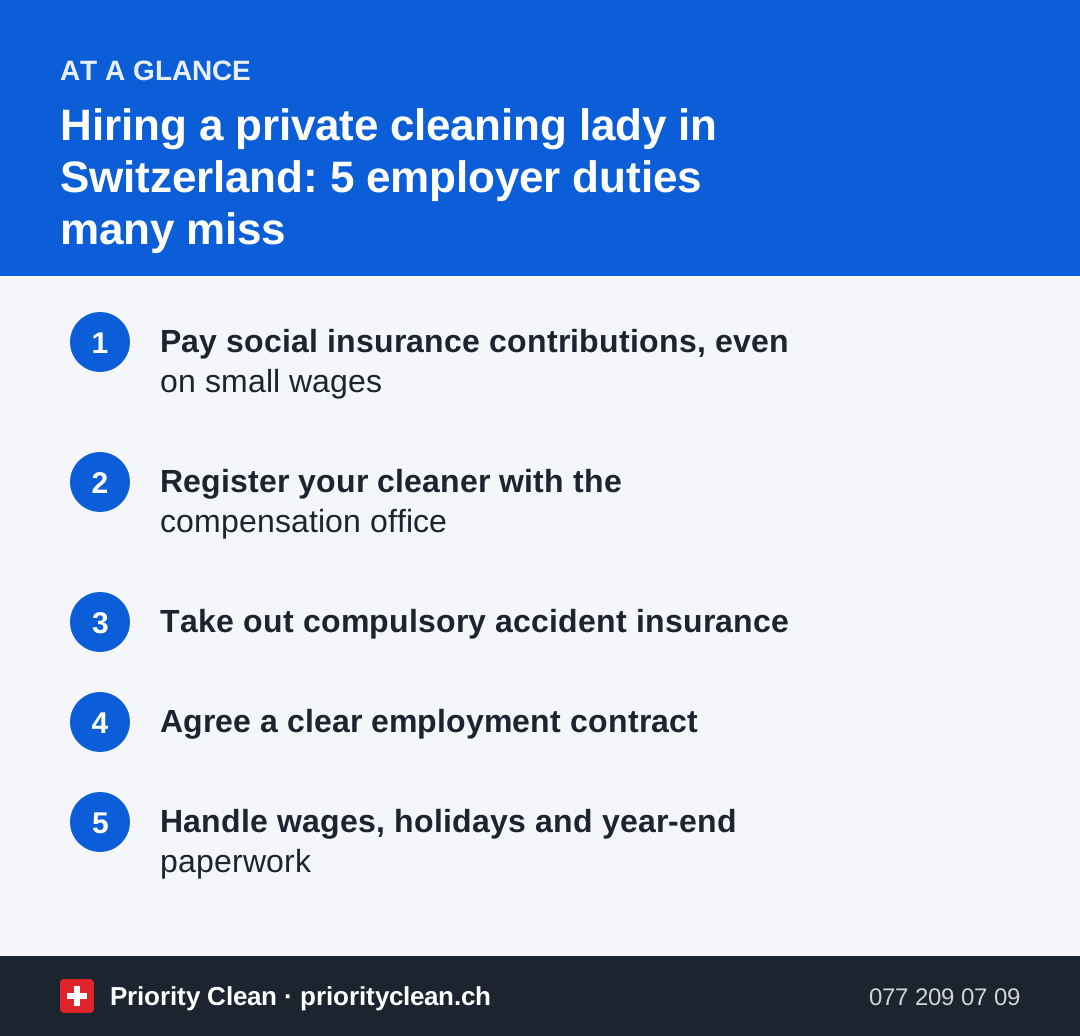
1. Pay social insurance contributions, even on small wages
Household work is treated strictly in Switzerland. According to the AHV/IV leaflet on contributions for domestic work, social insurance contributions (old age and survivors' insurance, disability insurance, income compensation and unemployment insurance) are generally owed even on very small wages. There is only a narrow exemption for young people up to 25, and the leaflet sets out the exact conditions.
In practice this means:
- You deduct the employee's share from the gross wage.
- You add the employer's share.
- You pay both to the compensation office.
Not paying contributions is not a harmless shortcut. It can leave your cleaner without pension and insurance cover and can lead to back payments.
2. Register your cleaner with the compensation office
As a private employer, you register with the compensation office of your canton (or its local branch, often at the commune). Many cantons offer a simplified settlement procedure for small wages, where contributions and taxes are handled together. It is designed precisely for households employing a cleaner or babysitter.
SECO's step-by-step guide to registering employment shows the process for private households, from registration to wage statements, and links to model contracts for domestic workers.
3. Take out compulsory accident insurance
Anyone employed in Switzerland must be insured against occupational accidents – including a cleaning lady who works a few hours in your home. A slip on a wet floor or a fall from a step ladder is a real risk.
Important for expats who know the name Suva: Suva does not insure private household staff. You need a policy with a licensed private accident insurer. Many insurers offer policies designed specifically for household employees. The AHV/IV leaflet points this out explicitly.
4. Agree a clear employment contract
A written contract is not always legally required, but it prevents misunderstandings. It should cover:
| Topic | What to agree |
|---|---|
| Working time | Days, hours, flexibility, notice for changes |
| Wage | Hourly or monthly wage, gross amount, payment date |
| Holidays | Holiday entitlement and how it is paid |
| Absence | What happens if you cancel or your cleaner is ill |
| Tasks | Scope of cleaning, ironing, windows |
| Keys and trust | Handling keys, privacy, damage |
| Termination | Notice periods |
Minimum wages for household workers also apply in many situations, set by federal and in some cases cantonal standard employment contracts. SECO provides model contracts for hourly and monthly wages that take these rules into account.
5. Handle wages, holidays and year-end paperwork
Being an employer continues after the first payment:
- Holiday pay: Employees are entitled to paid holiday. For irregular hourly work, holiday pay is often added as a percentage to the hourly wage – this must be shown separately.
- Sick pay: Depending on the length of employment, employers must continue paying wages for a limited time.
- Wage statement: At the end of the year, your cleaner needs a salary certificate for their tax return. In the simplified procedure, the compensation office can help.
- Records: Keep payslips and hours worked.
The alternative: a cleaning company
For many busy households, the administrative side is what tips the balance. When you book a cleaning company, the company is the employer: it pays contributions, insures its staff, organises replacements during holidays or illness and provides products and equipment. You receive a clear invoice.
Neither option is right for everyone. A private cleaner can suit you well if you are happy to handle the paperwork. If you want to compare, our guide on what drives cleaning company cost explains the price factors, and our comparison of private cleaner versus cleaning company goes into more detail.
Common mistakes when employing a cleaner privately
- Paying cash without registering: Leaves your cleaner uninsured and exposes you to back payments.
- Assuming Suva covers household staff: It does not – you need a private accident insurer.
- Believing small wages are exempt: Contributions are due on small household wages too, apart from narrow exceptions.
- No written agreement: Leads to disputes over cancelled visits, holidays and notice.
- Forgetting the salary certificate: Your cleaner needs it for their tax return.
Frequently asked questions
Do I have to register my cleaning lady in Switzerland?
In most cases, yes. If you employ a cleaner privately, you register with the cantonal compensation office and pay social insurance contributions, even on small wages. Many cantons offer a simplified procedure for household employers.
Does Suva insure private cleaners?
No. Suva does not cover private household staff. You must take out accident insurance for your cleaner with a licensed private insurer.
Can my cleaner work as self-employed instead?
Only if the compensation office recognises genuine self-employment, which is rarely the case for someone cleaning private households regularly. Check with the compensation office before relying on it.
Is it easier to hire a cleaning company?
Administratively, yes: the company employs and insures its staff and handles contributions and replacements. You pay an invoice and are not an employer yourself.
Thanks for your feedback! Feel free to share the guide.
Thanks! What was missing? Drop us a line – we will improve the guide. WhatsApp