This weekend brings an extra hour: in Switzerland, as across most of Europe, the clocks go back on Sunday, 25 October 2026. At 3:00 in the morning, clocks are set back to 2:00, and summer time ends. From now on it gets dark early, the heating runs more often and we spend more time indoors.
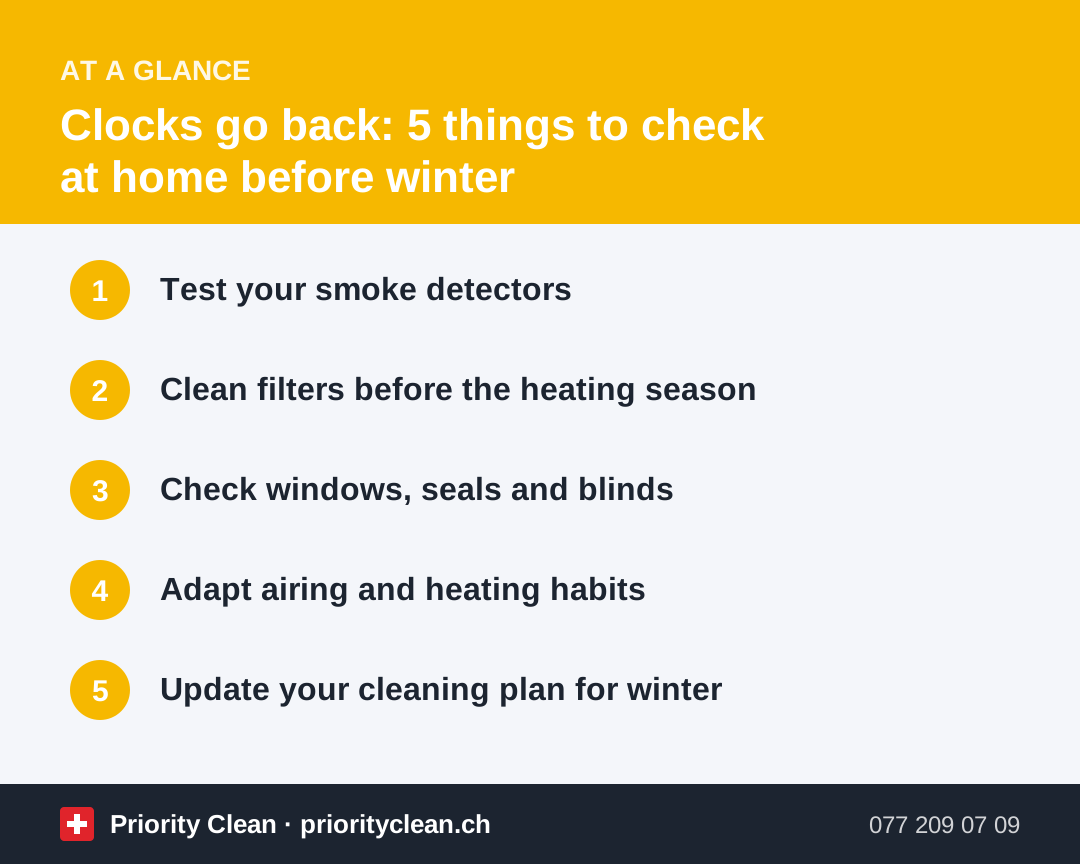
That makes the changeover a good reminder – a bit like changing the batteries in the smoke detector on a fixed date. Here are five things worth checking at home now.
When the clocks go back: what to change yourself
Phones, computers and most radio-controlled clocks switch automatically. The following usually need a manual update:
- Oven, microwave and cooker clocks.
- Car clock.
- Heating and hot water timers.
- Timer switches for lights, blinds or aquarium.
- Coffee machines and dishwashers with delay start.
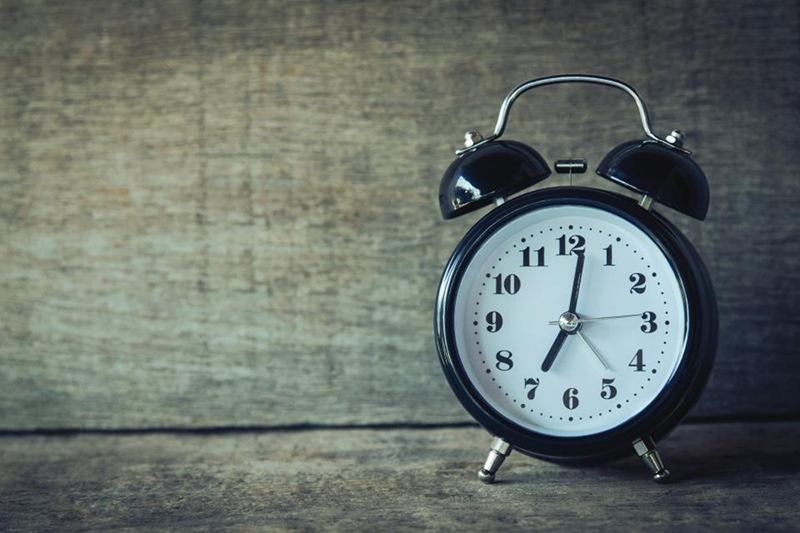
- Older alarm clocks and wall clocks.
Check the heating and blind timers in particular – otherwise the flat heats up or the blinds go down an hour too late for several months.
The changeover can also affect your routine: if a cleaner, a caretaker or a laundry room slot is booked for early morning, it will suddenly feel lighter or darker than before. It's worth a quick look at your weekly calendar, too.
1. Test your smoke detectors
The darker season is also the season of candles, advent wreaths and more cooking. The Swiss Council for Accident Prevention recommends never leaving candles unattended and equipping the home with smoke detectors, a fire extinguisher and a fire blanket.
- Press the test button on each smoke detector – you should hear a loud signal.
- Replace batteries if the device beeps intermittently or doesn't respond, following the manufacturer's instructions.
- Gently vacuum or wipe dust from the openings – dust can cause false alarms.
- Check the expiry date on the device; many need to be replaced after a certain number of years.
- In rented flats, ask the property management who is responsible for detectors they installed.
2. Clean filters before the heating season
Filters work hard in winter, when windows stay closed longer.
- Extractor hood: Degrease the metal grease filters; replace carbon filters as the manufacturer recommends. Our guide on cleaning extractor hood filters shows how.
- Ventilation systems: In newer flats with controlled ventilation, filters are often changed by the property management – ask if you're unsure.
- Tumble dryer: Clean the lint filter after every use and the heat exchanger as instructed.
- Vacuum cleaner: Empty the bin, clean or replace filters.
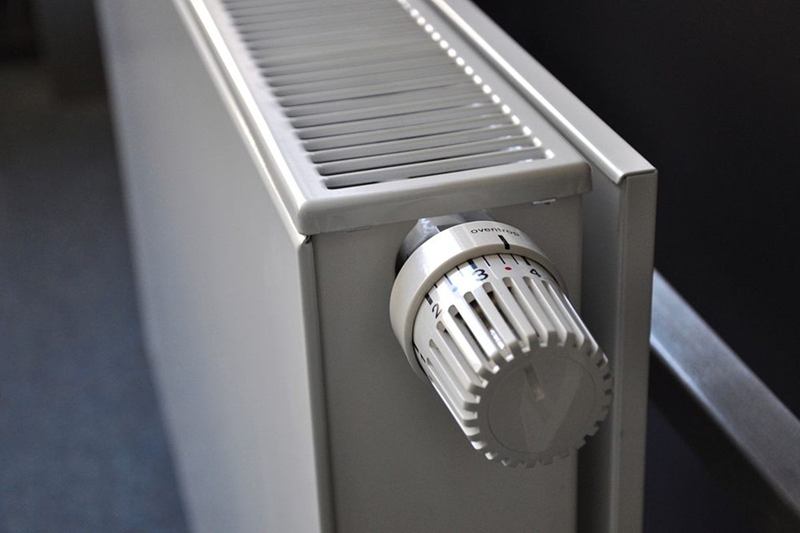
- Radiators: Dust between the fins before switching on – dust burning on the radiator smells and swirls around.
3. Check windows, seals and blinds
Now is the last comfortable moment to deal with windows before it gets cold.
- Clean windows inside and out while temperatures are mild – cleaning in frost is difficult.
- Check window seals for cracks or black spots; wipe seals with warm soapy water.
- Clean blinds and shutters so they run smoothly through winter.
- Check whether windows close tightly – draughts cost heating energy. Report defects to your landlord.
- Clear the balcony drain of leaves.
4. Adapt airing and heating habits
With the heating on, the rules for airing change. EnergieSchweiz recommends airing three times a day for 5–10 minutes with the windows fully open instead of leaving them tilted. The Federal Office of Public Health also explains in its advice on airing and heating correctly why short, wide-open airing is the basis for good indoor air and helps against damp.
- Turn down radiator valves while airing.
- Keep radiators free of furniture and long curtains.
- Air bathrooms and kitchens right after showering or cooking.
More details follow in our guide on how to ventilate in winter.
5. Update your cleaning plan for winter
Winter brings different dirt: wet shoes, road salt, grit and dust from dry heated air.
Common mistakes around the clock change
- Forgetting the heating timer: The flat is cold in the morning or heated for nothing.
- Leaving windows tilted all day: Cools walls and wastes energy.
- Postponing window cleaning until spring: Winter light shows every streak.
- Ignoring beeping smoke detectors: A weak battery can mean no alarm when it matters.
- Switching on dusty radiators: Burnt dust smells and spreads.
Frequently asked questions
When do the clocks go back in Switzerland in 2026?
On Sunday, 25 October 2026. At 3:00 in the morning, clocks are set back one hour to 2:00, and winter time (standard time) begins.
Do I get an extra hour of sleep when the clocks go back?
Yes, the night from Saturday to Sunday is one hour longer. Many people use the extra hour for small household tasks such as testing smoke detectors.
Which clocks don't change automatically?
Usually oven, microwave and car clocks, heating and blind timers, and older alarm clocks. Phones and computers generally switch automatically.
What should I check at home before winter?
Test smoke detectors, clean extractor hood filters and radiators, check windows, seals and blinds, and adapt your airing habits to the heating season.
Thanks for your feedback! Feel free to share the guide.
Thanks! What was missing? Drop us a line – we will improve the guide. WhatsApp