A cappuccino in the morning, a latte for your mid-morning break – and then the frother often goes back on the counter without a rinse. If you want to clean a milk frother with minimal effort, do it straight away: fresh milk comes off with a little warm water, while dried-on milk turns into a stubborn film that smells and makes the foam worse.
Whether it is an electric jug with a whisk, a battery-powered handheld frother or the steam wand on your coffee machine, five simple steps keep it clean, fresh and frothing properly again.
Why you should clean a milk frother after every use
Milk is an ideal breeding ground for germs: it contains protein, fat and lactose. If residue sits at room temperature in the jug or wand, germs multiply quickly and a sour smell soon follows. The Swiss Federal Food Safety and Veterinary Office (FSVO/BLV) points out that germs spread via utensils and cloths and recommends cleaning worktops and utensils with hot water and washing-up liquid after each step. The same goes for your frother.
Heating also leaves a thin film of milk protein and fat on the base and sides. Once it dries and limescale from the water joins it, milk stone gradually forms: a rough, yellowish-white deposit that washing-up liquid alone can hardly shift.
| Sign | Likely cause |
|---|---|
| Sour smell from the jug | Milk residue in the seal, lid or under the whisk |
| Brown film on the bottom | Scorched milk, jug cleaned too late |
| Rough, whitish deposit | Milk stone and limescale |
| Flat foam, weak hiss from the wand | Grease on the whisk, dried milk in the wand |
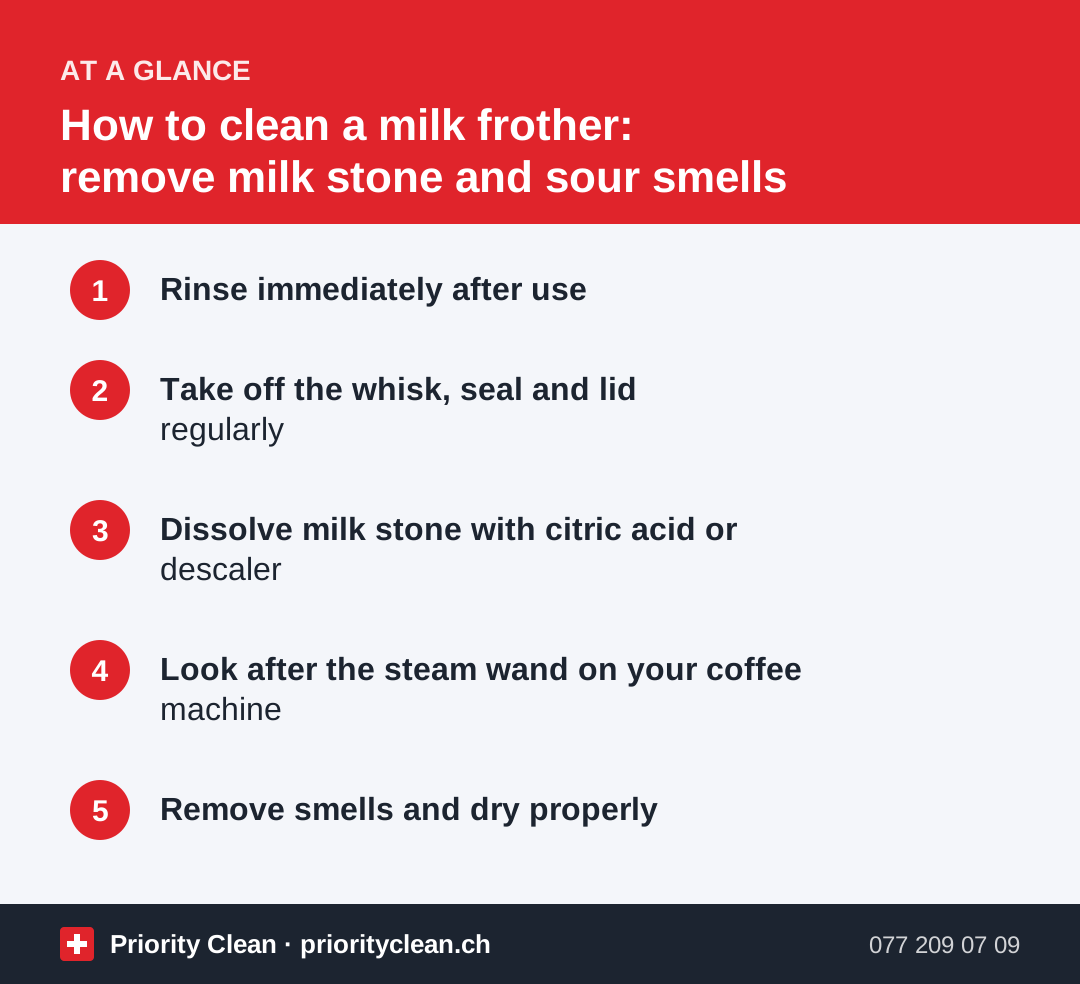
1. Rinse immediately after use
The most important step takes a minute: pour out the milk as soon as it is frothed and fill the jug with lukewarm water. Swirl, empty, done – nothing gets a chance to dry on.
- Electric jug: lift the jug off the base before adding water. Many models have a non-stick coating, so use a soft sponge and a little washing-up liquid, never the scouring side.
- Handheld frother: run the whisk for a few seconds in a glass of warm water with a drop of washing-up liquid, then rinse it in clean water. Keep the battery compartment dry.
- Manual plunger jug: pull out the plunger and wash the mesh and jug with washing-up liquid.
2. Take off the whisk, seal and lid regularly
Most smells do not come from the jug itself but from places a quick rinse does not reach:
- Whisk or coil: on induction models it usually just sits on a pin and pulls off easily. Clean the coil with a soft brush.
- Lid seal: ease off the rubber seal, wash it and let it dry completely before you put it back.
- Lid: milk vapour condenses here. Wash it in warm soapy water; the manual tells you whether it is dishwasher-safe.
Plan this clean once a week, more often if you use the frother daily. Let all parts air-dry and only reassemble the appliance afterwards.
3. Dissolve milk stone with citric acid or descaler
Once a rough deposit has formed, acid helps: it dissolves the mineral part of milk stone and limescale. Citric acid from the chemist's works well, as does a milk-system cleaner or descaler recommended by the manufacturer of your appliance.
- Unplug, empty the jug and wash off loose residue with washing-up liquid.
- Dissolve citric acid as directed on the pack in warm, not boiling, water and fill up to the mark.
- Leave it for about half an hour, not overnight – over time acid can attack coatings and seals.
- Loosen the deposit with a soft sponge and rinse thoroughly with clean water.
- Fill with water once more and empty it so no sour taste remains.
How often you need to do this also depends on your tap water. In Switzerland water hardness varies from one municipality to the next; on the Swiss gas and water association's platform you can look up the water hardness by postcode. Hard water means deposits build up faster. When to use vinegar and when citric acid is explained in our guide Descaling with citric acid or vinegar.
4. Look after the steam wand on your coffee machine
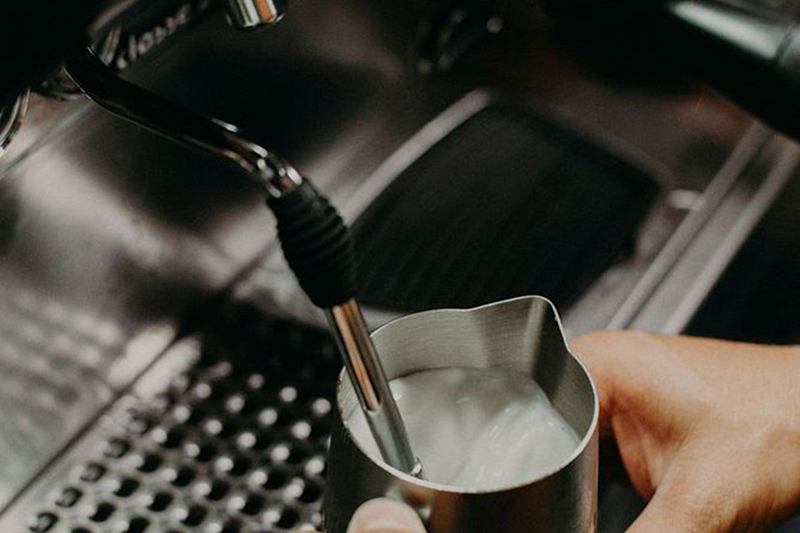
On portafilter espresso machines and some bean-to-cup machines, a steam wand froths the milk directly in the pitcher. Milk dries on especially fast here because the wand is hot.
- After every use: wipe the wand straight away with a damp cloth and release a short burst of steam to blow milk out of the tip. Beware of scalding: use a cloth and point the wand into a container or over the drip tray.
- Daily: unscrew the removable tip or frothing sleeve and wash it in warm soapy water. Clear the tiny holes with the needle tool supplied.
- Automatic milk systems: many bean-to-cup machines have a cleaning programme for the milk tube. Run it as often as the machine asks, using the recommended milk-system cleaner.
Caring for the whole machine is covered in our guides Cleaning a bean-to-cup coffee machine and Descaling a coffee machine.
5. Remove smells and dry properly
If the frother still smells sour after cleaning, the odour is usually trapped in the seal or lid. Here is how to get rid of it:
- Remove the seal and whisk and soak them in hot water with washing-up liquid.
- Fill the jug with water and citric acid or, alternatively, a little bicarbonate of soda, leave it to work and rinse. Do not use both together – acid and bicarbonate cancel each other out.
- Let all parts dry separately in the open air before reassembling the appliance.
If the smell persists, the seal has often hardened or cracked – many manufacturers sell replacements as accessories.
The most common mistakes
- Leaving milk in the jug: milk dries on quickly – afterwards you need acid and patience.
- Scouring pad on the coating: scratches make milk stick even more next time.
- Putting the whole frother in the dishwasher: electronics and contacts can be damaged.
- Leaving descaler in overnight: acid can attack coatings and seals.
Frequently asked questions
How often should you clean a milk frother?
Give it a quick rinse with warm water after every use and wash the whisk, seal and lid thoroughly once a week. Remove milk stone as soon as a rough deposit appears – more often if your water is hard.
Can a milk frother go in the dishwasher?
It depends on the model. Never the base, battery-powered frothers or jugs with built-in electronics; sometimes the whisk, seal or lid. The manual is what counts.
What removes milk stone?
An acidic product: citric acid in warm water or the manufacturer's milk-system cleaner or descaler. Leave it to work, loosen the deposit with a soft sponge and rinse carefully.
Why does my milk frother no longer make good foam?
Often grease on the whisk or a partly blocked steam wand is to blame. Clean the whisk and wand thoroughly and check that the whisk is seated correctly.
Thanks for your feedback! Feel free to share the guide.
Thanks! What was missing? Drop us a line – we will improve the guide. WhatsApp