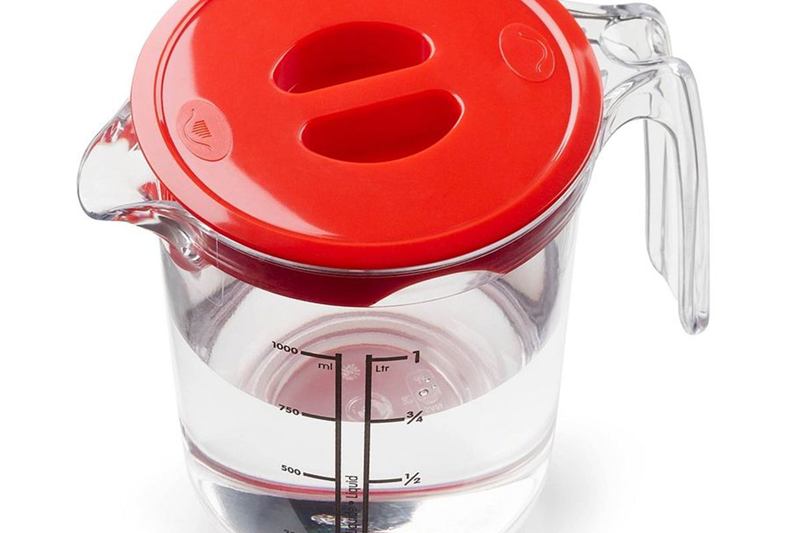
Softer water for tea and coffee, less limescale in the kettle: that is why many kitchens have a filter jug. But while people usually keep an eye on the cartridge, the jug itself is often forgotten. If you want to clean a water filter jug properly, plan on about once a week – otherwise deposits build up in the jug, funnel and lid, and the water starts to taste stale.
Looking after it is simple, but there are a few catches: the lid often contains electronics, and the cartridge must never come into contact with washing-up liquid. Five steps show you how to get it right.
Why you should clean a water filter jug regularly
Swiss tap water is a strictly monitored foodstuff. A filter jug is therefore mainly a matter of convenience: it reduces limescale and can change the taste. To find out how hard your water is, use the Swiss gas and water association's platform to look up the water hardness for your municipality by postcode. Where the water is soft, a filter jug brings little benefit.
Problems start when the jug itself gets dirty. Water standing at room temperature, moisture in the lid and light create good conditions for germs and algae. The Swiss Federal Food Safety and Veterinary Office (FSVO/BLV) points out that germs spread via utensils and cloths and recommends cleaning utensils with hot water and washing-up liquid. For the jug, the rule is warm water and a mild product, so the plastic and electronics are not damaged.
| Sign | Likely cause |
|---|---|
| Slippery film in the jug or funnel | Biofilm, not cleaned often enough |
| Greenish deposit | Algae caused by light, jug standing in the sun |
| White flakes or rings | Limescale, cartridge exhausted |
| Stale taste | Water left standing too long or cartridge overdue |
| Tiny black particles | Often activated carbon from a new cartridge |
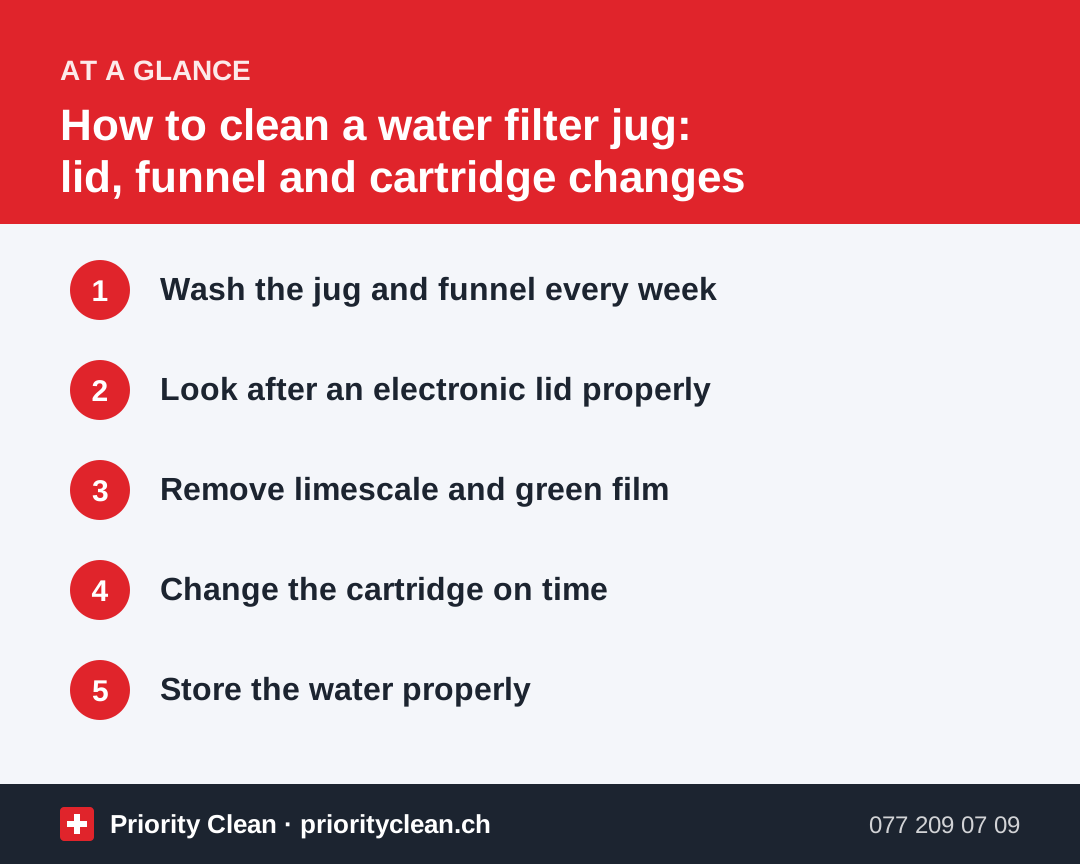
1. Wash the jug and funnel every week
Here is how to do the weekly clean:
- Empty the jug, take off the lid and lift out the funnel with the cartridge.
- Unscrew the cartridge and stand it in a clean glass of already treated water so it does not dry out.
- Wash the jug and funnel with warm water, a drop of mild washing-up liquid and a soft sponge. Use a small brush for corners and the handle.
- Rinse thoroughly with clean water until there is no foam left.
- Let everything air-dry or dry it with a clean cloth, then put the cartridge back.
Many manufacturers allow the jug and funnel to go in the dishwasher, often with a temperature limit – read the manual before you do. Scouring powder and abrasive sponges are off-limits: they roughen the plastic, and deposits cling to scratches more quickly.
2. Look after an electronic lid properly
Many jugs have a battery-powered change indicator in the lid. It is the most delicate part of the whole jug:
- Never in the dishwasher, never under running water. Moisture can destroy the electronics.
- Wipe the lid inside and out with a well wrung-out damp cloth and a little soapy water.
- Open the refill flap and clean the edges with a cotton bud – moisture and dust collect there.
- After changing the cartridge, reset the indicator as described in the manual.
Lids without electronics can go in the dishwasher, depending on the manufacturer.
3. Remove limescale and green film
White limescale rings in the jug and funnel come off with acid. The Swiss consumer protection foundation (Stiftung für Konsumentenschutz) recommends simple household remedies such as vinegar, citric acid and bicarbonate instead of lots of special cleaners. For the jug, citric acid is the best choice because it has no smell:
- Remove the cartridge and set it aside.
- Dissolve citric acid in warm water as directed on the pack and fill the jug and funnel.
- Leave for about half an hour, wipe again with the sponge and rinse thoroughly.
A greenish film points to algae, which grow in the light. Clean the jug as described above and keep it somewhere darker from now on. Citric acid works for the kettle too – see our guide Descaling a kettle.
4. Change the cartridge on time
An exhausted cartridge hardly works any more and can become a problem itself. Change it as the manufacturer specifies – often after about four weeks or a certain number of litres. With hard water or heavy use, an earlier change can make sense.
- Preparing a new cartridge: soak or rinse it as described in the instructions. Often the first fillings should be poured away or used to water plants.
- After holidays: a cartridge that has been dry or unused for a long time should be rinsed or replaced as the manufacturer advises.
- Disposal: many shops and manufacturers take back used cartridges. Ask in store; otherwise follow the manufacturer's instructions.
5. Store the water properly
Treated water is not bottled mineral water that keeps for ages. To keep it fresh:
- Keep the jug in the fridge or somewhere cool and shady – never on a sunny windowsill or next to the cooker.
- Drink the water the same day if possible, as many manufacturers recommend.
- Do not drink straight from the jug, and keep the lid closed.
- To take water with you, pour it into a clean bottle – see How to clean a water bottle.
The most common mistakes
- Changing the cartridge but never cleaning the jug: the deposit stays and spoils the fresh water.
- Putting the electronic lid in the dishwasher: the electronics will not survive.
- Leaving the jug in the sun: light and warmth encourage algae and germs.
- Using the cartridge long past its change date: it stops working properly.
- Scrubbing with an abrasive sponge: scratches in the plastic become dirt traps.
Frequently asked questions
How often should you clean a water filter jug?
About once a week with warm water and a mild washing-up liquid, and every time you change the cartridge. If a film or green deposit appears, straight away.
Can a water filter jug go in the dishwasher?
The jug and funnel often can, if the manufacturer allows it. The lid with an electronic indicator and the cartridge never. The manual is what counts.
How often does the cartridge need changing?
As often as the manufacturer states – often after about four weeks or a certain number of litres. With hard water or heavy use it may be sooner.
Why is my filter jug turning green?
A green film is usually caused by algae growing in the light. Clean the jug and funnel thoroughly and keep the jug in the fridge or somewhere shady.
Thanks for your feedback! Feel free to share the guide.
Thanks! What was missing? Drop us a line – we will improve the guide. WhatsApp