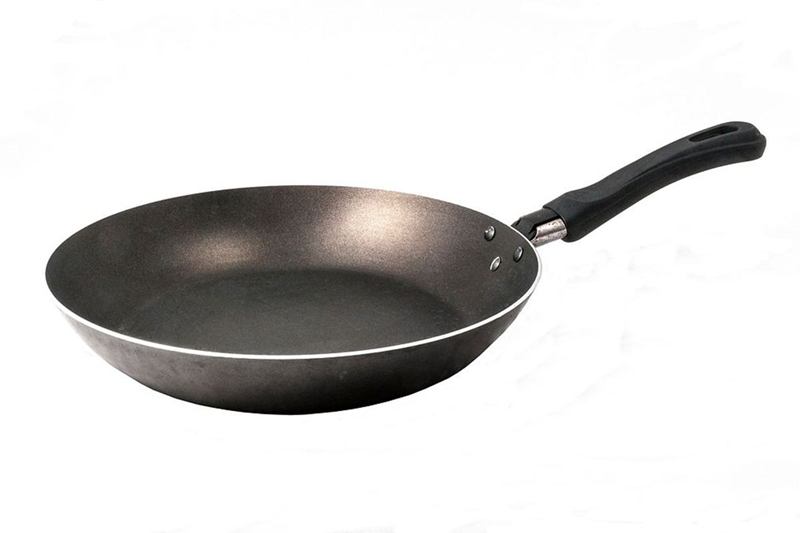
Rösti, fried eggs or an omelette almost cook themselves in a non-stick pan – as long as the coating is intact. But scratches, too much heat and harsh cleaners wear it down faster than you might think. To clean a non-stick pan, you do not need strong products, just the right technique: warm water, a soft sponge and a little patience.
That goes for classic non-stick coatings and ceramic pans alike. Five rules keep the non-stick effect going for a long time – and help you spot in good time when a pan needs replacing.
Why a non-stick pan loses its effect
A non-stick coating is a thin layer on the base of the pan. It wears over time anyway, but some habits speed that up considerably:
- Mechanical damage: metal spatulas, forks, scouring pads and stacked pans leave scratches.
- Too much heat: heated empty on full power, a pan gets very hot – which harms the coating.
- Thermal shock: cold water on a hot pan can warp the base and stress the coating.
- Residue: burnt oil and fat, especially from cooking sprays, form a film that food sticks to again.
- Dishwasher: harsh dishwasher detergent and high temperatures take their toll on many coatings.
| Classic non-stick coating | Ceramic coating | |
|---|---|---|
| Strength | Excellent release at medium heat | Usually tolerates higher temperatures |
| Weak point | Sensitive to overheating and scratches | Loses its effect through fat residue |
| Cleaning | Warm water, mild washing-up liquid, soft sponge | The same, removing all residue carefully |
| Watch out for | Never heat strongly when empty | Avoid cooking sprays and thermal shock |
The exact limits are in your pan's instructions – they take priority over any general rule.
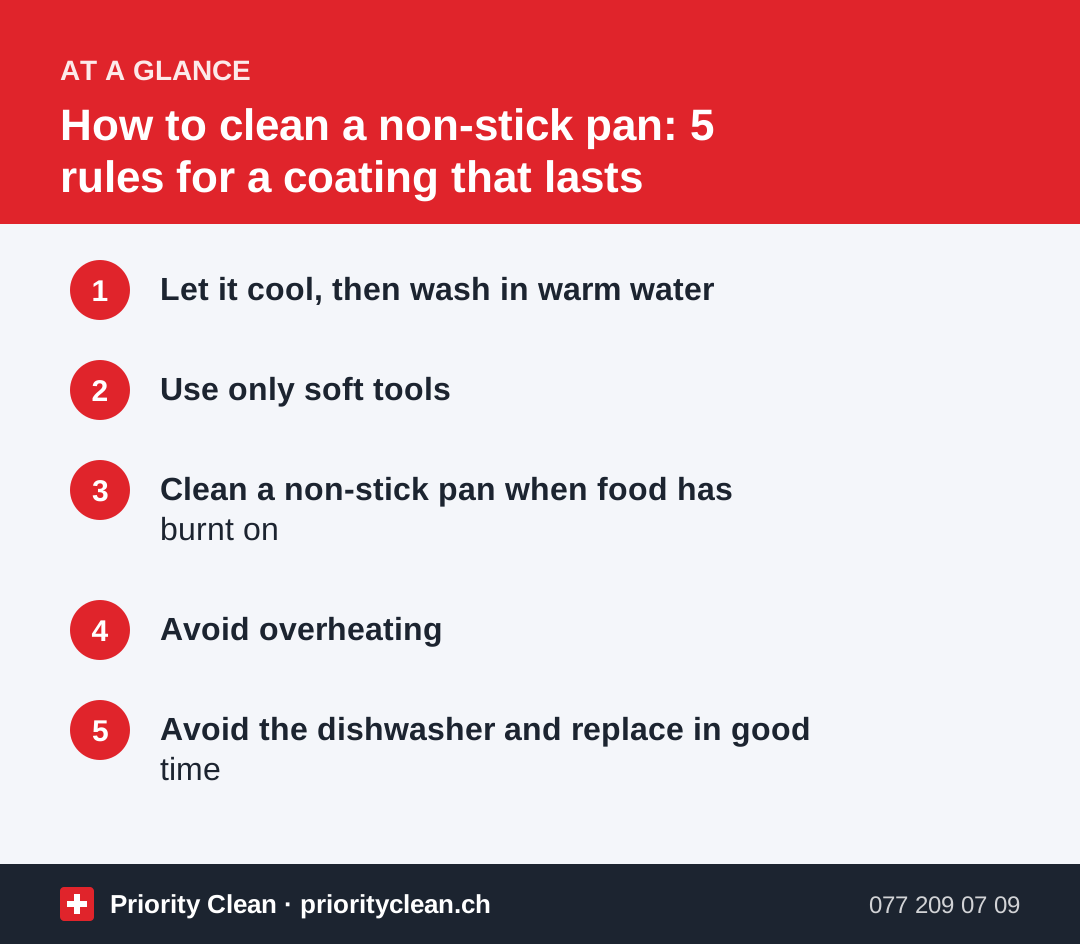
1. Let it cool, then wash in warm water
Good cleaning starts with waiting. After cooking, let the pan cool for a few minutes until it is just warm. Then:
- Wipe out leftover fat with kitchen paper. Larger amounts of oil do not belong down the drain but in the bin or at a used-oil collection point.
- Fill the pan with warm water and a drop of mild washing-up liquid.
- Clean it with a soft sponge or washing-up brush, including the rim and the outside.
- Rinse with clean water and dry straight away.
Usually that is all it takes. A pan cleaned like this after every use never builds up a sticky film in the first place.
2. Use only soft tools
Most damage happens not while washing up but while cooking and putting pans away:
- Utensils: turners and spoons made of wood, silicone or heat-resistant plastic – metal only if the manufacturer expressly allows it.
- Sponge: always the soft side. The green scouring side, steel wool and cream cleaners scratch the coating.
- Cutting: never cut food in the pan, such as an omelette or rösti.
- Storage: when stacking, put a tea towel, kitchen paper or a pan protector between the pans.
3. Clean a non-stick pan when food has burnt on
If something has stuck despite your care, loosen it gently rather than with force:
- Soak: fill the pan with warm water and washing-up liquid and leave it for half an hour. Afterwards, much of the residue wipes off with the soft sponge.
- Bicarbonate: briefly bring water with one or two tablespoons of bicarbonate of soda to the boil in the pan, let it cool and wipe away the loosened residue. For individual spots, a paste of bicarbonate and a little water, rubbed gently with the sponge, works well.
- Rinse: rinse thoroughly with clean water and dry.
More methods for badly burnt pots and pans – including stainless steel – are covered in our guide How to clean a burnt pan. For everything about bicarbonate in the home, see Cleaning with baking soda.
4. Avoid overheating
For most dishes, medium heat is enough in a non-stick pan. Add fat or food before the pan gets really hot and never preheat it empty on full power – on induction it heats up particularly quickly.
Overheating is also a fire risk. The Swiss fire prevention advice centre (BFB) recommends never leaving a hot hob unattended and never putting out burning fat with water. If oil catches fire, switch off the hob and smother the flames with a suitable lid or a fire blanket.
If a pan has badly overheated and the coating is discoloured or rough, air the kitchen well and check whether the pan is still usable.
5. Avoid the dishwasher and replace in good time
Even if the packaging says "dishwasher-safe", a coating usually lasts longer when washed by hand. Dishwasher detergent is much harsher than mild washing-up liquid, and in the basket a pan easily knocks against cutlery and crockery. If you do use the dishwasher, follow the manufacturer's instructions closely.
When has a non-stick pan had its day?
- The coating has deep scratches or is flaking.
- Food sticks despite careful cleaning and enough fat.
- The base has warped and no longer sits flat on the hob.
Then it is time for a new one. Old pans usually go to your municipality's metal collection – the details are in the waste calendar. If you are looking for a sturdy alternative, our guide Cleaning and caring for cast iron tells you all about cast-iron pans.
The most common mistakes
- Holding a hot pan under cold water: the base can warp.
- Scouring pad or steel wool: the coating gets scratched and loses its effect.
- Preheating empty on full power: bad for the coating and a fire risk.
- Using cooking spray: it leaves a sticky film, especially on ceramic.
- Stacking pans unprotected: every contact leaves marks.
Frequently asked questions
How do you clean a non-stick pan properly?
Let it cool, wipe out the fat with kitchen paper, then wash with warm water, mild washing-up liquid and a soft sponge, rinse and dry.
Can a non-stick pan go in the dishwasher?
Only if the manufacturer allows it. Even then, the coating usually lasts longer if you wash the pan by hand.
How do I get burnt-on food off a non-stick pan?
Soak it in warm soapy water, or briefly boil water with a little bicarbonate of soda in it, let it cool and wipe gently. Never use steel wool or oven cleaner.
When should you throw away a non-stick pan?
When the coating is deeply scratched or flaking, food sticks despite good care, or the base has warped. Take it to your municipality's metal collection.
Thanks for your feedback! Feel free to share the guide.
Thanks! What was missing? Drop us a line – we will improve the guide. WhatsApp