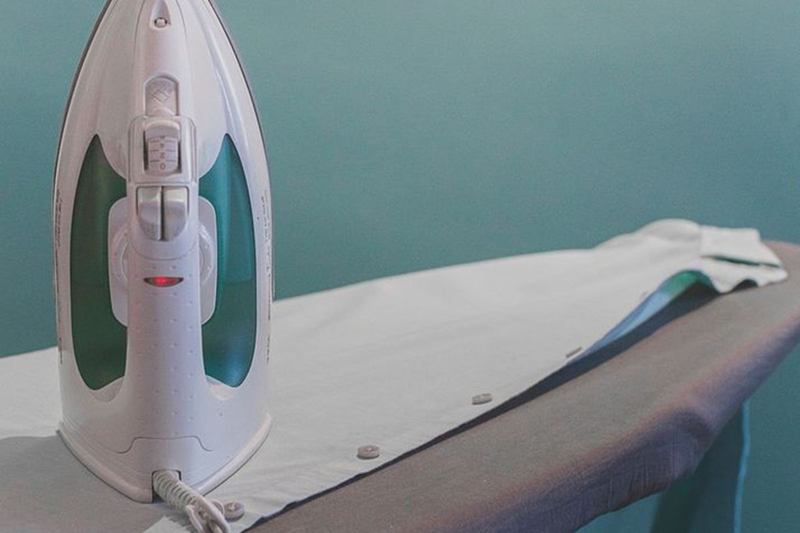
Your favourite white shirt suddenly has a brown streak, the iron drags across the fabric and white flakes shoot out of the steam holes. Both problems are common in Switzerland, where the tap water in many regions is hard. Knowing how to clean an iron properly saves your clothes and extends the life of the appliance – as long as you choose the right method for the soleplate type and follow the manufacturer's instructions.
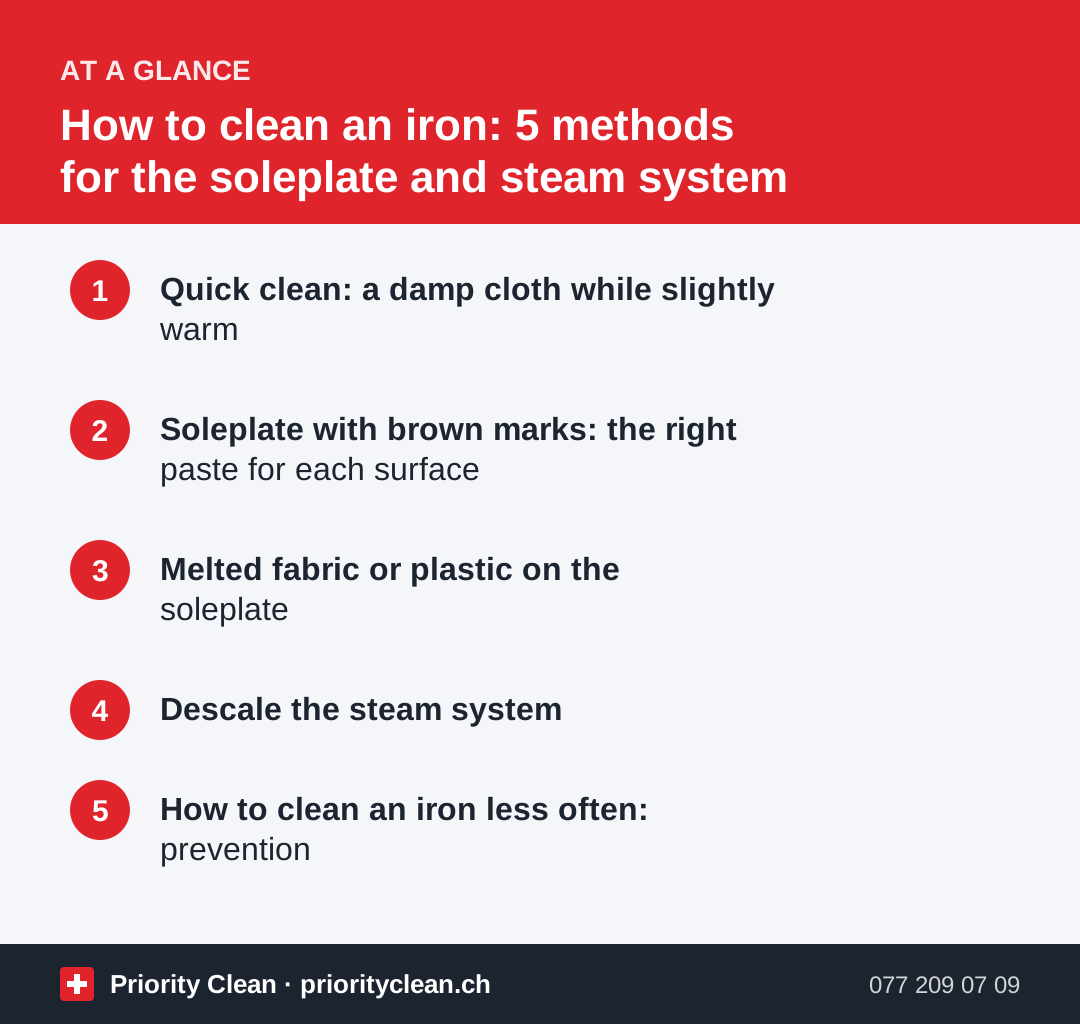
Here are five methods, from the quick wipe to descaling the steam system.
Why irons get dirty and scaled
Two different things happen. On the soleplate, starch, fabric softener residue, synthetic fibres and dust burn onto the hot surface and form brown or black marks. Inside the steam system, water evaporates and leaves minerals behind. The harder your water, the faster limescale blocks the steam holes and the more white or brown flakes come out.
You can find the hardness of your tap water by postcode on trinkwasser.ch. The City of Zurich explains the scale in French degrees, from soft below 15 °fH to very hard above 42 °fH – the higher the value, the more often your appliances need descaling.
1. Quick clean: a damp cloth while slightly warm
For light residue, this is often all you need.
- Heat the iron briefly on a low setting, then unplug it.
- Wipe the lukewarm soleplate with a damp, folded cotton cloth.
- For sticky spots, add a drop of washing-up liquid to the cloth.
- Wipe again with clear water and dry.
Never hold your fingers directly against a warm soleplate, and never put the iron under running water.
2. Soleplate with brown marks: the right paste for each surface
For stubborn marks on a cold, unplugged iron:
- Stainless steel soleplates: Make a paste of baking soda and a little water, apply with a soft cloth, rub gently, then wipe off completely with a damp cloth. Make sure no paste gets into the steam holes.
- Non-stick or ceramic soleplates: Use only a soft cloth with a little washing-up liquid or a mild cleaner that the manufacturer approves. Abrasives damage the coating.
- Steam holes: Clean them carefully with a cotton bud or a wooden toothpick – never a metal needle.
Afterwards, iron over an old towel with steam to blow out any residue before touching good clothes.
3. Melted fabric or plastic on the soleplate
It happens to everyone: a synthetic label or a plastic print melts onto the iron.
- Unplug the iron and set it on a low temperature so the residue softens slightly, or let it cool fully if the residue is hardening.
- Gently push the soft residue off with a wooden spatula.
- Wipe the remaining film with a damp cloth once the iron is cold.
- Heat briefly and iron over an old towel.
You may have seen tips online about rubbing a painkiller tablet or toothpaste on a hot iron. We don't recommend them: medicines don't belong on hot appliances, and toothpaste contains abrasives that can scratch soleplates and clog steam holes.
4. Descale the steam system
This is where you need to be most careful, because manufacturers use very different systems.
- Self-clean function: Many steam irons have a self-clean button. Fill the tank, heat the iron, hold it over the sink and press the button so hot water and steam flush out loose limescale.
- Anti-calc cartridge or valve: Some irons have a removable rod or cartridge. Take it out, rinse or soak it as described in the manual, and replace cartridges when needed.
- Steam generators: Many have a separate rinse or descaling procedure, often with a limescale collector. Follow the display instructions.
- Citric acid or vinegar: Only if the manual explicitly allows it, and exactly in the dilution given. Some manufacturers advise against acids because they can damage the inside of the iron.
5. How to clean an iron less often: prevention
- Use the right water: Many manuals recommend mixing hard tap water with demineralised water, available in supermarkets and DIY stores. Some irons are designed for tap water only – check before using pure distilled water.
- Empty the tank after ironing: Standing water leaves more limescale.
- Don't use scented water or fabric softener in the tank unless it's made for irons.
- Iron starched and synthetic items at the right temperature.
- Store the iron upright on its heel so the soleplate isn't scratched.
Which method for which problem?
| Problem | Method | Avoid |
|---|---|---|
| Light residue | Damp cloth, washing-up liquid | Running water |
| Brown marks, steel soleplate | Baking soda paste | Steel wool |
| Marks on non-stick soleplate | Soft cloth, mild cleaner | Salt, scouring pads |
| Melted synthetic fabric | Wooden spatula, low heat | Knives, metal scrapers |
| White flakes from steam holes | Self-clean, anti-calc function | Acids not approved by the manufacturer |
Common mistakes
- Salt trick on coated soleplates: Salt is abrasive and scratches non-stick coatings.
- Descaling with vinegar against the manual: Can damage seals and the steam chamber.
- Leaving water in the tank for weeks: Encourages limescale and odours.
- Poking steam holes with metal: Scratches and widens the openings.
- Ironing good clothes straight after cleaning: Always test on an old towel first.
Other small appliances suffer from hard water too – see our guides to descaling a kettle and descaling a coffee machine.
Frequently asked questions
How do I clean the bottom of my iron?
Unplug the iron and let it cool. Wipe with a damp cloth and a drop of washing-up liquid. For stainless steel, a baking soda paste helps with brown marks; non-stick soleplates need a soft cloth and a mild cleaner only.
Why does my iron spit white flakes?
That's limescale from hard water inside the steam system. Use the self-clean or anti-calc function as described in the manual, and mix tap water with demineralised water if your manufacturer recommends it.
Can I descale an iron with vinegar?
Only if the manual allows it. Some manufacturers approve diluted vinegar or citric acid, others advise against acids because they can damage the steam chamber.
How often should I clean my iron?
Wipe the soleplate whenever you see residue, and use the self-clean function regularly. In hard-water areas and with frequent ironing, that may mean every few weeks.
Thanks for your feedback! Feel free to share the guide.
Thanks! What was missing? Drop us a line – we will improve the guide. WhatsApp