
By late summer, the insect screens on Swiss windows and balcony doors have done their job for months – and it shows. Pollen, dust, spider webs and dead midges turn the mesh grey and make rooms darker. The good news: it only takes a few simple tools to clean fly screens properly. The best method depends on one question: can you take the screen out, or is it fixed?
Why fly screens get so dirty
They act like a filter. Air flows through, and everything it carries sticks to the fine mesh: pollen in spring, dust from roads and building sites in summer, soot in winter. Near fields or busy roads, the fabric can look noticeably darker after a single season.
Dirty mesh is not just an eyesore. They reduce light and airflow, and the next rain splashes the dirt onto freshly cleaned windows. Cleaning them before autumn, when many people store roller or frame screens for the winter, keeps them in good condition for longer.
Removable or fixed? Know your screen type
Before you start, check how it is mounted. The method depends on it.
| Screen type | Typical mounting | Best approach |
|---|---|---|
| Frame screen (hinged or clip-in) | Clipped or hooked into the window frame | Take out and wash flat |
| Roller screen | Cassette at the top, rails at the sides | Clean in place, pulled down |
| Pleated screen or screen door | Rails on the balcony door | Clean in place, rails separately |
| Self-adhesive or Velcro mesh | Stuck to the frame | Clean in place very gently |
If you rent, do not drill, bend or force anything. If a clip or rail seems stuck, leave it and clean in place instead.
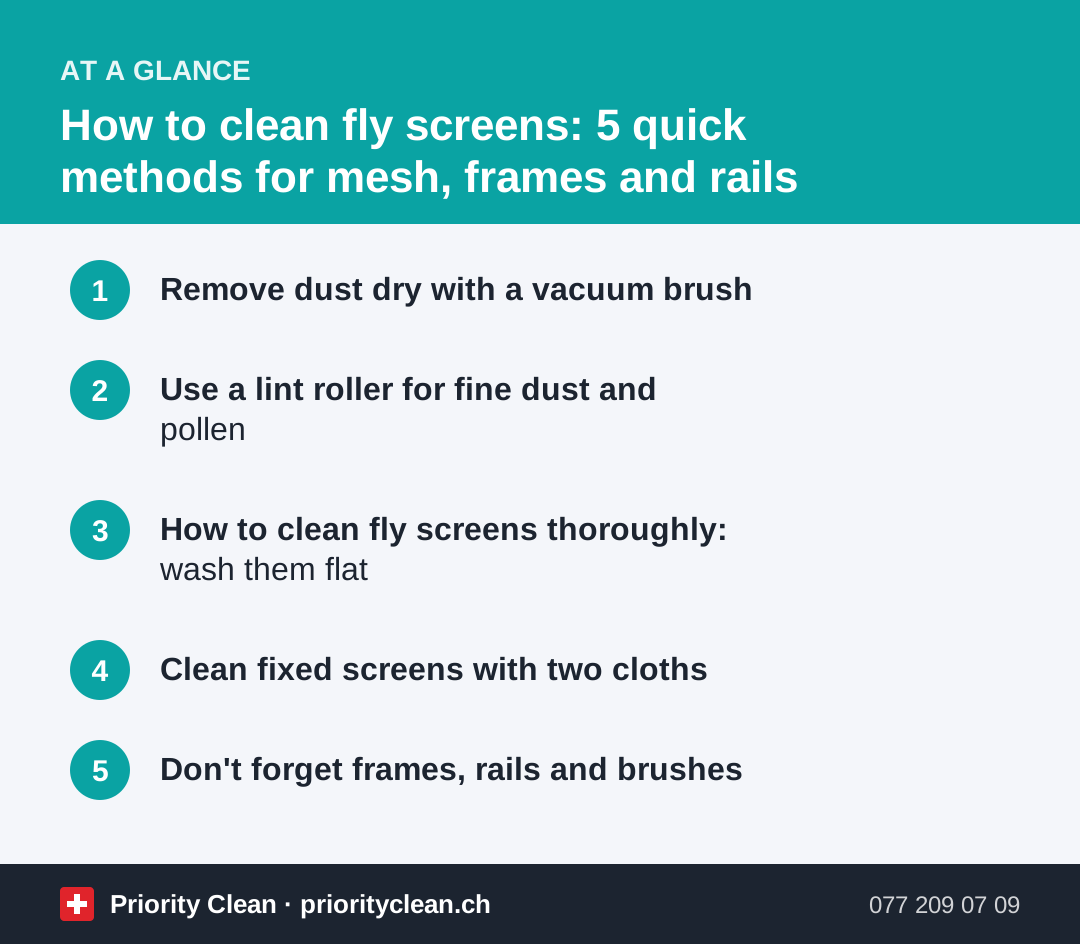
1. Remove dust dry with a vacuum brush
This step works for every type and should always come first.
- Close the window behind it if possible, so dust does not blow inside.
- Use the soft upholstery or dusting brush attachment on low suction.
- Vacuum the mesh in straight lines from top to bottom, first on the outside, then on the inside.
- Go over the frame edges and corners where insects collect.
Low suction matters: a strong vacuum can pull the mesh out of shape.
2. Use a lint roller for fine dust and pollen
A lint roller is a surprisingly effective tool here, especially for fixed and roller models. Roll it gently over the stretched mesh without pressing hard. The adhesive picks up pollen, fine dust and small insects that a vacuum leaves behind. Replace the sheet as soon as it is grey.
3. How to clean fly screens thoroughly: wash them flat
If yours can be taken out, a proper wash removes greasy film and stubborn dirt.
- Lay it flat on an old towel on the balcony, in the bathtub or on the shower floor.
- Mix lukewarm water with a small amount of washing-up liquid or soft soap.
- Brush the mesh gently with a soft brush in both directions.
- Rinse with a shower head on a gentle setting or with a watering can – never with a high-pressure jet.
- Shake off excess water and let it dry upright in the shade before putting it back.
To clean fly screens made of fibreglass mesh, avoid solvents and abrasive sponges. Aluminium mesh tolerates more, but also bends more easily.
4. Clean fixed screens with two cloths
For models you cannot remove, use a two-cloth technique after vacuuming:
- Hold a dry microfibre cloth flat behind the mesh as support.
- Wipe the front gently with a well-wrung, damp microfibre cloth and a drop of mild soap.
- Swap sides and repeat, then wipe with a cloth dampened with clear water.
Work in small sections and rinse the damp cloth often. Too much water runs into the rails and leaves streaks on the window below.
5. Don't forget frames, rails and brushes
The mesh is only half the job. Frames, side rails and the brush seals of roller and pleated screens collect sand, leaves and insects, which can cause jamming.
- Vacuum the rails with a crevice nozzle.
- Wipe frames with soapy water and dry them.
- Use a paintbrush or old toothbrush for the brush seals.
- Check that everything runs smoothly; do not oil it unless the manufacturer says so, as oil attracts dust.
If you clean upper-floor windows, safety comes first. Use a stable step ladder with a safety bar instead of a chair – the BFU explains what makes a step ladder safe – and never lean far out of a window. The BFU also warns against acrobatics when cleaning windows.
Common mistakes when cleaning fly screens
- High-pressure cleaners: They stretch the mesh, tear it out of the frame and push dirt into the rails.
- Wetting dusty mesh first: Creates a smeary layer that is harder to remove than the dust was.
- Stiff brushes or scouring pads: Roughen fibreglass mesh and leave visible marks.
- Putting screens back wet: Moisture in the frame and rails can lead to marks and musty smells.
- Forgetting the window: Clean the screen first, then the glass – otherwise dirt drips onto clean windows.
Once the screens are clean, the glass behind them is the next step – our guide to streak-free windows shows how. And if you are preparing to move out, read what applies to cleaning blinds and shutters as a tenant.
Frequently asked questions
How do you clean fly screens without removing them?
Vacuum the mesh on low suction with a soft brush, go over it with a lint roller and then wipe it with a damp microfibre cloth while holding a dry cloth behind it. Finish by cleaning the rails and frame.
Can I put fly screens in the bathtub?
Yes, removable frame screens can be laid flat in the bathtub or shower on a towel, brushed with mild soapy water and rinsed gently. Protect the tub surface from the frame corners.
How often should fly screens be cleaned?
For most homes, a thorough clean once or twice per season is enough, ideally in early summer and before you store them in autumn. Near roads or fields, a quick vacuum every few weeks helps.
Can I use a pressure washer on insect screens?
It is better not to. The strong jet can stretch or tear the mesh and pull it out of the frame. A gentle shower head or a watering can is sufficient.
Thanks for your feedback! Feel free to share the guide.
Thanks! What was missing? Drop us a line – we will improve the guide. WhatsApp