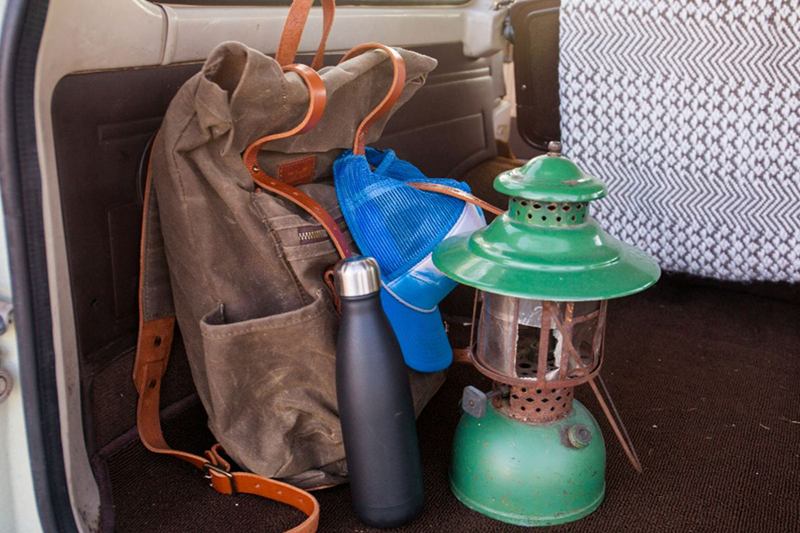
A backpack goes with us to the office, on hikes, on holiday and to the lake. Sooner or later, snack crumbs stick in the corners, a bottle leaks and the back panel smells of sweat. If you want to wash a backpack, the first question is: can it go in the machine, or is hand washing safer?
The answer is usually on the care label – and depends on whether your backpack has a frame, a waterproof coating or leather parts. Five steps show how to clean a daypack, hiking pack or travel backpack thoroughly without damaging it.
Why you should wash a backpack regularly
A backpack collects more than you might think: breadcrumbs, sand, sunscreen, spilt drinks and, on the back panel, sweat and skin oil. Moisture and dirt get trapped in the padding and seams. If the backpack is put away damp in a cupboard or cellar, unpleasant odours and, in the worst case, mildew spots can develop.
Most backpacks do not need frequent washing. After a sweaty hiking season, after a holiday or when something has leaked, a thorough clean is worthwhile, though. For everyday use, it is enough to vacuum the inside now and then and wipe off stains straight away with a damp cloth.
| Backpack type | Recommended method | What to watch out for |
|---|---|---|
| Simple fabric backpack, gym bag | Machine, 30 °C, delicates | Pillowcase as a wash bag, low spin |
| Daypack with laptop compartment | Hand wash or machine as per the label | Don't bend the padding, check the label |
| Hiking backpack with frame | Hand wash only | Remove frame and hip belt first |
| Coated or waterproof backpack | Wipe with a damp cloth, hand wash | No machine, protect the coating |
| Backpack with leather parts | Spot-clean the fabric | Don't soak the leather, care for it separately |
| School bag | See our dedicated guide | Protect reflectors and moulded parts |
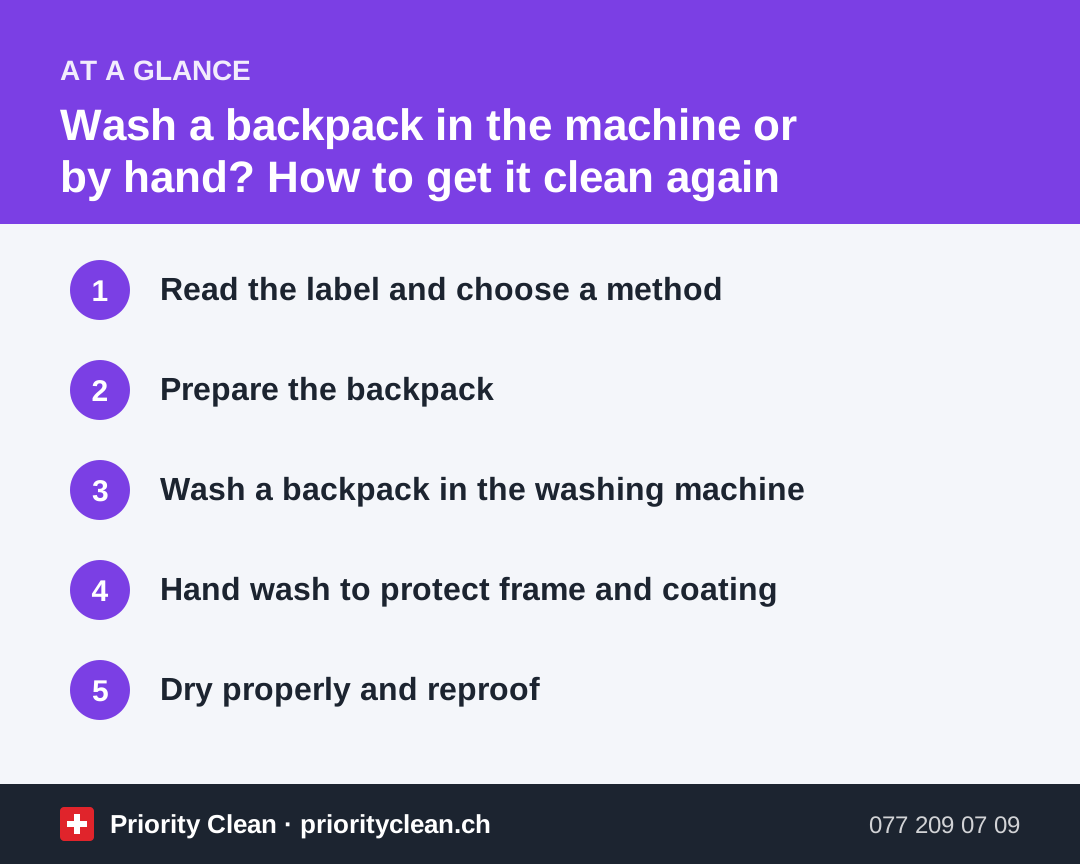
1. Read the label and choose a method
Look for the care label, often hidden in an inside pocket or at the bottom. A wash tub with a number allows machine washing up to that temperature, a hand in the tub means hand wash only, and a crossed-out tub means no washing in water. The GINETEX care symbols index explains each symbol in detail.
If there is no label, go by the design: a simple polyester or cotton pack without a frame usually copes well with the machine. Models with a back plate, carrying system, waterproof coating or leather trim are better washed by hand. School bags have their own rules – see our guide to cleaning a school bag.
2. Prepare the backpack
- Empty every compartment, including side pockets and the lid pocket.
- Turn it upside down, shake it out and vacuum up crumbs and sand with the crevice tool.
- Remove detachable parts: frame or back plate, hip belt, hydration bladder, rain cover, key rings.
- Close zips and Velcro so they don't damage anything.
- Pre-treat heavy stains, for example with a little gall soap and a soft brush – test on an inconspicuous spot first.
3. Wash a backpack in the washing machine
If the label allows machine washing, choose a delicates or hand-wash programme at 30 °C and a low spin speed. Add a few towels to balance the drum. Use a small amount of delicates detergent and skip fabric softener: it can attack the coating and reduce water repellency.
EnergieSchweiz, the Swiss federal energy programme, recommends washing at low temperatures of 20 to 30 °C and on eco programmes – without increasing the amount of detergent. That suits backpacks well: high temperatures can damage coatings, bonded seams and foam padding.
4. Hand wash to protect frame and coating
For hand washing, fill the bath, a sink or a large tub with lukewarm water and a little delicates detergent. Submerge the bag and clean it with a soft brush or sponge, especially the back panel, shoulder straps and base. According to GINETEX, hand-washed items should not be rubbed or wrung – for a backpack, that means brushing gently rather than scrubbing hard.
Rinse with clean water until no more foam comes out, as detergent left in the padding attracts dirt. Gently press out the water without bending the padding, then blot with a towel. For coated models, a damp cloth with a little mild soapy water is often enough.
5. Dry properly and reproof
Hang it upside down with all compartments open, for example on a hanger over the bath or in the shade on the balcony. That way water can drain from the padding and air can reach the inside. No tumble dryer and not directly on a radiator: heat can damage the coating, bonded seams and foam. A padded pack can take one to two days to dry completely.
After washing, water often no longer beads up as well. For hiking backpacks, you can use a reproofing product for outdoor textiles. Our guide on washing outdoor clothing explains how this works for jackets.
Common mistakes when washing a backpack
- Leaving the frame inside: a back plate or aluminium stays can bend in the machine or damage the drum.
- Washing too hot: above 30 °C, coating, bonded seams and padding suffer.
- Using fabric softener: reduces water repellency and leaves a film.
- Storing it damp: a pack that isn't fully dry starts to smell in the cupboard or cellar.
Frequently asked questions
Can you wash a backpack in the washing machine?
Many simple fabric backpacks, yes – if the label allows it: at 30 °C on a delicates or hand-wash programme, in a pillowcase and with a low spin. Backpacks with a frame, coating or leather parts are better washed by hand.
How do I get the sweat smell out of a backpack?
Wash the back panel and shoulder straps in particular with delicates detergent and rinse well. The backpack must then dry completely, ideally open in an airy place. If the smell remains, repeat the hand wash.
How long does a backpack take to dry?
Depending on the material and padding, one to two days. Hang it open and upside down in an airy place and only put it away once the padding is dry on the inside too.
Do I need to reproof my backpack after washing?
For hiking and outdoor backpacks, it makes sense once water no longer beads up. Use a product for outdoor textiles and follow the manufacturer's instructions. Simple city backpacks usually don't need reproofing.
Thanks for your feedback! Feel free to share the guide.
Thanks! What was missing? Drop us a line – we will improve the guide. WhatsApp