A well-fitting bra is not a throwaway item. That makes it all the more annoying when, after a few months, the band has stretched, the cups are dented or an underwire is poking through the fabric. Often it isn't wearing it that's to blame, but the way it's cared for. If you want to know how to wash a bra without harming its shape and elasticity, the answer is little heat, little friction and a bit of patience when drying.
By hand or in the machine: both can work. The five rules below show what matters for underwire, moulded-cup, lace and sports bras.
Why bras suffer in the laundry
A bra combines many different materials: an elastic band and straps, often lace or microfibre, metal underwires, pre-formed foam cups, hooks and eyes. Each part reacts differently to water, heat and movement.
The elastane in the underband and straps is particularly sensitive. Heat makes it tire faster, and the bra loses its support. Moulded cups get creased in the drum. And an underwire that has worked its way through the fabric can come loose and, at worst, damage the machine.
| Problem | Common cause |
|---|---|
| Underband has stretched | Too hot, tumble dryer, radiator |
| Dented or creased cups | In the drum without a bag, stored folded |
| Underwire poking out | Lots of friction in the machine, age |
| Lace torn or snagged | Open hooks, laundry with zips |
| White bra turns grey | Mixed with colours, wrong or badly dosed detergent |
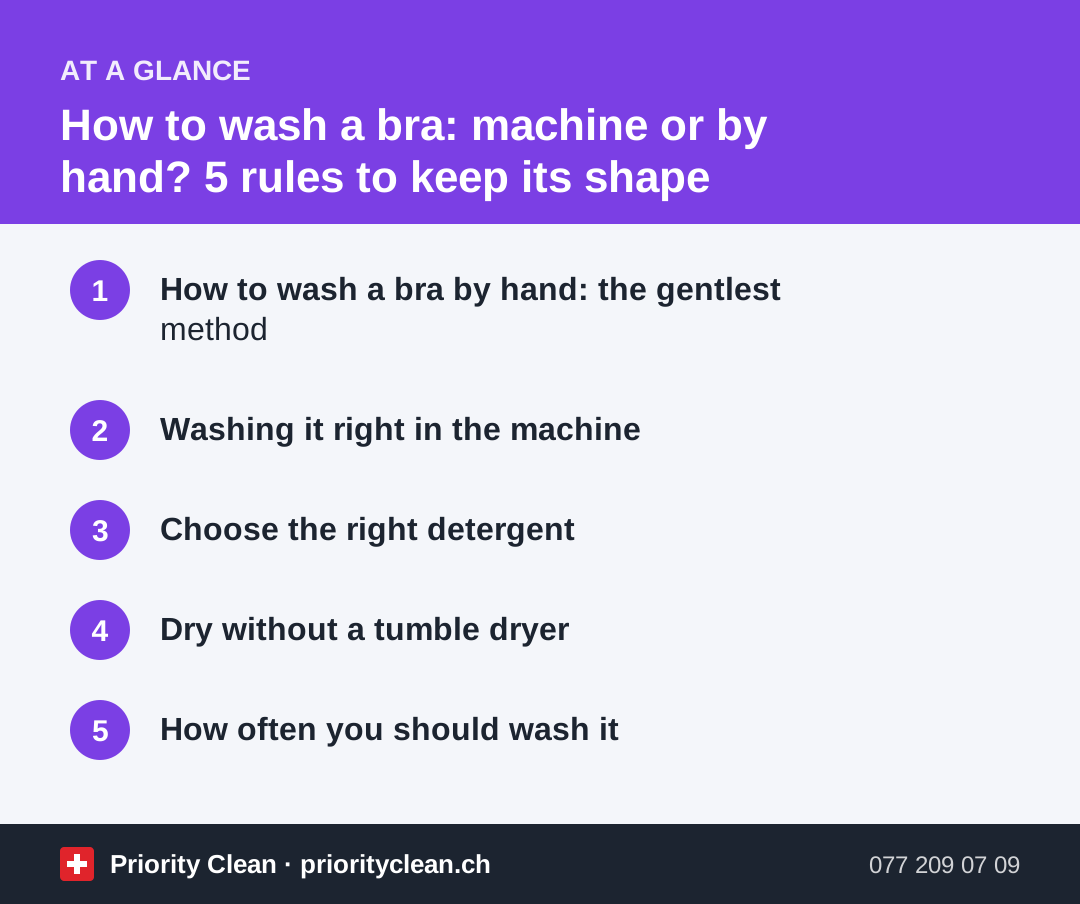
1. How to wash a bra by hand: the gentlest method
For underwire bras, fine lace and moulded cups, hand washing is the best choice. According to GINETEX, the "hand in the tub" symbol means a maximum of 40 °C, ideally 20 to 30 °C, without rubbing or wringing.
- Fill the sink or a bowl with lukewarm water.
- Dissolve a small amount of delicates detergent in it.
- Submerge the bra and leave it to soak for a few minutes.
- Move it gently through the water, lightly squeezing the underarm areas and the band between your fingers.
- Rinse with clean water until no more foam appears.
- Press the water out gently – don't wring.
It only takes a few minutes. Many people simply do it in the evening while brushing their teeth.
2. Washing it right in the machine
If the label allows it, the machine works well for sturdy non-wired bras, bralettes and sports bras – with a few precautions:
- Fasten the hooks: open hooks snag on lace and other laundry.
- Use a mesh bag or a bra ball: it protects cups and underwires from creasing and friction.
- Delicates or hand programme: 30 °C at most; cold is often enough.
- Small load: GINETEX recommends that you reduce the load on gentle programmes.
- The right company: only with light items of a similar colour, never with jeans or towels.
- Low spin: choose the lowest spin speed.
The Swiss energy programme EnergieSchweiz recommends choosing low temperatures of 20 to 30 °C anyway. For lingerie, that's not only economical but also the best care for the elastane.
3. Choose the right detergent
A delicates detergent without bleach is a good choice: it's gentle on elastane and lace. Fabric softener isn't needed for underwear.
Put a white bra in only with white or very light items so it doesn't turn grey. Chlorine bleach is off limits, as it attacks elastane. Silk bras follow their own rules – see our guide on how to wash silk. Sports bras made from technical fabrics are treated like other training kit; see cleaning sportswear.
4. Dry without a tumble dryer
The tumble dryer is lingerie's worst enemy. Heat and movement tire the elastane, deform the cups and can loosen the underwires.
To dry it properly:
- Carefully blot excess water with a towel.
- Press the cups back into their original shape by hand.
- Lay the bra flat on a drying rack or towel, or hang it from the centre, between the cups, over a line.
- Don't hang it by the straps – the weight of the wet fabric stretches them.
- Keep it off the radiator and out of blazing sun.
5. How often you should wash it
There's no fixed number. An everyday bra that hasn't been exposed to much sweat doesn't need washing after every wear. Let it air after taking it off and wash it as soon as it no longer feels fresh. Sports bras, on the other hand, should be washed after every workout, because sweat builds up in them.
Storage is part of good care too: keep moulded bras in the drawer with the cups nested inside each other. Never fold a cup inwards.
The most common mistakes
- Into the drum without a bag: cups crease, underwires work their way out.
- Too much heat: the underband loses its support sooner.
- Wringing: it twists bands and cups.
- Tumble dryer "just briefly": even a short cycle harms the elastane.
- With towels and jeans: rough, heavy laundry rubs against fine lace.
Frequently asked questions
Can you put a bra in the washing machine?
Yes, if the label allows it. Fasten the hooks, put the bra in a mesh bag and choose a delicates or hand programme at no more than 30 °C with a low spin speed. For underwires, lace and moulded cups, hand washing is gentler.
Can an underwire bra go in the machine?
In a mesh bag and on a gentle programme it's often possible, if the label permits. Hand washing is still safer, though: in the drum, an underwire can gradually work its way through the fabric and come loose.
How often should a bra be washed?
There's no fixed rule. An everyday bra can be worn several times, airing it in between; wash it as soon as it's no longer fresh. A sports bra should be washed after every workout.
Why shouldn't a bra go in the tumble dryer?
Heat and movement tire the elastane in the band and straps, deform the cups and can loosen the underwires. So let it air-dry, flat or hung from the centre.
Thanks for your feedback! Feel free to share the guide.
Thanks! What was missing? Drop us a line – we will improve the guide. WhatsApp