If you work in an office, you probably put on a fresh shirt or blouse every day. By the weekend they pile up in the laundry basket – with grey collar lines, sweaty underarms and the prospect of a long evening at the ironing board. If you want to know how to wash shirts so that no marks remain and you don't have to smooth out every crease by hand, most of the gain comes from preparation and from how you hang them up.
The five steps below apply to cotton work shirts as well as to blouses and easy-care blends. Silk and linen have their own rules.
Why collars and cuffs turn grey
The collar and cuffs are in direct contact with your skin all day. Skin oil, sweat, traces of skincare products and dust collect there. This greasy mixture often doesn't dissolve completely in a normal, low-temperature cycle. With every wear more builds up, until a grey or yellowish line becomes visible.
Under the arms, deodorant and sweat add to the problem. If white fabric turns yellow or stiff there, our guide to removing sweat stains can help.
| Problem | Common cause | What helps |
|---|---|---|
| Grey collar line | Skin oil, no pre-treatment | Ox-gall or household soap before washing |
| Yellow underarms | Sweat and deodorant | Targeted pre-treatment, no very hot wash |
| Heavy creasing | Full drum, high spin, left lying | Smaller loads, short spin, hang up at once |
| Torn buttonholes | Washed with buttons done up | Undo all buttons |
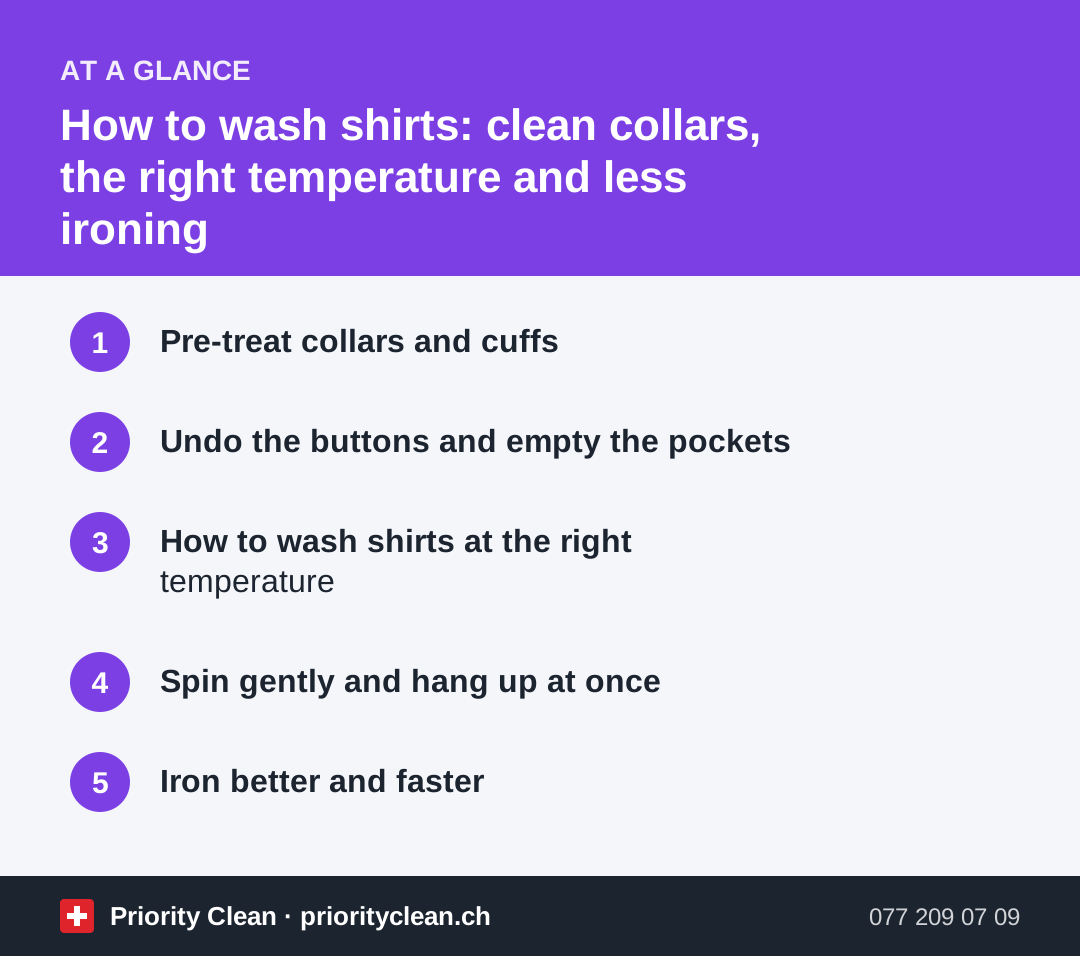
1. Pre-treat collars and cuffs
Pre-treatment is the key step – it replaces the hot wash. The Swiss consumer protection foundation Stiftung für Konsumentenschutz lists curd soap among the tried-and-tested household remedies. For collars, many people also use ox-gall soap, which is especially popular for greasy stains.
- Dampen the collar and cuffs.
- Rub the soap or a little liquid detergent directly onto the line.
- Work gently along the seam with a soft brush or an old toothbrush.
- Leave it for a few minutes, then add the garment to the rest of the laundry.
On coloured fabric, test the soap and brush on a hidden spot first. Our guide to ox-gall soap explains how to use it and where its limits are.
2. Undo the buttons and empty the pockets
It sounds trivial, but it extends the life of every garment: before washing, undo all the buttons, including those on the cuffs and a button-down collar. Done-up buttons tug at buttonholes and threads in the drum.
- Remove collar stiffeners: they can bend or get lost in the machine.
- Empty the breast pocket: a forgotten pen can ruin a whole load.
- Sort colours: whites with whites, colours with similar shades.
- Delicates in a mesh bag: blouses with fine details go in a laundry bag.
3. How to wash shirts at the right temperature
The care label sets the maximum temperature. GINETEX, the association behind the symbols, explains that bars under the wash tub mean a gentler programme – on easy-care garments you'll usually see one.
| Garment | Temperature | Programme |
|---|---|---|
| White cotton | 40 °C, if heavily soiled up to the label value | Easy-care or a dedicated shirt programme |
| Coloured cotton | 30–40 °C | Easy-care, colour detergent |
| Non-iron or blended fabric | 30–40 °C | Easy-care, small load |
| Blouses with fine details | 30 °C | Delicates, in a mesh bag |
Thanks to pre-treatment, 30 to 40 °C is usually enough for everyday wear. The Swiss energy programme EnergieSchweiz recommends choosing low temperatures and eco programmes without increasing the detergent dose. Going above 40 °C is only worthwhile for white cotton, if the label allows it and the marks persist despite pre-treatment.
4. Spin gently and hang up at once
This is where you decide how long you'll spend ironing later. The garments need room: fill the drum only half to two-thirds full. Then choose a low spin speed or the short spin of the easy-care programme.
Take everything out as soon as the programme ends – in a shared laundry room, an alarm helps. Then:
- Give each piece a good shake.
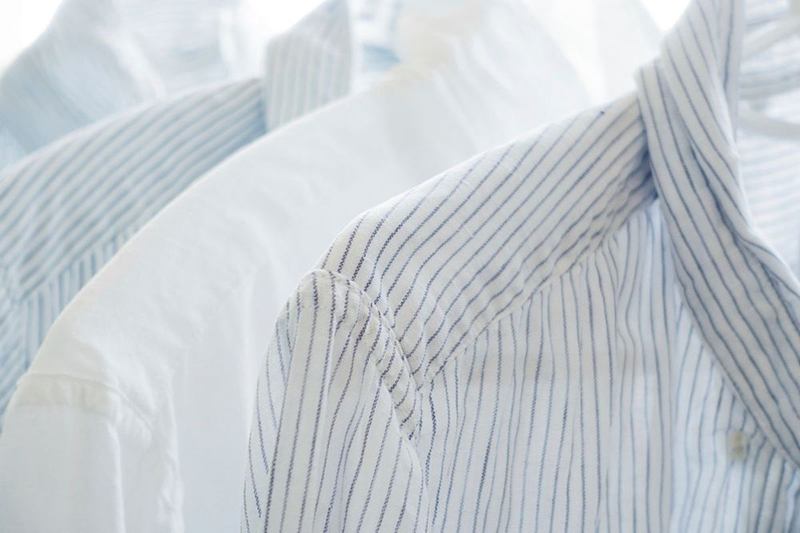
- Hang it on a wide hanger and do up the top button.
- Smooth the collar, button placket and cuffs by hand.
- Pull the sleeves and side seams straight lengthwise.
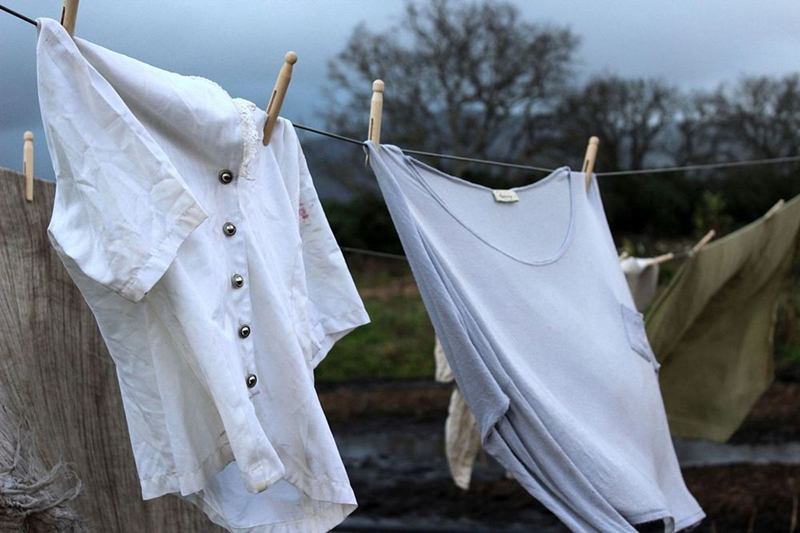
- Leave to dry in the air with some space between the hangers.
Depending on the label, non-iron models can go briefly into the tumble dryer on a gentle setting. Take them out while still slightly damp and hang them up so that no new creases form.
5. Iron better and faster
A shirt is easiest to iron while slightly damp. Follow the dots in the iron symbol: according to GINETEX, three dots mean a maximum of 210 °C, two dots 160 °C and one dot 120 °C. Cotton usually tolerates more heat than blends.
A tried-and-tested order:
- Collar: underside first, then the top side, each time from the points towards the middle.
- Cuffs: inside, then outside.
- Sleeves: lay them flat and line them up along the seam.
- Yoke and back: pull them over the narrow end of the ironing board.
- Front panels: last, ironing the button placket on the reverse.
The most common mistakes
- Washing marks out on hot: without pre-treatment they often stay anyway, and the fibre suffers.
- Chlorine bleach for whites: it attacks the fibre and is unsuitable for colours and many blends.
- Too much detergent: residues make the fabric stiff. See our guide to dosing laundry detergent.
- Leaving garments in the basket: damp fabric creases badly and can start to smell musty.
Frequently asked questions
What temperature should shirts be washed at?
That depends on the label and the colour. With a pre-treated collar, 30 to 40 °C is enough for most. White cotton can be washed hotter if the label allows it – but that's only needed for stubborn marks.
How do I get a shirt collar clean again?
Dampen the collar, rub it with ox-gall soap, household soap or a little liquid detergent and brush gently along the seam. After a few minutes, wash as usual. On coloured fabric, test on a hidden spot first.
Should shirts be washed with buttons open or closed?
Open. Done-up buttons tug at buttonholes and threads in the drum. Only when drying on the hanger should you do up the top button, so the garment hangs straight.
How do I dry shirts so I have less ironing?
Don't overload the drum, spin slowly, take everything out straight away, shake it and hang it on a hanger. Smooth the collar, placket and cuffs by hand. Often only a few creases remain.
Thanks for your feedback! Feel free to share the guide.
Thanks! What was missing? Drop us a line – we will improve the guide. WhatsApp