Fill the cup by eye, then add a splash more to be safe – that is how many people have washed for years. Getting the laundry detergent dosage right, however, depends on three things: your water hardness, how much laundry is in the drum and how dirty it is. Too much does as much harm as too little.
In January, when festive tablecloths and winter clothes go through the machine, these five rules help you find the right amount – at home or in the shared laundry room.
Why laundry detergent dosage matters
Detergent contains not only cleaning agents but also water softeners that bind the limescale in the water. Only once the lime is bound can the other ingredients lift dirt properly. That is why hard water needs a bigger dose than soft water.
Too much detergent is not fully rinsed out. Clothes feel stiff, smell overpoweringly of perfume and can irritate sensitive skin. Residue builds up in the detergent drawer and door seal, a breeding ground for musty smells. Some machines detect excess foam and add extra rinses, which costs water, electricity and time.
Too little detergent cannot bind the lime or keep the loosened dirt suspended in the wash water. Whites slowly turn grey, towels become hard and limescale builds up in fabrics and in the machine.
| Sign | Likely cause |
|---|---|
| Stiff laundry, very strong scent | Too much detergent or fabric softener |
| White powder marks on dark clothes | Too much powder, water too cold or drum too full |
| Grey, dull whites | Dose too low, often with hard water |
| Musty smell from machine and laundry | Residue and deposits, often from overdosing |
Other causes of smells are covered in our guide on laundry that smells musty.
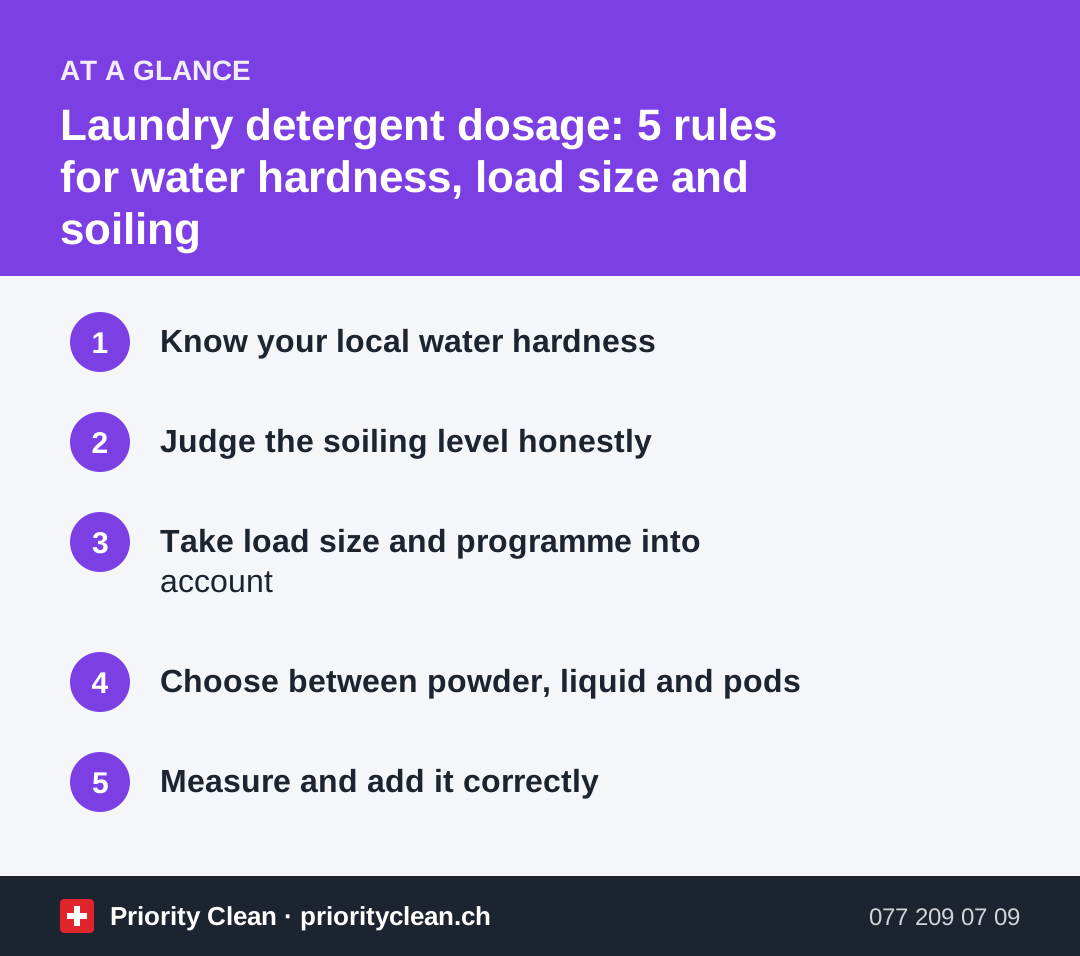
1. Know your local water hardness
In Switzerland, water hardness varies from one commune to the next. No need to guess: the platform of the Swiss Gas and Water Association (SVGW) lets you look up your water hardness by postcode, and your commune can also tell you. If your building has its own water softener, ask the property management or caretaker – the water may then be softer than the mains supply.
Packs sold in Switzerland give hardness in French degrees (°fH), usually in three ranges:
| Hardness range | French degrees | What it means for dosing |
|---|---|---|
| Soft | below 15 °fH | Use the smallest amount – soft water foams quickly |
| Medium | 15–25 °fH | Medium amount, depending on soiling |
| Hard | above 25 °fH | Amount for hard water – do not underdose |
If an imported pack uses German degrees (°dH): 1 °dH equals roughly 1.8 °fH. Our guide to water hardness in Switzerland explains more.
2. Judge the soiling level honestly
Dosing tables usually distinguish three levels, and most everyday laundry is less dirty than you might think:
- Lightly soiled: no visible stains, e.g. clothes worn for one day.
- Normally soiled: visible dirt or a few light stains, such as towels or everyday clothes worn for several days.
- Heavily soiled: clear stains, e.g. work and sports kit, tea towels or children's clothes after the playground.
Go by most of the load, not by the dirtiest item.
3. Take load size and programme into account
The amounts on the pack refer to a specific quantity of laundry, usually stated next to the dosing table. If your load is very different, adjust:
- Full drum: with cotton, you can still lay a hand flat across the top of the laundry. The amount on the pack applies.
- Half-full drum: use less; automatic load detection saves water, not detergent.
- Wool, silk and delicates: small loads with a special product, following its own table.
SwissEnergy (EnergieSchweiz) recommends full loads, low temperatures of 20–30 °C and eco programmes – and advises not increasing the detergent dose at low temperatures.
In the shared laundry room, the machine often differs from yours: check the drum size and bring your measuring cup.
4. Choose between powder, liquid and pods
The type of product matters too:
- Universal powder: usually contains oxygen-based bleach – ideal for whites, towels and bed linen. For colours and darks, which it can fade, use a colour detergent without bleach.
- Liquid: dissolves well at low temperatures and suits colours and darks, but usually contains no bleach. If you always wash cool with liquid, run a hotter wash with powder now and then to prevent deposits.
- Compact and concentrated products: go much further, so the dose per wash is smaller. Use the measuring cap supplied – never one from another product.
- Pods and tablets: fixed portions that cannot be adapted to water hardness or small loads. With soft water and a half-full drum, one pod is often too much.
5. Measure and add it correctly
- Read the measuring cup at eye level on a flat surface.
- Put powder in the main wash compartment – the manual tells you which one.
- Depending on your machine, add liquid to the drawer or put it straight into the drum in a dosing ball.
- Place pods in the empty drum first, then the laundry on top – never in the drawer.
- Use fabric softener sparingly and only up to the mark. Skip it for towels, sportswear and microfibre cloths.
Sticky residue in the drawer is a sign you are using too much. Our guide on how to clean a washing machine shows how to clean the drawer, seal and filter.
Common mistakes
- "More is better": extra detergent doesn't clean better; it leaves residue in laundry and machine.
- Always the same amount: half loads, soft water and lightly soiled laundry need much less.
- Adding more at 20 °C: not necessary, according to SwissEnergy – the dose stays the same.
- Fabric softener for hard towels: the real cause is often underdosing in hard water.
Frequently asked questions
How much laundry detergent should I use per wash?
It depends on water hardness, soiling and load size. In the dosing table on the pack, choose the column for your water hardness and the row for the soiling level; for a half-full drum, use less.
How can I tell if I'm using too much detergent?
Typical signs are lots of foam in the door window, stiff or heavily scented laundry, white marks on dark fabrics and sticky residue in the drawer. Reduce the amount step by step until the laundry comes out clean and soft.
Do I need more detergent with hard water?
Yes. Part of the dose is used up binding the limescale, so above roughly 25 °fH follow the amount for hard water on the pack. With the correct dose, a separate water softener is usually not necessary.
Is liquid or powder detergent better?
Both have their place. Powder with bleach suits whites and towels, liquid suits colours, darks and low temperatures. Either way, dose according to water hardness, soiling and load.
Thanks for your feedback! Feel free to share the guide.
Thanks! What was missing? Drop us a line – we will improve the guide. WhatsApp