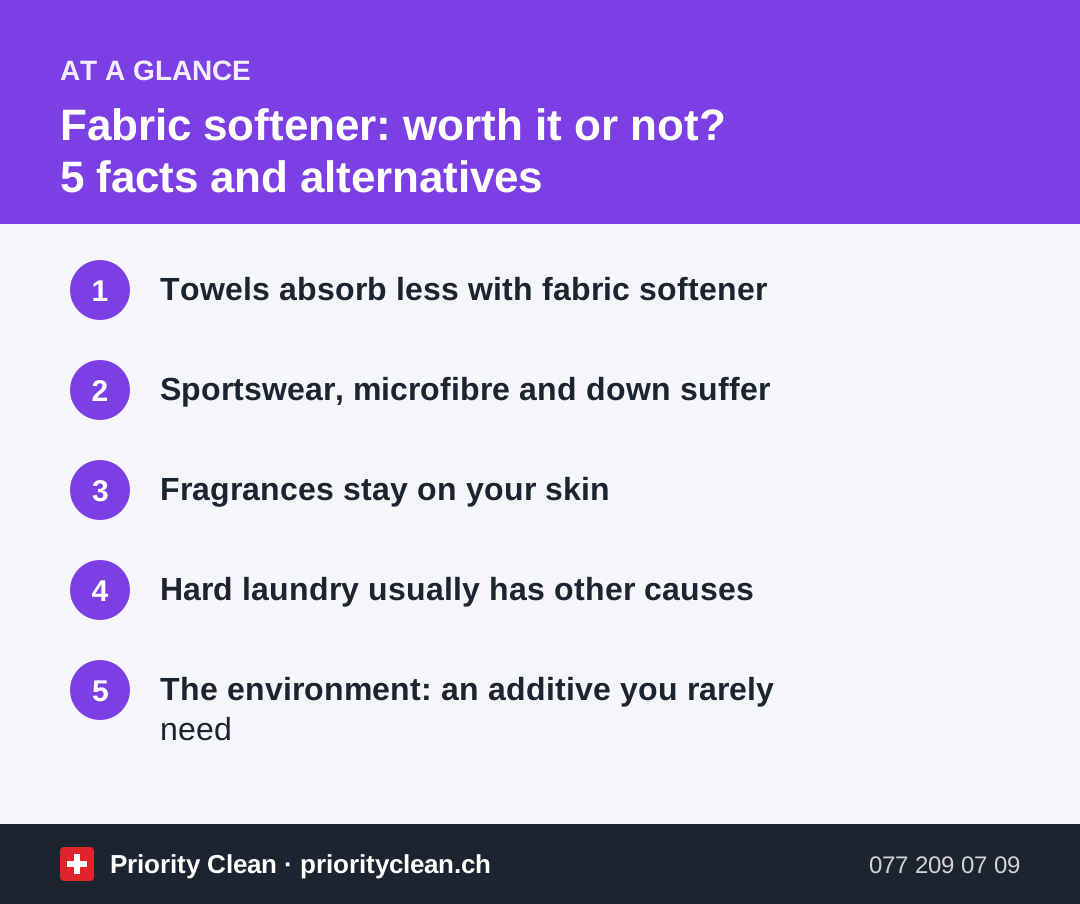
As soft as a teddy bear and as fresh as a spring meadow – that is the promise of the bottles lined up on the supermarket shelf. So for many people, fabric softener goes into every load. Yet this additive has side effects: towels dry you less well, sportswear loses its performance and the fragrances stay on your skin.
These five facts show when the product does harm, when it is acceptable and how to get pleasantly soft laundry without it.
How fabric softener works
The softener is added in the final rinse. Its main active ingredients, known as cationic surfactants, settle on the fibres as a very thin film. The fibres then glide past each other more easily: the fabric feels softer, builds up less static and holds its scent for longer.
But this very film is also the problem: it stays on the fibre and changes its properties. Depending on the fabric, that is pleasant, neutral or harmful:
| Fabric | Softener? | Why |
|---|---|---|
| Towels, bathrobes | No | The film reduces absorbency |
| Sportswear and outdoor clothing | No | Moisture is wicked away less well |
| Microfibre cloths | No | The fine fibres lose their cleaning power |
| Down | No | The down clumps and lofts less well |
| Baby clothes, sensitive skin | Better not | Fragrances stay on the skin |
| Bed linen, cotton and synthetic clothing | Possible, sparingly | Softer feel, less static |
1. Towels absorb less with fabric softener
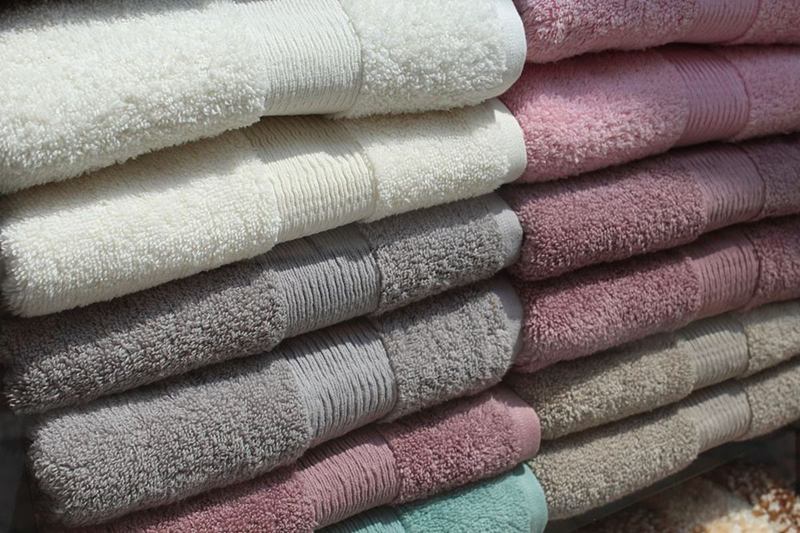
Terry towelling relies on its loops, which soak up water like tiny sponges. The softener film makes the fibres smoother but also more water-repellent. The towel feels soft yet dries you less well. With every wash, more builds up, and the residue can encourage a musty smell.
You can get soft towels without any additive – our guide on how to make towels soft again shows you how.
2. Sportswear, microfibre and down suffer
High-tech fabrics are where the film does the most damage:
- Sportswear and outdoor clothing: the fine channels that carry sweat away get clogged. The shirt feels clammy and holds on to odours more, and membrane jackets lose breathability. Find out more in our guide on how to wash outdoor clothing.
- Microfibre cloths: they clean thanks to ultra-fine fibres that pick up dirt and grease. Once these are coated, the cloths just smear. See our guide on how to wash microfibre cloths.
- Down: the clusters stick together and no longer loft properly. Down jackets and duvets belong in a special down detergent.
3. Fragrances stay on your skin
The scent is meant to last as long as possible, so it deliberately stays in the fabric – and therefore on your skin. The Federal Office of Public Health (FOPH) points out that fragrances can cause contact allergies. If you have sensitive skin, are prone to eczema or are washing baby clothes, it is better to skip scented rinse additives.
Fragrance-free products do exist, but the film on the fibres is the same. And you can get a fresh scent for free: dry your laundry in the fresh air whenever you can.
4. Hard laundry usually has other causes
Reaching for the softener often only treats a symptom. The real causes of hard, scratchy laundry are usually these:
- Limescale: in hard water, too little detergent cannot bind all the lime, which then settles in the fibres.
- Too much detergent: residue that is not rinsed out sticks the fibres together.
- Drying without air movement: on the radiator or in still air, towel loops dry flat and stiff.
- An overloaded drum: there is not enough water for rinsing.
Our guide on laundry detergent dosage explains how to match the amount to your water hardness.
5. The environment: an additive you rarely need
Every extra rinse additive ends up in the waste water and at the sewage treatment plant, and every bottle becomes rubbish. The Swiss consumer protection foundation (Stiftung für Konsumentenschutz) advises getting by with a few simple products and, when buying conventional ones, choosing products with environmental labels.
If you do not want to do without, choose a product with a recognised ecolabel. The EU Ecolabel criteria for detergents and cleaning products, for example, limit hazardous substances and require sustainably sourced raw materials and recyclable packaging.
Alternatives to fabric softener
- Dose correctly: matching the amount of detergent to water hardness, soiling and load size makes the biggest difference.
- Shake things out: give every item a good shake before hanging it up, then dry it somewhere airy rather than on the radiator.
- A short tumble: ten to fifteen minutes in the tumble dryer noticeably fluffs up towels, and wool dryer balls add extra movement.
- Vinegar, with care: a small splash of household vinegar in the softener compartment dissolves limescale and detergent residue. Because acid can attack rubber seals over time, this is disputed: use it occasionally at most, and only if your machine's manual does not advise against it.
Common mistakes
- Softener in every load: for many fabrics it does nothing, or even does harm.
- More softener for hard towels: the film gets thicker and absorbency drops further.
- Filling above the mark: the product flows in too early or leaves sticky residue in the compartment.
- Washing microfibre cloths with it: afterwards they clean poorly.
Frequently asked questions
Is fabric softener harmful?
For most fabrics it is not harmful, but it is rarely necessary. It reduces the absorbency of towels, impairs sportswear and microfibre, and its fragrances can bother sensitive skin.
Can I use vinegar instead of fabric softener?
A small splash of household vinegar in the compartment dissolves limescale and detergent residue. Because acid can attack the seals over time, use it only occasionally, never together with chlorine products, and only if your machine's manufacturer does not advise against it.
Why is my laundry hard without fabric softener?
Usually because of limescale, a poorly dosed detergent or drying without air movement. Dose for your water hardness, shake the laundry out and give towels a few minutes in the tumble dryer.
Which fabrics should never be washed with fabric softener?
Towels, sportswear and outdoor clothing, microfibre cloths and down. Also check the care label: some manufacturers explicitly advise against it.
Thanks for your feedback! Feel free to share the guide.
Thanks! What was missing? Drop us a line – we will improve the guide. WhatsApp