A tub with two bars, a square with a circle, a crossed-out triangle: the tiny signs in the collar or side seam look like a secret code. Once you can read laundry symbols, however, a few seconds tell you how hot a garment can be washed and whether it may be bleached, tumble dried or ironed.
In January, when new jumpers, presents and winter clothes pile up in the shared laundry room, a closer look at the label pays off. Here are the five symbol groups, their variations and the most common misunderstandings.
Why laundry symbols are worth a closer look
Laundry symbols are harmonised internationally. They belong to the GINETEX association and are defined in the ISO 3758 standard. The manufacturer has tested what the fabric, colours and seams can take, and the label shows the most intensive treatment that is still safe. Follow it and you avoid the classic mishaps: the shrunken wool jumper, the shirt that ran or the shiny patches on a pair of trousers.
The logic is what matters. Every symbol sets an upper limit: at most this temperature, at most this much mechanical action, at most this much heat when ironing. Gentler is almost always fine; harsher is not. The symbols always appear in the same order, so with a little practice you can read them at a glance.
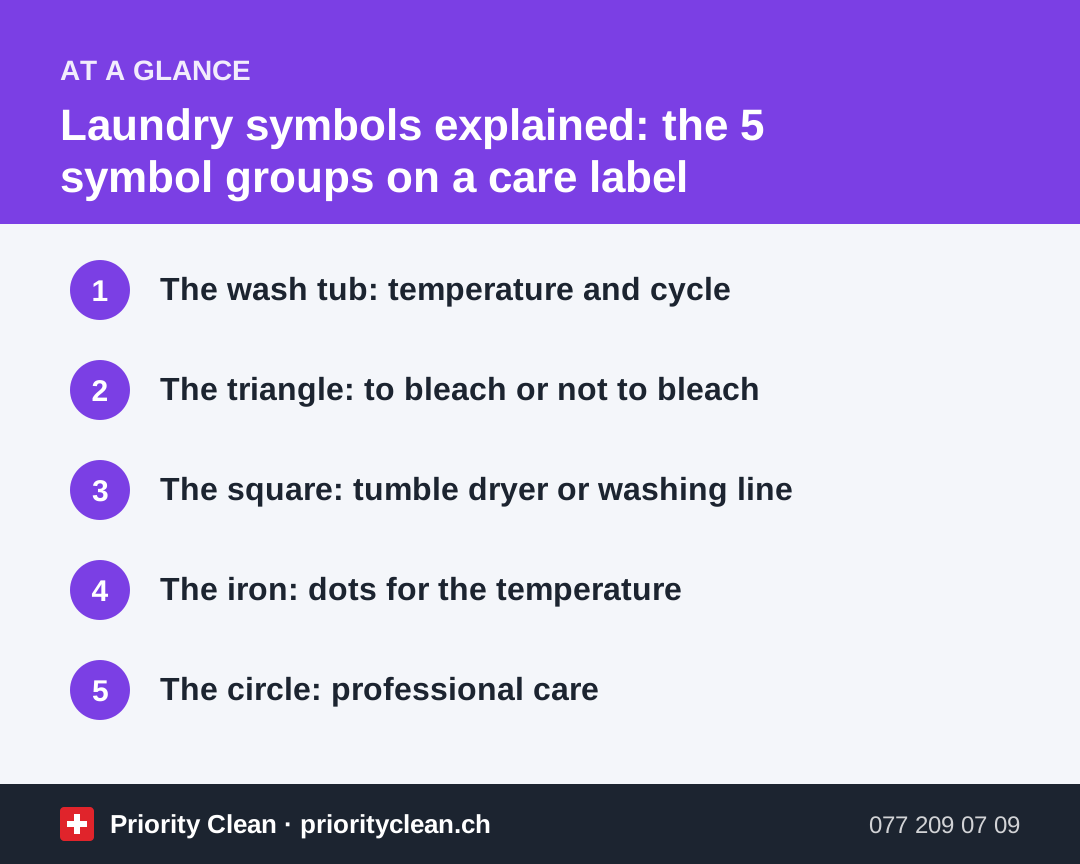
| Symbol group | Basic shape | What it covers |
|---|---|---|
| Washing | Tub of water | Temperature, type of cycle, hand wash |
| Bleaching | Triangle | Which bleaches are allowed |
| Drying | Square | Tumble dryer, line or flat drying |
| Ironing | Iron | Maximum soleplate temperature, steam |
| Professional care | Circle | Dry cleaning and professional wet cleaning |
1. The wash tub: temperature and cycle
The number in the tub is the maximum washing temperature in degrees Celsius. GINETEX explains that one bar under the tub means a milder cycle with reduced mechanical action and two bars a very mild one, for example for woollens.
| Laundry symbol | Meaning |
|---|---|
| Tub with 95 or 70 | Hot wash for sturdy white cotton and linen |
| Tub with 60, 40 or 30 | Coloured wash up to the temperature shown |
| Tub with one bar | Mild cycle, such as the easy-care or synthetics programme |
| Tub with two bars | Very mild cycle, such as the wool or delicates programme |
| Tub with a hand | Hand wash only |
| Crossed-out tub | Do not wash |
GINETEX's consumer site adds that for mild cycles you should load the drum less, for wool no more than one-third full, and hand wash at a maximum of 40 °C without rubbing or wringing. Some labels, for instance on imported goods, show dots in the tub instead of a number: the more dots, the warmer the wash may be.
The number is a ceiling, not a recommendation. EnergieSchweiz, the Swiss federal energy programme, advises choosing low temperatures of 20 to 30 °C, eco programmes and full loads. Everyday laundry with normal soiling still comes out clean. Find out more in our guide to washing at 20 degrees.
2. The triangle: to bleach or not to bleach
The triangle covers bleaching agents, including stain-removing powders and heavy-duty detergents that contain bleach:
- Empty triangle: any bleach may be used, including chlorine bleach.
- Triangle with two diagonal lines: oxygen bleach only, for example a stain-removing powder or heavy-duty washing powder.
- Crossed-out triangle: do not bleach. That also rules out heavy-duty detergents with bleach – use a colour detergent instead.
3. The square: tumble dryer or washing line
Everything to do with drying appears inside a square. A circle in the square means the tumble dryer; lines mean air drying.
| Drying symbol | Meaning |
|---|---|
| Square with circle and two dots | Tumble dry at normal temperature |
| Square with circle and one dot | Tumble dry at reduced temperature, gentle setting |
| Crossed-out square with circle | Do not tumble dry |
| Square with a vertical line | Line dry |
| Square with three vertical lines | Drip dry, hang up without spinning |
| Square with a horizontal line | Dry flat |
| Extra diagonal line in the corner | Dry in the shade |
In a shared laundry room this symbol matters especially, because the tumble dryers there are often powerful. Hang wool, silk and anything with a crossed-out dryer symbol in the drying room, or lay it flat on a towel. For the cold season, see our guide to drying laundry in winter.
4. The iron: dots for the temperature
The dots in the iron show the maximum soleplate temperature. According to GINETEX, that is about 120 °C for one dot, 160 °C for two and 210 °C for three, and this takes priority over the fibre content.
- One dot: low temperature, for example synthetics, silk and acrylic. Steam is often unsuitable.
- Two dots: medium temperature, for wool and blends.
- Three dots: high temperature for cotton and linen.
- Crossed-out iron: do not iron.
- Iron with crossed-out steam lines below: iron without steam.
Iron delicate items inside out or with a cloth in between to avoid shiny patches.
5. The circle: professional care
The last symbol is aimed at the dry cleaner. Letters in the circle tell the professional which process is allowed:
- P in the circle: dry cleaning with the usual solvents.
- F in the circle: dry cleaning with hydrocarbon solvents only.
- W in the circle: professional wet cleaning.
- Bar under the circle: gentle process.
- Crossed-out circle: do not dry clean.
In practice: if the label shows only a circle and a crossed-out tub, the item belongs at the dry cleaner's, not in the washing machine.
The most common mistakes with laundry symbols
- Reading the number as a recommendation: 60 °C means "no hotter than", not "wash at". Cooler is gentler and saves energy.
- Overlooking the bars: a wool jumper with two bars washed on a normal cycle will felt and shrink. The right method is in our guide on how to wash a wool jumper.
- Everything into the tumble dryer: a crossed-out square with circle still applies when you are in a hurry.
- Cutting off the label without noting it: you end up guessing – and often guessing wrong.
Frequently asked questions
What do the bars under the wash tub mean?
One bar stands for a mild cycle with less mechanical action, two bars for a very mild cycle such as the wool programme. Load the drum less, for wool no more than one-third full.
Can I wash at a lower temperature than the label says?
Yes. The number in the tub is the maximum temperature. Washing cooler is allowed and saves energy. Only heavily soiled laundry or items where hygiene matters need more heat.
What does a square with a circle mean?
It is the tumble dryer symbol. Two dots allow normal heat, one dot only reduced heat. If the symbol is crossed out, the item must not go in the dryer.
What should I do if the label is missing?
If in doubt, wash cold or at no more than 30 °C on a gentle cycle, air dry and iron on a low setting. For wool, silk or valuable pieces, ask a dry cleaner for advice.
Thanks for your feedback! Feel free to share the guide.
Thanks! What was missing? Drop us a line – we will improve the guide. WhatsApp