The machine beeps, you open the door – and the white T-shirts have turned pink. Somewhere between the duvet cover and the towels, a red sock was hiding. It is annoying, but you can often still remove colour run from your laundry, as long as you take the right steps in the right order now.
The most important rule first: do not dry anything, neither on the airer nor in the tumble dryer. As long as the fabrics are wet, the stray dye comes out far more easily.
Why colour runs in the wash
Dyes are not always fully fixed in the fibre. During washing, excess dye is released, above all from new, brightly coloured items such as red socks, jeans or dark towels. The loose dye floats in the wash water and settles in other fabrics, which shows most on whites and pale shades.
The risk rises with temperature: the warmer the water, the more dye is released. A mixed load that sits wet in the drum for hours after the programme ends also keeps bleeding. The right rescue depends on the fabric:
| Fabric | First aid | If that is not enough |
|---|---|---|
| White cotton and linen | Rewash with universal detergent and a colour catcher | Oxygen bleach, then a colour run remover |
| White synthetics and blends | Rewash with a colour catcher | Oxygen bleach as per label, remover only if suitable |
| Coloured items | Rewash with colour detergent and a colour catcher | Colour-safe oxygen bleach after a test, no remover |
| Wool, silk, delicates | Rinse cold, wool detergent | Advice from a professional dry cleaner |
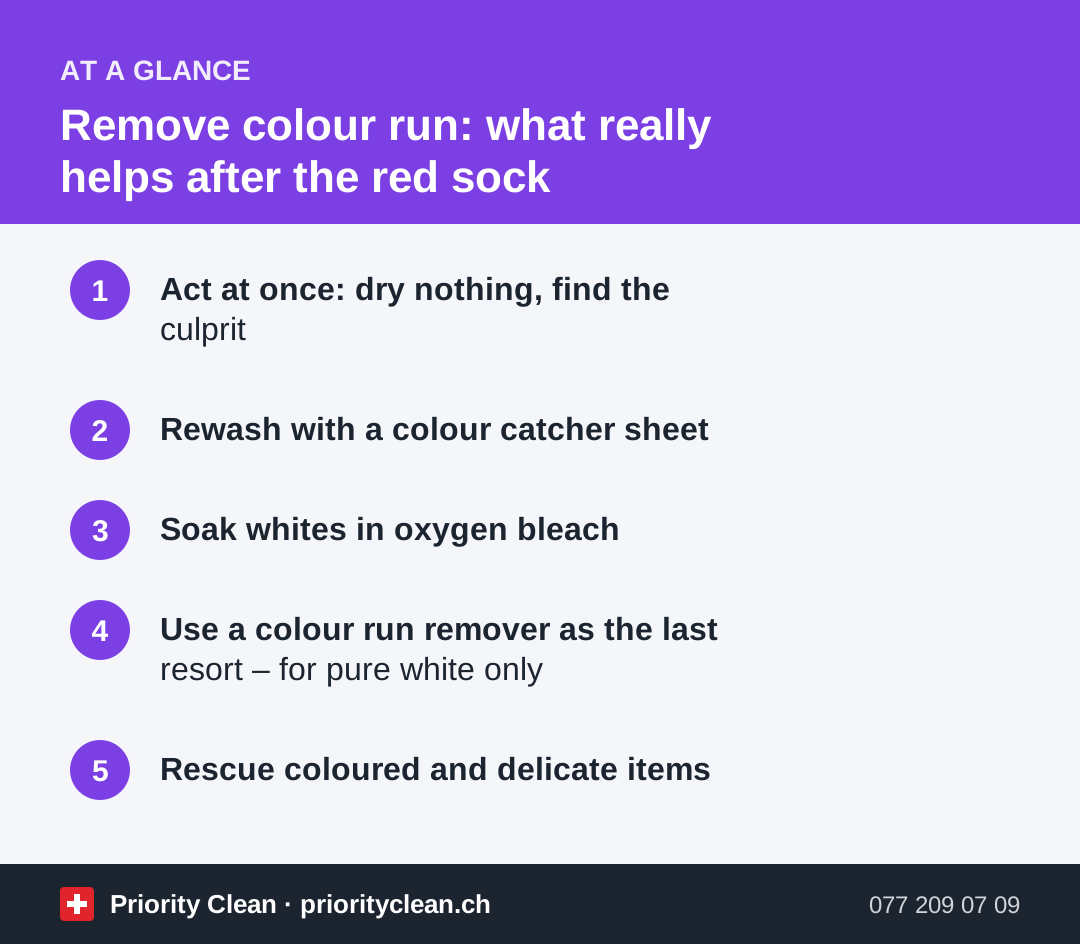
1. Act at once: dry nothing, find the culprit
The first few minutes are decisive. Heat from the tumble dryer or a radiator sets the stray dye in the fibre, and after that the rescue gets much harder.
- Keep it wet: do not hang up the affected items and do not put them in the dryer.
- Find the culprit: shake out duvet covers, pillowcases and trouser legs – socks love to hide in them.
- Sort: separate whites, colours and delicates, as each group needs its own treatment.
- Read the labels: the temperature and the bleach symbol decide which method is allowed.
The number in the wash tub gives the maximum temperature, and the triangle tells you whether bleaching is allowed: empty for any bleach, with two diagonal lines for oxygen bleach only, crossed out for none. GINETEX explains every symbol in its care symbols index.
2. Rewash with a colour catcher sheet
While the dye is still fresh, a second wash is often enough.
- Put only the tinted items back in the drum, without the culprit.
- Add one or two colour catcher sheets – they trap dissolved dye in the wash water before it can settle again.
- Wash whites with universal washing powder, which usually contains oxygen-based bleach, and coloured items with a colour detergent.
- Wash whites as warm as the label allows, and coloured items no warmer than usual.
- Do not overload the drum, so the water can circulate freely.
Check the result in daylight. If the tint has gone, dry as usual; if it has only faded, repeat the wash or move on to step 3.
3. Soak whites in oxygen bleach
If a pink or bluish sheen remains, a soak in oxygen bleach based on sodium percarbonate, sold as stain remover powder, helps white fabrics.
- Dissolve the powder in warm water as directed on the pack – the bleach only works properly at fairly high temperatures.
- Submerge the laundry completely and leave it to soak for a few hours or overnight.
- Then wash with a universal detergent and check again.
The label must allow bleaching. Colour-safe versions exist; test them first on a hidden spot, such as the inside of a hem. Wool and silk cannot take oxygen bleach. You will find more tips for whites in our guide on how to whiten socks.
4. Use a colour run remover as the last resort – for pure white only
If nothing else works, there is the colour run remover from the chemist or supermarket. It strips dye from the fibre, and not just the stray colour: patterns, prints and coloured stitching fade or disappear too. That is why it is only suitable for items that are entirely white.
- Dose exactly as directed and stick to the stated temperature.
- Check which fibres the product is suitable for.
- Rinse thoroughly after the treatment and wash as normal.
Chlorine bleach (Javel water) is no substitute: it attacks elastane and many synthetic fibres and can leave a yellow tinge.
5. Rescue coloured and delicate items
For coloured fabrics the options are fewer. Rewash them with a colour detergent and colour catcher sheets, twice or three times if needed. If that does not help, the remaining option is a colour-safe oxygen bleach, after a test.
With wool, silk, viscose and anything that carries the "do not wash" symbol, it is better not to experiment: a professional dry cleaner can judge what is still possible.
And if nothing helps? A slightly tinted T-shirt still works as pyjamas or for sport – or you can dye it a darker shade with fabric dye.
Prevent the next colour mishap
Washing cooler is also kinder to colours. SwissEnergy (EnergieSchweiz) recommends low temperatures of 20 to 30 °C, eco programmes and full loads anyway. Our guide on how to do laundry explains how to sort by colour, temperature and fabric.
Common mistakes
- Drying first, looking later: heat sets the dye, and your chances drop sharply.
- Chlorine on colours or elastane: light patches, yellowing and brittle fibres are the result.
- Combining products: removers, bleach and vinegar never belong in the same bowl.
- Leaving wet laundry in the shared laundry room: a mixed load keeps bleeding in the drum – and the neighbours are waiting for the machine.
Frequently asked questions
Can white laundry with colour run be saved?
Often, yes – especially if it has not been dried yet. Rewash it straight away with a colour catcher sheet, then soak it in oxygen bleach. For items that are entirely white, a colour run remover is the last resort.
What if the laundry has already been in the tumble dryer?
Your chances are lower, but it is still worth a try: soak overnight in oxygen bleach, then wash; for pure white items, use a colour run remover as directed. Sometimes it takes several rounds.
Do colour catcher sheets really work?
They trap dissolved dye in the wash water and so reduce the risk of colour transferring to other items. They do not protect against everything: new textiles that bleed heavily should still be washed separately.
How many times should new clothes be washed separately?
Until a colour catcher sheet washed with them hardly picks up any colour – often several times for jeans and bright reds. Find out more in our guide on washing new clothes.
Thanks for your feedback! Feel free to share the guide.
Thanks! What was missing? Drop us a line – we will improve the guide. WhatsApp