Your first flat or a room in a flatshare – and suddenly nobody empties the basket for you any more. Knowing how to do laundry properly is no great art, but a few ground rules save energy, keep your clothes in good shape and spare you pink T-shirts.
This guide takes you through five steps from sorting to drying, whether you have your own machine or share the laundry room in an apartment building.
How a simple routine saves your laundry
Most mishaps are not bad luck but routine without a plan: everything goes into the drum together at 40 °C, with a generous splash of detergent. The results are T-shirts with colour run, shrunken jumpers, a grey tinge on whites and a musty smell. With a fixed sequence, that hardly ever happens.
To get started, a small basic kit is enough:
- Universal washing powder: for whites, towels and bed linen; it usually contains bleach.
- Colour detergent: for colours and darks, without bleach.
- Delicates or wool detergent: for wool, silk and fragile items.
- Gall soap: for pre-treating stains.
- Two baskets or a sorting bag: so lights and darks are separated as soon as you get undressed.
- A mesh bag for small items and a clothes airer.
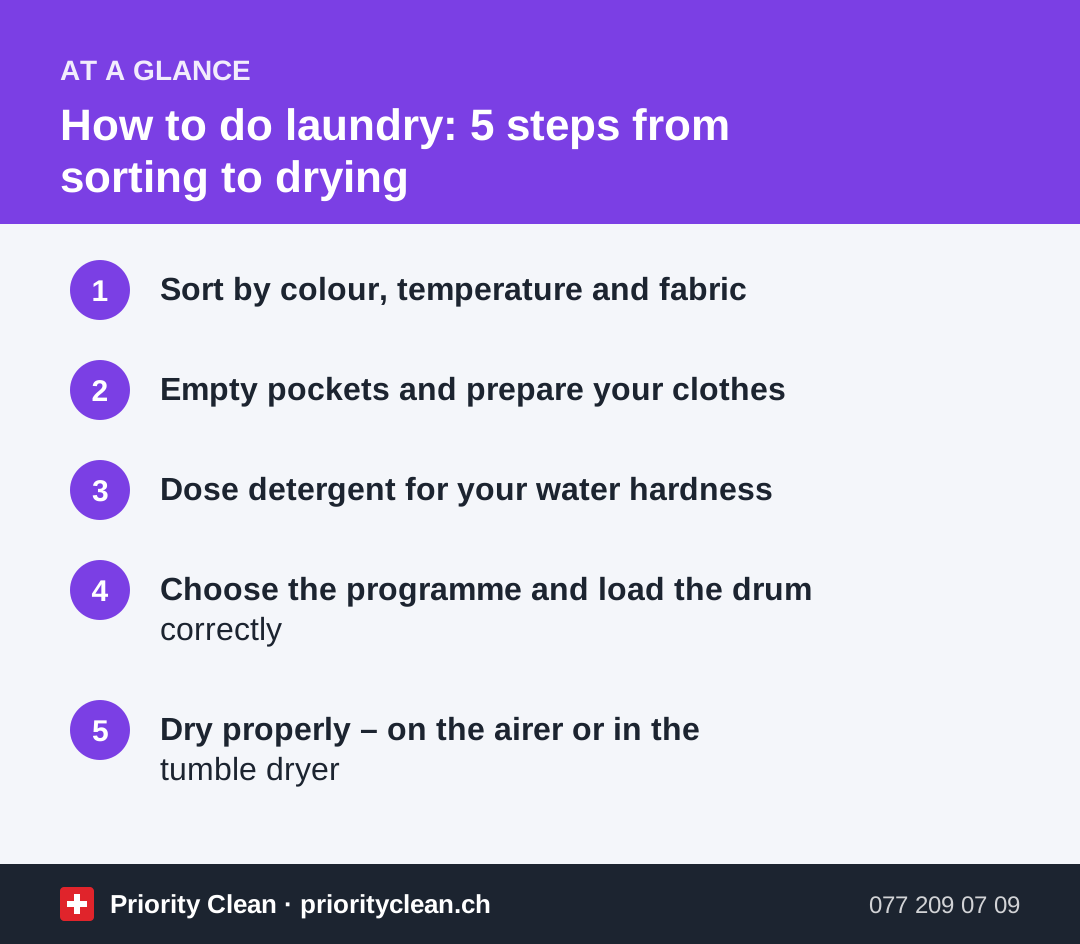
1. Sort by colour, temperature and fabric
Sorting is the most important step, because this is where it is decided whether colours and fibres stay intact.
- Colour: keep whites and lights, colours, and darks and blacks apart. New, strongly dyed items go into the machine on their own for the first few washes.
- Temperature: group items with the same maximum temperature, which the label tells you.
- Fabric: cotton is robust, synthetics prefer a gentler cycle, and wool and silk need a programme of their own. Towels shed lint and do not belong with dark fleece.
The key symbols on the label:
| Symbol | Meaning |
|---|---|
| Wash tub with a number (30, 40, 60) | Maximum temperature in °C |
| One bar under the tub | Gentle cycle with less mechanical action |
| Two bars | Very gentle cycle, e.g. for wool |
| Hand in the tub | Hand wash only |
| Crossed-out tub | Do not machine wash |
GINETEX explains exactly what each symbol means in its care symbols index. And if something does go wrong, our guide on how to remove colour run will help.
2. Empty pockets and prepare your clothes
A forgotten paper tissue scatters lint over the whole load, coins and keys can damage the drum and door glass, and a pen leaves ink stains. So before every wash:
- Empty all pockets, including the small coin pocket on jeans.
- Close zips and Velcro fastenings so they do not snag other items.
- Undo the buttons on shirts so the buttonholes do not tear.
- Turn jeans and printed T-shirts inside out – it protects colour and print.
- Put socks, underwired bras and small items in a mesh bag.
- Pre-treat stains with gall soap; on delicate colours, test on a hidden spot first.
3. Dose detergent for your water hardness
How much powder or liquid you need depends on three things: water hardness, soiling and load size. In Switzerland, water hardness varies from commune to commune; you can look up your water hardness by postcode. Packs sold in Switzerland give the right amount for soft, medium and hard water.
- Use the measuring cap supplied rather than pouring by eye.
- Use less for a half-full drum – automatic load detection saves water, not detergent.
- Fabric softener is not necessary, and for towels, sportswear and microfibre it even does harm. Find out more in our guide on fabric softener.
- Keep pods and detergents closed and out of children's reach.
The detailed rules are in our guide on laundry detergent dosage.
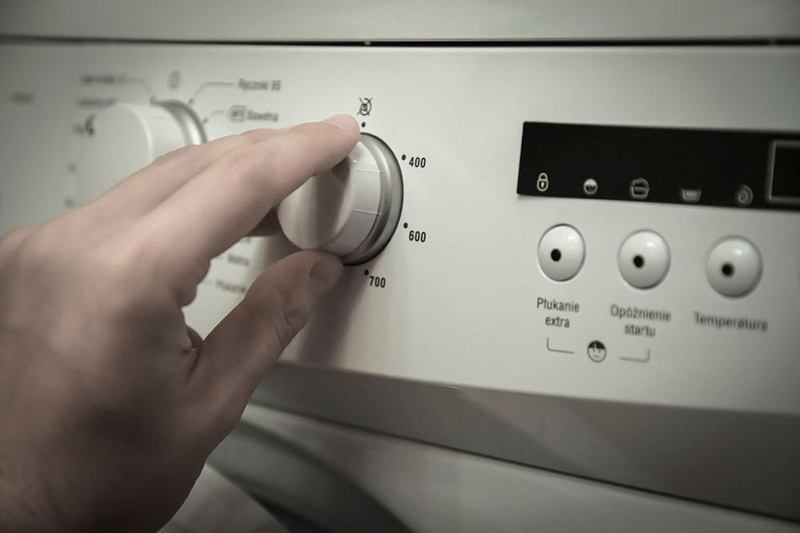
4. Choose the programme and load the drum correctly
The most common programmes and what they are for:
- Cotton: for robust textiles such as towels, bed linen and T-shirts.
- Eco 40–60: for normally soiled cotton; it uses little energy but takes longer.
- Easy care or synthetics: for shirts, blouses and sportswear, with a half load and a gentler spin.
- Delicates, wool or hand wash: for small amounts of fragile items.
- Quick wash: only for small, lightly soiled loads.
SwissEnergy (EnergieSchweiz) recommends choosing low temperatures of 20 to 30 °C, eco programmes and full loads and not using more detergent at low temperatures. For towels, bed linen and tea towels, a 60 °C wash now and then is fine if the label allows it.
Full does not mean crammed: with cotton, you should still be able to lay a hand flat across the top of the load. Easy-care items fill the drum about halfway, wool a third at most. An overloaded drum rinses poorly, and clothes come out badly creased.
5. Dry properly – on the airer or in the tumble dryer
Take your clothes out as soon as the programme ends. If they sit wet in the drum, they start to smell musty.
- Shake out: a good shake smooths creases and fluffs up towels.
- Hang up: shirts and blouses on hangers, trousers by the legs, woollen jumpers flat.
- Tumble dryer: only for items with the tumble-dry symbol; empty the lint filter after every use.
- In the flat: drying clothes release a lot of moisture. Air the room several times a day, briefly and with the windows wide open.
In apartment buildings, the house rules and the laundry rota govern the machine, tumble dryer and drying room. What is usual is summarised in our guide to laundry room rules.
Common mistakes
- Everything together at 40 °C: colours run and whites turn grey.
- Cramming the drum: clothes do not get properly clean and crease badly.
- More powder for more cleanliness: residue makes fabrics stiff and encourages smells.
- Wool on the normal programme: jumpers felt and shrink.
- Leaving wet clothes in the machine: after a few hours the whole load smells musty.
Frequently asked questions
What temperature should I wash clothes at?
For everyday clothes with normal soiling, 30 °C or an eco programme is enough. Towels, bed linen and tea towels can be washed at 60 °C now and then, if the care label allows it.
How full can the washing machine be?
With cotton, full enough that you can still lay a hand flat across the top of the load. Easy-care items should only fill the drum halfway, wool a third at most.
Can I wash towels and clothes together?
Yes, if colour and temperature match. Towels shed a lot of lint, though, so they do not belong with dark fleece or dark synthetics.
What is the "Eco 40–60" programme?
It washes normally soiled cotton labelled for 40 or 60 °C using very little energy. It takes longer because the lower temperature is made up for with more washing time.
Thanks for your feedback! Feel free to share the guide.
Thanks! What was missing? Drop us a line – we will improve the guide. WhatsApp