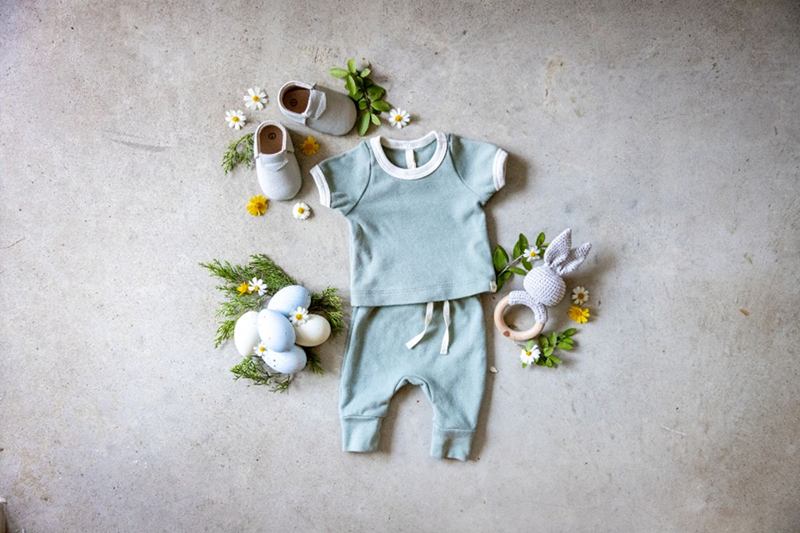
The first bodysuits, sleepsuits and muslins are ready, often gifts from family and friends. Before they touch a newborn's delicate skin, they go in the machine. Washing baby clothes is less about high temperatures and more about the right detergent, thorough rinsing and leaving out anything that puts unnecessary strain on the skin.
A baby's skin is thinner and more sensitive than an adult's. Five simple rules keep the laundry clean, soft and gentle on the skin – from the very first wash to puree stains and cloth nappies.
Why baby clothes need special care
New textiles can carry residues from manufacturing, transport and storage – for example finishes that keep fabric smooth and crease-resistant, or excess dye. Adults hardly notice, but a baby's sensitive skin may react with redness. On top of that, clothes in shops have often been handled, tried on or left on the shelf for a long time.
Then there is everyday life with a baby: milk, spit-up, puree and full nappies mean small items often land in the laundry basket after just a few hours. The amount of washing rises sharply, and you want to avoid detergent residue in fabrics that sit against the skin all day.
| Item | Temperature (if the label allows) | Note |
|---|---|---|
| Cotton bodysuits, sleepsuits, pyjamas | 40 °C, 60 °C if needed | Fragrance-free detergent, extra rinse |
| Muslins, bibs, burp cloths | 60 °C | Often heavily soiled, pre-treat stains |
| Bedding, sleeping bag covers | 40–60 °C | Sleeping bag as per manufacturer |
| Knitwear, wool, wool-silk | 30 °C or hand wash | Wool detergent, dry flat |
| Cloth nappies | 60 °C | As per manufacturer, no fabric softener |
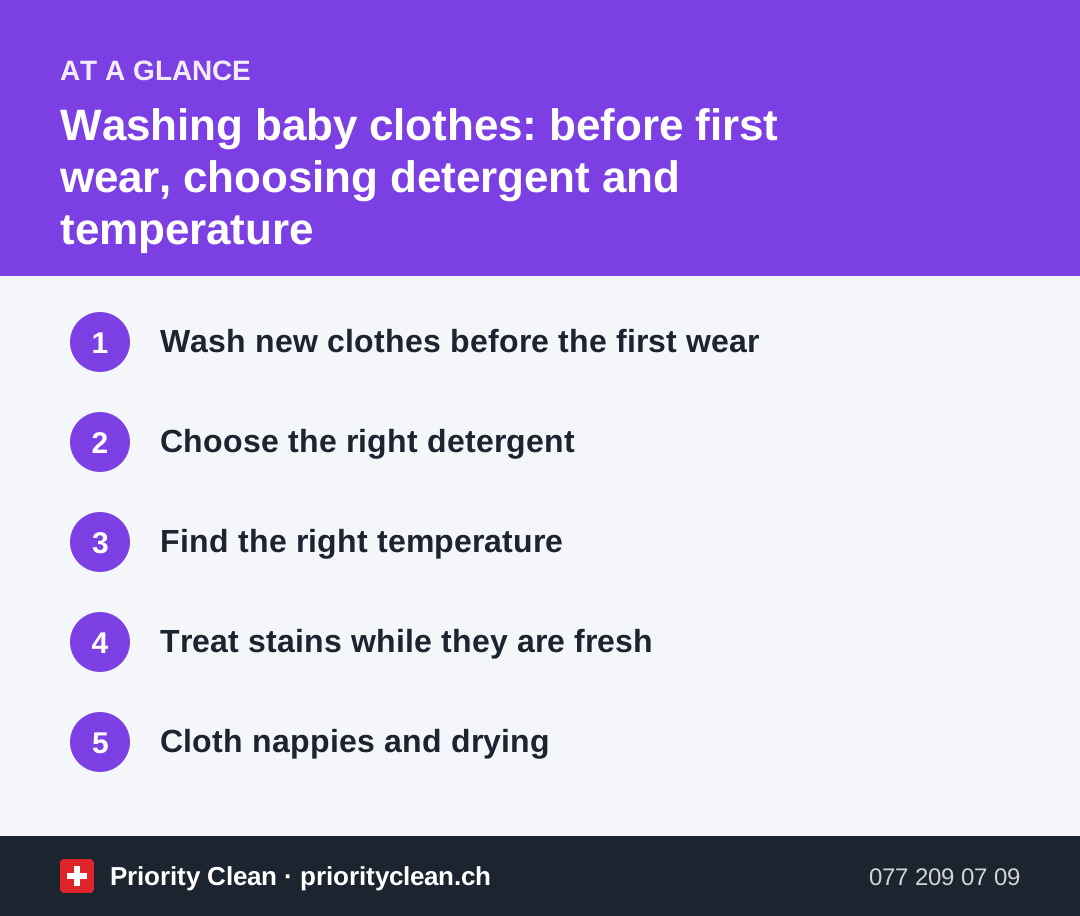
1. Wash new clothes before the first wear
Wash everything new for the nursery once before use: bodysuits, little hats, muslins, bedding and soft toys too, if they are washable. This applies to gifts as well as to clothes from second-hand children's markets or hand-me-downs from older siblings that have spent a long time in the attic or cellar.
First remove labels, tags, clips and cardboard, close poppers and zips and turn printed items inside out. Wash brightly coloured new pieces separately the first few times, as they may bleed. Our guide to washing new clothes explains why a first wash is worthwhile for adult clothing too.
2. Choose the right detergent
A fragrance-free detergent without dyes is ideal for baby clothes, preferably one made for sensitive skin. Use a heavy-duty detergent for white cotton, a colour detergent for coloured items and a wool detergent for woollens.
The amount matters more than the brand: dose according to water hardness and soiling, and err on the low side. Many machines offer an extra-rinse option that removes detergent residue from the fabric – for baby laundry it is well worth using.
Fabric softener is best left out completely. It leaves a film on the fibres, contains fragrance and makes towelling and cloth nappies less absorbent. Read more in our guide fabric softener: yes or no?.
3. Find the right temperature
For most bodysuits, sleepsuits and trousers, a 40-degree programme with a good detergent is enough. EnergieSchweiz, the Swiss federal energy programme, recommends choosing low temperatures, eco programmes and full loads – without adding more detergent. That suits baby laundry well, as long as you rinse thoroughly.
60 °C makes sense for heavily soiled items such as muslins, bibs and cloth nappies, when there is a stomach bug in the household, and in case of allergies. aha! Swiss Allergy Centre recommends that people with a house dust mite allergy wash pillowcases, duvet covers and pyjamas at 60 °C. Always check the care label, though: knitwear, wool and prints often tolerate only 30 °C.
4. Treat stains while they are fresh
Milk, puree, carrots and nappy contents leave stubborn stains once they dry. Rinse soiled items in cold water as soon as possible – hot water can set protein-based stains such as milk. Then rub in a little gall soap or liquid detergent and wash as usual. Carrot and pumpkin stains often fade if the washed item dries in the sun.
Which method works for which stain? Our guide to removing stains from children's clothes covers the lot.
5. Cloth nappies and drying
If you use cloth nappies, rinse them after changing or remove solid matter, and store them until wash day in a ventilated container. Wash them according to the manufacturer's instructions – usually with heavy-duty detergent at 60 °C and no fabric softener. Microfibre or wool inserts have their own rules.
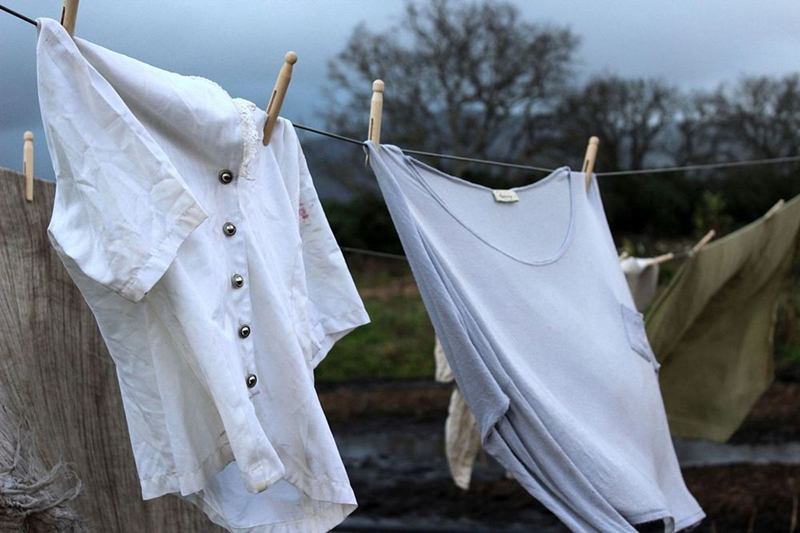
Baby clothes dry best in the air, on an airer indoors or outside in the shade. Cotton can go in the tumble dryer if the label allows, but tends to shrink a little. In the shared laundry room of an apartment building, give the detergent drawer and door seal a quick clean before washing baby clothes if neighbours use fabric softener or heavily scented products.
Common mistakes when washing baby clothes
- Putting new clothes on unwashed: residues from manufacturing and storage go straight onto the skin.
- More detergent for more cleanliness: overdosing leaves residue in the fabric that can irritate sensitive skin.
- Scented fabric softener: makes towelling less absorbent and brings needless fragrance onto the skin.
- Everything at 90 degrees: uses energy, shrinks cotton and fades colours without any everyday benefit.
Frequently asked questions
Do you need to wash baby clothes before the first wear?
Yes, it is recommended. New textiles can carry residues from manufacturing and storage, and clothes from shops have often been handled or tried on. One wash with a fragrance-free detergent is enough.
Which detergent is best for baby clothes?
A fragrance-free detergent without dyes, used sparingly: heavy-duty for whites, colour detergent for coloured items, wool detergent for woollens. Special baby detergents are fine but not essential.
What temperature should baby clothes be washed at?
Everyday laundry at 40 °C. Muslins, bibs, cloth nappies and laundry during illness or allergies at 60 °C, if the label allows. Knitwear and wool at 30 °C or by hand.
Can baby clothes be washed with the rest of the laundry?
In principle yes, if you use a fragrance-free detergent and no fabric softener for the whole load. Heavily soiled work clothes or cleaning cloths are better washed separately.
Thanks for your feedback! Feel free to share the guide.
Thanks! What was missing? Drop us a line – we will improve the guide. WhatsApp