The van is booked, the boxes are packed – and on the morning of the move there isn't a single free space outside the building. If you don't sort out a parking permit for moving day in time, you end up carrying furniture a long way, blocking the street or risking a fine. In many communes, a simple application is all it takes to avoid this.
However, every commune handles parking for moves slightly differently. Using Zurich, Bern and Geneva as examples, this guide shows what to look out for, which deadlines are common and how to organise signs and inform your neighbours in good time.
Why a parking permit for moving makes such a difference
A moving van needs room: for the vehicle itself, for the open rear door or tail lift, and often for a furniture lift. If the street outside is full, only bad options remain. Every extra metre of carrying costs time and energy, and for a whole flat that quickly adds up.
| Situation | What you need |
|---|---|
| Private driveway or visitor space | Permission from property management or the owner |
| Space in a blue or white zone | A reservation with the commune or city police, depending on the location |
| No-stopping or no-parking zone, old town, pedestrian zone | Usually a special permit |
| Furniture lift on the pavement | Usually a permit to use public land |
Which rule applies where is up to the commune. There is no single nationwide solution.
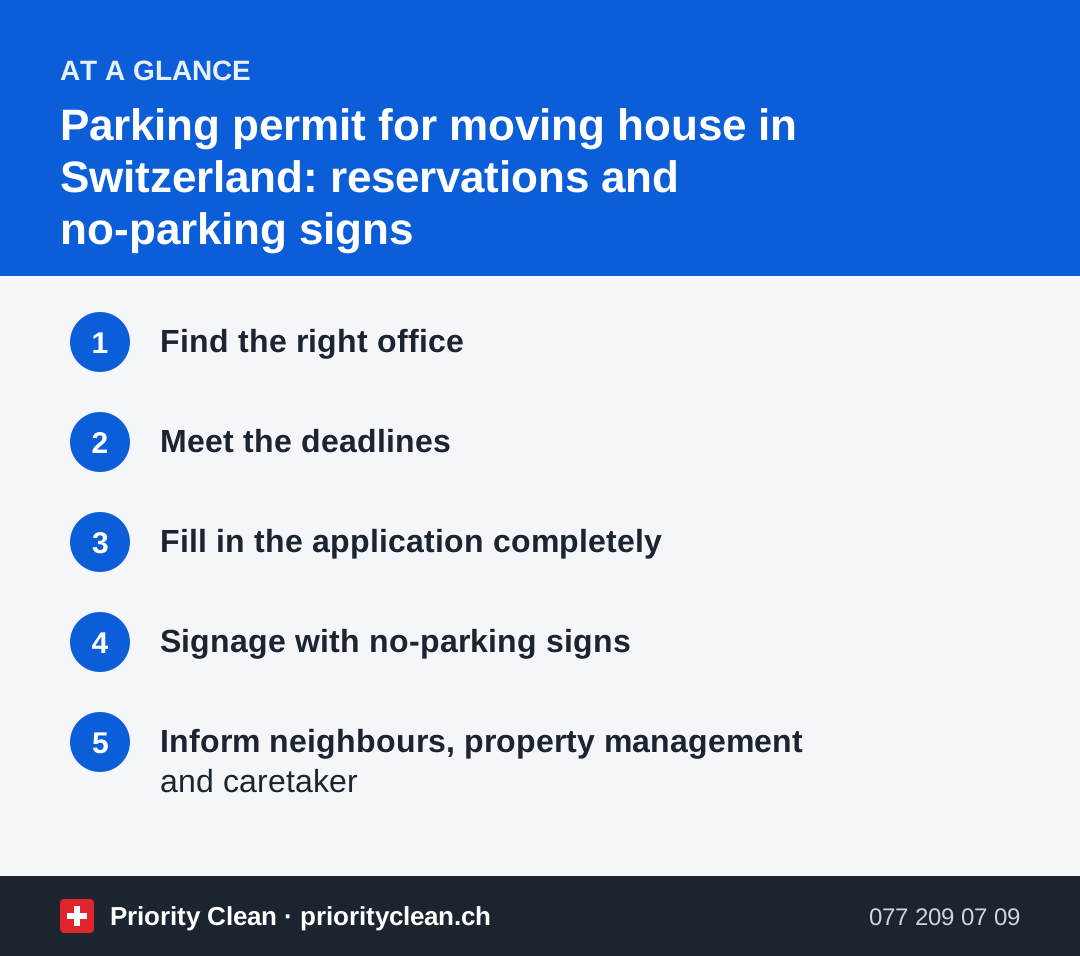
1. Find the right office
In larger cities it is usually the city police who are responsible; in smaller communes it's the municipal administration or the communal police. Search your commune's website for terms such as "moving" ("Umzug", "déménagement", "trasloco"), "parking reservation" or "use of public land". If you can't find anything, call the commune's office.
Remember both addresses: the van needs a space at your new home too. If your old and new flats are in different communes, submit two applications.
2. Meet the deadlines
Lead times vary considerably. Three examples from the cities' official information:
| City | What applies | Deadline |
|---|---|---|
| Zurich | Online reservation with the city police, only if really needed, maximum 14 days | Blue zone at least 7, white zone at least 3 working days before |
| Bern | Free moving permit for the city centre or no-stopping and no-parking zones | Order no-parking signs at least 8 working days before |
| Geneva | Permit for increased use of public land, depending on the space needed | Online at least 10 working days before |
In Zurich you reserve parking spaces for your move using an online form from the city police. According to the city, one or two adjacent spaces for a maximum of one day cost between CHF 120 and 170; confirmation usually arrives within two working days. If the requested spaces aren't available, the next possible alternative can be reserved.
3. Fill in the application completely
The more precise your details, the faster the permit. Have ready:
- the exact address and, if possible, the position outside the building;
- the date and time window, for example 7 am to 5 pm;
- the type and length of the vehicle, including the total length with a trailer;
- the number of spaces or the length needed in metres;
- any furniture lifts, containers or ramps on the pavement;
- your contact details for queries.
Plan realistically: it's better to reserve an extra half day than to have to vacate the space in the middle of unloading.
4. Signage with no-parking signs
A reserved space is only useful if other drivers know about it. How signage works is also set by the commune:
- In Bern you can order no-parking signs from a moving company or, to set them up yourself, from the cantonal police signage office. The moving company puts them up and collects them again; the order must be placed at least eight working days before the move.
- In Geneva, the signage guidelines have to be requested separately from the canton; the permit to use public land is issued by the city.
- In other communes, the responsible office will tell you whether signs are provided or whether you need to arrange them yourself.
Home-made notes don't replace a permit or official signage. If the commune requires it, put up the signs in good time so that parked cars can be moved away.
5. Inform neighbours, property management and caretaker
A short notice in the stairwell saves a lot of trouble. State the date, the time window and the reserved spaces. Ask property management or the caretaker whether the lift can be reserved or protected and whether the entrance and underground car park need to be kept clear.
For a full overview of all the tasks involved in moving, see our moving checklist for Switzerland. How many people you need on the day is covered in our article on moving day helpers.
The most common mistakes
- Asking too late: if you only think about parking two days before, you'll miss the deadline in many cities.
- Only thinking of one address: the vehicle needs space at your new home too.
- Reserving too little space: tail lift, furniture lift and room to manoeuvre are often forgotten.
- Parking in a no-parking zone without a permit: this can lead to a fine and hold up traffic.
- Surprising the neighbours: without warning, the cars you could have avoided are often exactly the ones in the way.
Frequently asked questions
Do I need a permit to park outside my home when moving?
That depends on the commune and the location. On normal parking spaces, a reservation is enough in some cities; in no-stopping or no-parking zones or in the old town, you usually need a permit. Ask your commune or the city police.
How far in advance do I need to reserve the space?
It varies: in Zurich at least three working days for the white zone and seven for the blue zone, in Bern at least eight working days for the no-parking signs, in Geneva at least ten working days. Other communes have their own deadlines.
How much does a parking space for moving cost?
Each commune sets its own fees. According to the city, the moving permit is free in Bern; in Zurich, one or two spaces for one day cost between CHF 120 and 170 according to the city police. Elsewhere, your commune will tell you the price.
Can I put up no-parking signs myself?
Only if the commune allows it and you use official signs. In Bern, for example, you can order them from the cantonal signage office and put them up yourself. Home-made signs don't replace a permit.
Thanks for your feedback! Feel free to share the guide.
Thanks! What was missing? Drop us a line – we will improve the guide. WhatsApp