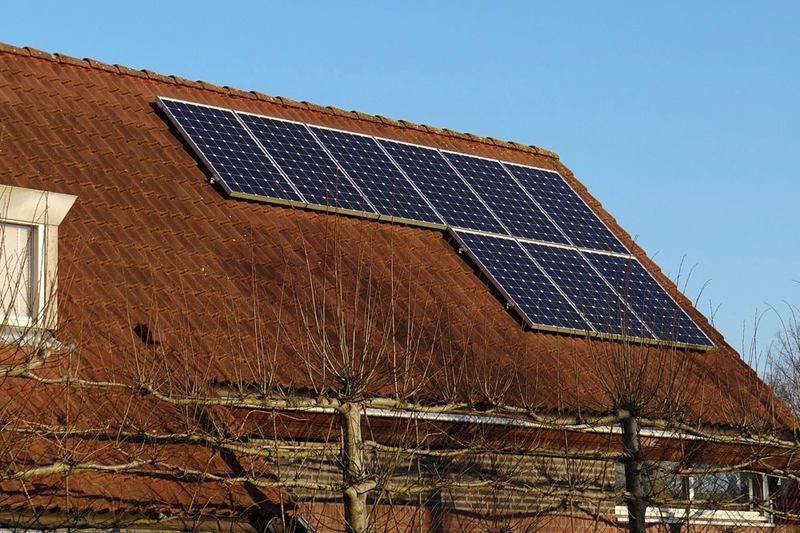
In spring, yellow pollen covers the modules, along with a few spots of bird droppings and last autumn's leaves stuck in a corner. No wonder many homeowners are now wondering whether to have someone clean solar panels for them – or to reach for the hose themselves. The honest answer may surprise you: in many cases the rain does the job, and where it doesn't, cleaning on the roof belongs in the hands of a specialist firm.
This guide explains how to tell whether cleaning is worthwhile, what you can safely do yourself and why tap water, cleaning products and pressure washers have no place on solar panels.
Do you need to clean solar panels?
Dust, pollen, leaves, bird droppings and moss reduce output – that's undisputed. But according to the Swiss solar industry association Swissolar, normal soiling is usually washed off by the rain. Regular cleaning mainly pays off in three situations: on stables, near dusty sites such as gravel works or building sites, and on roofs with a pitch of less than 10 degrees, where water doesn't drain well.
| Situation | Cleaning needed? |
|---|---|
| Normal pitched roof in a residential area | Usually not – the rain cleans |
| Flat roof or pitch under 10 degrees | More often useful, dirt stays at the edge |
| Stable, farming, dusty surroundings | Regularly useful |
| A few spots of bird droppings | Keep an eye on them, rain often washes them away |
| Balcony solar kit on the railing | Yourself, gently, when needed |
There is no legal obligation to maintain a system. Swissolar notes that a photovoltaic system has hardly any wearing parts and usually needs no regular maintenance. An owner who neglects all due care, however, can share responsibility for damage.
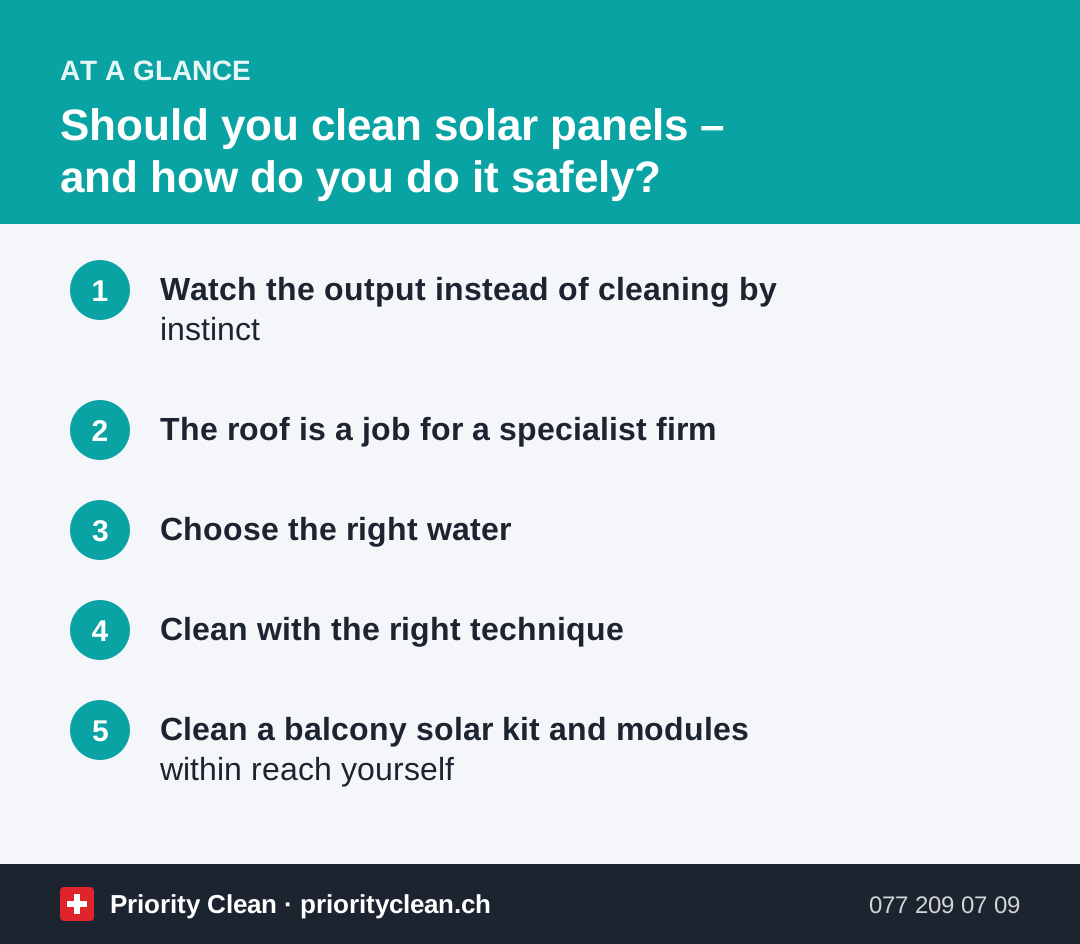
1. Watch the output instead of cleaning by instinct
The best indicator of soiling isn't a glance at the roof, but the output. Swissolar recommends monitoring systems remotely so that faults can be spotted and fixed. Compare the figures in the app or on the inverter with the same months in previous years in similar weather. If output drops noticeably and the weather doesn't explain it, dirt may be the cause – but so may a technical fault.
After a storm, Swissolar says a visual check makes sense. Do it from the ground or a window, with binoculars for example, and don't climb onto the roof yourself.
2. The roof is a job for a specialist firm
According to Swissolar, solar panels on the roof must be cleaned by a specialist company. The reasons are clear:
- Risk of falling: roofs are steep, modules are smooth, and wet surfaces are even more slippery.
- Never walk on the modules: even a person's weight can cause fine cracks in the cells.
- Electrical system: modules generate voltage in daylight, and cables and connectors are sensitive.
- Warranty: the wrong products or tools can damage the surface and put the warranty at risk.
3. Choose the right water
For cleaning, Swissolar only names demineralised water or rainwater. In many Swiss communes, tap water is hard and leaves limescale spots on the glass as it dries – exactly what you want to avoid. It's the same problem you know from windows; read more in our guide to limescale spots on windows.
Cleaning products are off limits: according to Swissolar, they can attack the surface, put the module warranty at risk and pollute the wastewater. Abrasive cleaners, glass cleaners with additives and vinegar don't belong on the panels either.
4. Clean with the right technique
Specialist firms work with soft, non-scratching brushes on telescopic poles or with cleaning robots. For panels you can reach without a ladder and without any risk of falling, the same principle applies:
- Soft brush or sponge: nothing that scratches, and no blades or scrapers.
- No pressure washer: the hard jet can damage seals and frames.
- Gently from top to bottom: rinse with plenty of demineralised water.
- Cool modules: ideally in the morning, the evening or when it's overcast, so the water doesn't dry immediately.
- Soak bird droppings: moisten them and wait rather than scrubbing.
5. Clean a balcony solar kit and modules within reach yourself
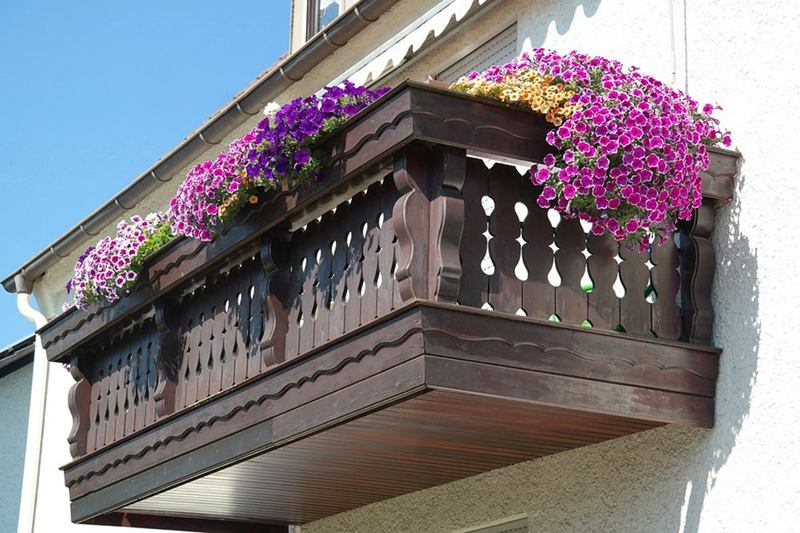
Plug-in solar kits on a balcony railing, modules on a façade at hand height or on the edge of a carport can often be reached without a ladder. Here you can clean them yourself – with the same rules as the professionals:
- Read the manufacturer's instructions, especially on cleaning and the electrical connection.
- Brush off loose dirt and pollen dry with a soft brush.
- Wipe with demineralised water or rainwater and a soft sponge.
- Let bird droppings soak and loosen them gently.
- Don't lean over the railing and don't stand on chairs.
If you need a step, use a stable step ladder. The BFU advises looking for deep, non-slip treads, non-slip feet and a lock that stops it folding up. To remove bird droppings from other surfaces around the house, see our guide on how to remove bird droppings.
The most common mistakes
- Climbing onto the roof yourself: the risk of falling is real, and modules that are walked on can be damaged.
- Cleaning with hard tap water: it leaves limescale spots that are more annoying than the dust.
- Using cleaning products: they can attack the coating and put the warranty at risk.
- Using a pressure washer: the jet can damage seals and frames.
- Cleaning for no reason: without a drop in output, cleaning often achieves little.
Frequently asked questions
Do you need to clean solar panels regularly?
Usually not. According to Swissolar, rain generally washes off normal soiling. Regular cleaning mainly pays off on stables, in dusty surroundings and on roofs with a pitch of less than 10 degrees.
Can I clean my solar panels myself?
According to Swissolar, modules on the roof should be cleaned by a specialist firm because of the risk of falling and because the modules must not be walked on. Balcony kits and modules within reach can be cleaned gently yourself.
What should you clean solar panels with?
With demineralised water or rainwater and a soft, non-scratching brush. Cleaning products, pressure washers and hard tap water are unsuitable.
Do you lose the warranty if you don't maintain the system?
According to Swissolar, warranty claims are not lost just because there is no regular maintenance. An owner who completely neglects due care, however, can share responsibility. The wrong cleaning products, on the other hand, can put the module warranty at risk.
Thanks for your feedback! Feel free to share the guide.
Thanks! What was missing? Drop us a line – we will improve the guide. WhatsApp