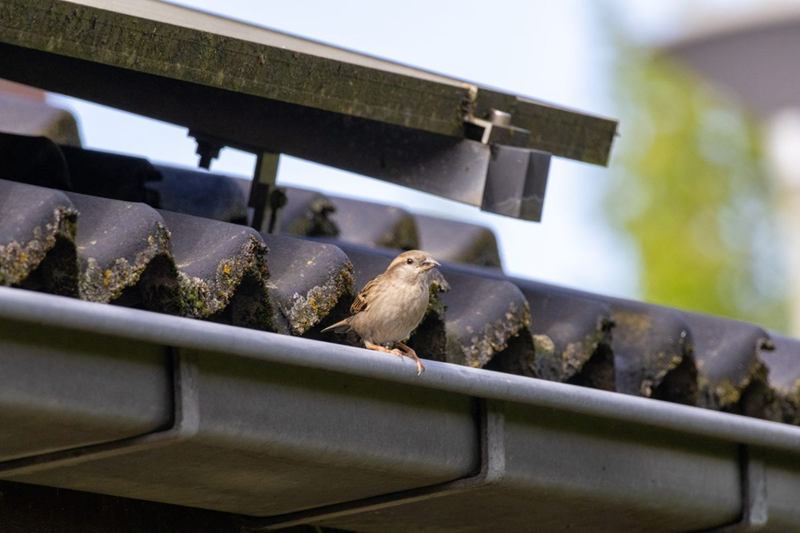
After winter, many gutters hold whatever autumn storms and snow have left behind: leaves, pine needles, twigs, moss and sludge. In the first heavy spring storm, the water then spills over the edge, runs down the facade or backs up in the downpipe. If you are wondering how to clean gutters, answer two questions first: who is responsible – and can the job be done safely at all?
This guide explains when cleaning is due, how to do it on low roofs and when to call in professionals. It is not legal advice: your lease, the house rules and the condominium regulations are what count.
Why a blocked gutter can get expensive
The gutter collects rainwater from the roof and drains it through the downpipe. If it is blocked, the water overflows. It soaks the facade and plinth, splashes onto windows and blinds and can seep into cellar walls. Wet leaves are heavy, and together with ice and snow they strain the brackets. In winter, standing water freezes into blocks of ice, and before long the first plants sprout in the layer of humus.
| Sign | Possible cause |
|---|---|
| Water spills over the edge when it rains | Channel or outlet blocked |
| Plants or moss growing along the eaves | Deposits of leaves and soil |
| Gurgling or water at the pipe joints | Blockage in the downpipe |
| Sagging section, water stays standing | Bent brackets or wrong fall |
| Damp patches on the facade or plinth | Overflowing or a leaking joint |
1. Who is responsible for cleaning the gutters?
Gutters are part of the building, and maintaining the building is in principle the owner's responsibility. Under Art. 259 of the Code of Obligations, tenants must remedy, at their own expense and in line with local custom, defects that can be fixed by minor cleaning or repairs. Emptying a channel several metres up is unlikely to count – but what your lease says is what matters.
| Situation | Usually responsible |
|---|---|
| Flat in an apartment building | Owner or property management, usually via the caretaker or a contractor |
| Rented detached house | The landlord, unless the lease transfers this upkeep to the tenant |
| Condominium ownership | The owners' community; the administrator organises the work |
| Your own house | You, as the owner |
| Rented garden shed or bike shelter | Depends on the lease – if in doubt, ask the property management |
If you notice as a tenant that water is overflowing, report it to the property management or caretaker, ideally with a photo. In many buildings, this check is part of the caretaker duties list.
2. When to clean: spring and autumn
A check at least once a year is a must. If there are deciduous or coniferous trees nearby, cleaning twice a year pays off: in spring, once winter storms have left branches and needles behind, and in late autumn, once the leaves have fallen. After severe storms, take an extra look. Work on a dry, calm day without frost, and don't hack at ice in a frozen channel – that damages the metal.
3. Safety: ladder or professional?
Only tackle what you can reach comfortably from a securely standing ladder – for example on a garden shed, carport, garage or single-storey extension. For stepladders, the Swiss Council for Accident Prevention (BFU) recommends, among other things, deep treads with non-slip grooves, non-slip feet and a lock that stops the ladder folding.
- Set the ladder on firm, level ground and never lean it against the gutter – it can bend.
- Don't lean out to the side; move the ladder more often instead.
- A second person steadies the ladder and hands up the bucket and tools.
- Wear sturdy shoes with good grip, gloves and safety glasses.
4. Step by step: clean the gutter and downpipe
- Place a bucket or tarpaulin below the work area and put on gloves and safety glasses.
- Lift out leaves, needles and sludge by hand or with a small scoop – don't push them towards the downpipe.
- Empty and rinse the leaf strainer or the grille at the outlet.
- Rinse the channel with a garden hose from the far end and check that the water drains away quickly.
- On the downpipe, open the access cover or rainwater diverter if there is one and remove any deposits.
- Check brackets, joints and outlet for rust, cracks and leaks, and report damage to the property management or a roofer.
If water stays standing in the channel, the fall is often wrong. If the downpipe is blocked low down or underground, you need a specialist firm.
Skip cleaning products and chemicals. Under the Chemical Risk Reduction Ordinance, products against algae and moss and weedkillers must not be used on roofs or in gutters, because residues are washed into water bodies – and the ban applies to private individuals too. Mechanical removal is the alternative. Leaves belong in the green waste or on the compost, never in the downpipe or a drain. For more on disposal, see our guide Fallen leaves: tenant or landlord?.
5. Prevention: guards and regular checks
Mesh guards or brush inserts keep out larger leaves, and leaf strainers protect the downpipe. But no solution is maintenance-free: needles, seeds and fine dirt still get in, and leaves pile up on top of the guards. Protected rainwater systems therefore need regular checks as well. Cutting back branches that overhang the roof reduces the amount of leaves; in a rented building, that is the owner's job. If your lease makes you responsible for outdoor work, our guide Garden maintenance, tenant or landlord? answers further questions.
Common mistakes
- Going up the ladder alone: nobody steadies it or can call for help if something happens.
- Leaning the ladder against the gutter: the metal bends and the ladder can slip.
- Using moss killer or cleaning products: residues end up in water bodies with the rain.
- Flushing leaves into the downpipe: the blockage just moves further down.
- Checking the channel but not the downpipe: the water backs up again in the next rain.
Frequently asked questions
How often should gutters be cleaned?
Check them at least once a year and clean them when needed. With trees nearby, cleaning in spring and again after the leaves fall in autumn makes sense, plus an extra check after severe storms.
Do I have to clean the gutters as a tenant?
Usually not. Under Art. 259 CO, tenants only have to carry out minor cleaning and repairs in line with local custom. For a rented detached house, the lease determines whether more is expected. Either way, avoid any work with a risk of falling and report a full channel to the property management.
Can I use moss killer in the gutter?
No. Products against algae and moss and weedkillers are banned on roofs and in gutters, because residues end up in water bodies. This also applies to private individuals. Moss and dirt are removed mechanically.
Are gutter guards worth it?
They keep out larger leaves and stretch the intervals between cleans. But fine dirt, needles and seeds still get in, and leaves pile up on top of the guard. Regular checks are still necessary.
Thanks for your feedback! Feel free to share the guide.
Thanks! What was missing? Drop us a line – we will improve the guide. WhatsApp