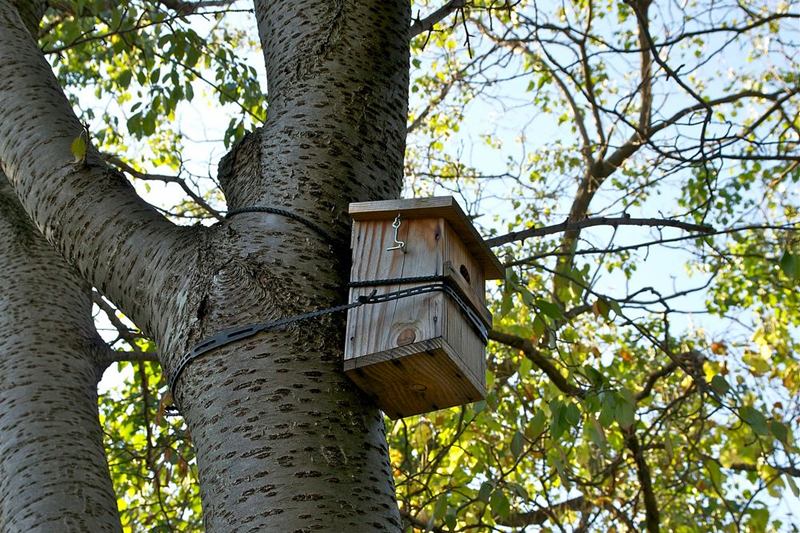
In early March the tits start singing again, and in the garden your eye falls on the box on the tree: is last year's old nest still inside? Many people now wonder whether to clean their bird nest box before the new breeding season begins. The short answer: the best time is in autumn and winter – from now on, the main thing is not to disturb the birds.
This guide explains when and with what to clean nest boxes properly, how to protect yourself from droppings and parasites, and what you can still do in spring – from hanging the box at the right height to keeping the bird feeder clean.
Why clean a bird nest box?
Tits, nuthatches, sparrows and other cavity-nesting birds build a new nest every year. The old one stays in the box along with droppings, feathers and often fleas, mites and other parasites. According to the Swiss Ornithological Institute, cleaning is not compulsory but sensible: the birds get room for a new nest, and there are fewer parasites the following year.
Bird droppings are not just unsightly, either. Writing about pigeons, the City of Zurich points out that bird droppings can be a hygiene problem because they can contain viruses, salmonella and other bacteria. With a small nest box the risk is limited, but a little caution is still worthwhile.
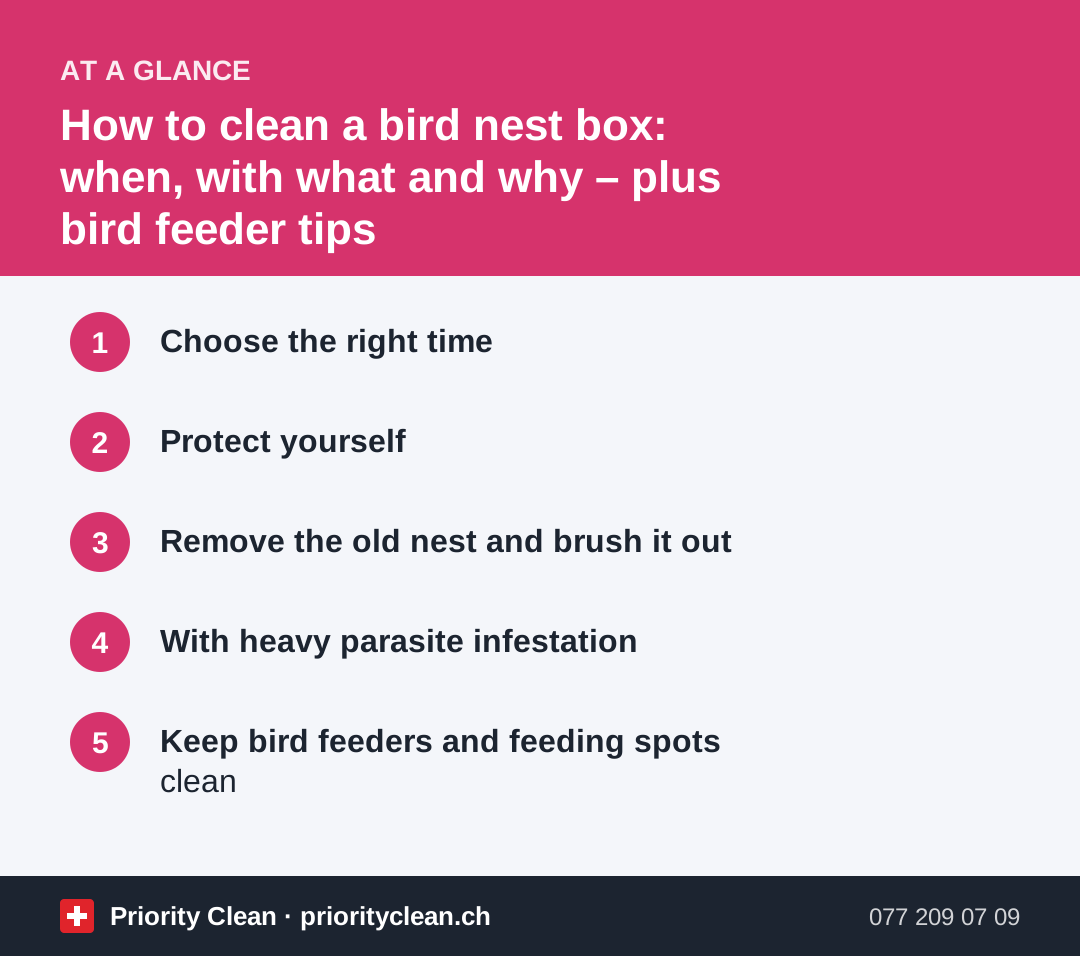
1. Choose the right time
When it comes to cleaning a nest box, timing matters most. The Swiss Ornithological Institute recommends cleaning it once a year between October and the end of January, and never during the breeding season.
| Period | What to do |
|---|---|
| October to end of January | Clean thoroughly, remove the old nest, check the box |
| February until breeding starts | Stop opening it once birds visit the box or carry in nesting material |
| Breeding season | Leave the box in peace, no checks |
| Late summer | Watch whether the box is still in use; plan the autumn clean |
A frosty day is ideal, says the Ornithological Institute: in the cold, parasites are sluggish and won't move onto you.
2. Protect yourself
Opening the box often releases dust from the old nest. So wear:
- Gloves: sturdy gardening gloves or disposable gloves.
- A dust mask: the City of Zurich recommends a good dust mask for cleaning up pigeon droppings – for a nest box, it's at least a sensible precaution.
- Old clothes: which go straight into the wash afterwards.
Open the box outdoors with the wind at your back, and wash your hands thoroughly when you've finished.
3. Remove the old nest and brush it out
Here's how:
- Take the box down or open the flap or front panel.
- Carefully lift out the old nest and put it straight into a bag.
- Brush out droppings and nest debris dry.
- Wipe the inside walls and floor with a damp sponge.
- Check the ventilation holes in the floor and clear them.
- Let the box dry open, then hang it back up.
The Ornithological Institute mentions at least two ventilation holes of about 5 mm in the floor – they stop water from collecting. The old nest goes in the rubbish bag, not on the compost or in the garden.
4. With heavy parasite infestation
Dry brushing is usually enough. But if there are a lot of parasites, the Ornithological Institute recommends rinsing the box with hot soft-soap water and then letting it dry thoroughly.
- No chemicals: insecticides, disinfectants and harsh cleaners have no place in a nest box.
- Dry it well: a box hung back up while damp can go mouldy.
- Protect the outside: treat the outside of the wood with an organic product such as linseed oil, and apply nothing inside.
If the box is rotten, cracked or no longer watertight, replace it – again outside the breeding season.
5. Keep bird feeders and feeding spots clean
Many gardens and balconies have a bird feeder as well as a nest box. Where lots of birds gather, droppings and leftover food build up – a breeding ground for germs. So clean the feeder regularly:
- Remove old, damp or mouldy leftover food.
- Clean the floor and roof with hot water and a brush.
- Let it dry thoroughly before adding fresh food.
- Keep the ground under the feeder clean.
Avoid attracting pigeons: in the City of Zurich, for example, feeding them is prohibited because it strongly boosts their numbers. To get bird droppings off your balcony, window sill or garden furniture, see our guide on how to remove bird droppings. If pigeons are the real problem, read our article on keeping pigeons off the balcony.
The most common mistakes
- Cleaning at the wrong time: during the breeding season the box stays closed – not even "just a quick look".
- Using chemicals: cleaners, disinfectants and insecticides harm the birds.
- Working without protection: dust from old nests doesn't belong in your eyes and airways.
- Forgetting the ventilation holes: blocked holes keep the box damp.
- Tipping the nest out in the garden: the parasites stay nearby – the rubbish bag is better.
Frequently asked questions
When should you clean a bird nest box?
The Swiss Ornithological Institute recommends cleaning it once a year between October and the end of January, never during the breeding season. A frosty day is ideal because parasites are sluggish then.
Do you really need to clean a nest box?
It's not compulsory, but it helps. The birds get room for a new nest and there are fewer parasites. If you missed the window, leave the box in peace during the breeding season.
What should you clean a nest box with?
A brush or a damp sponge is usually enough. With heavy parasite infestation you can rinse it with hot soft-soap water and let it dry thoroughly. Chemical cleaners and insecticides are off limits.
What if the old nest is still inside in March?
Leave the box in place as soon as birds visit it or carry in nesting material, and plan the clean for next autumn. An undisturbed brood is more important than a clean box.
Thanks for your feedback! Feel free to share the guide.
Thanks! What was missing? Drop us a line – we will improve the guide. WhatsApp