In March, many people bring their pots up from the cellar, down from the attic or out of a corner of the balcony – and find white crusts on the terracotta, a green film inside and dried-out soil. To clean terracotta pots (and plastic ones) before repotting, you need neither special products nor much time: a brush, warm water and an acidic household remedy are usually enough.
Clean pots don't just look better. They also stop fungal spores, pests and salt residues in the old soil from passing to the freshly repotted plant. Here is how to go about it step by step, from clay pot to saucer.
Why you should clean your pots before repotting
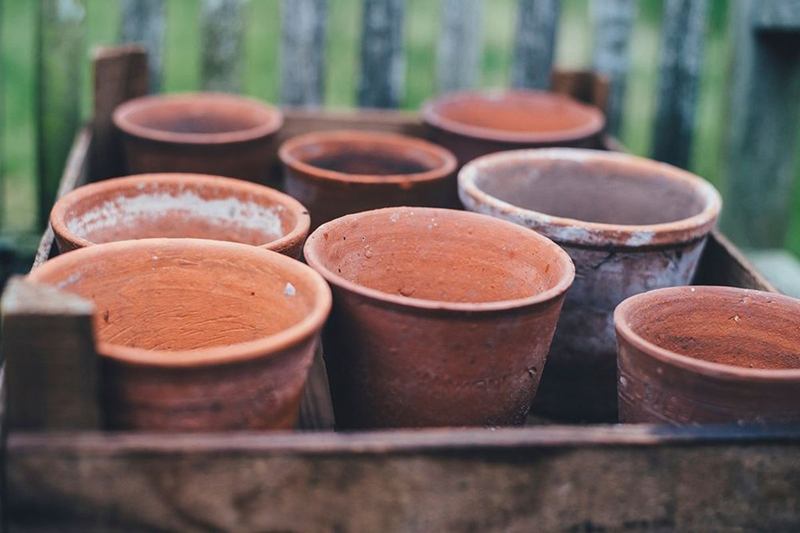
Terracotta is porous. Water evaporates through the wall of the pot and leaves dissolved minerals behind: limescale from tap water and salts from fertiliser. That is how the typical white crusts form – and the harder your water, the faster it happens.
Pots that stay damp for a long time – in the shade or inside a cachepot with no air – attract algae. Inside, you find leftover soil, matted roots and sometimes fungal spores or pest eggs, for example from fungus gnats, whose larvae live in damp potting soil (see how to get rid of fungus gnats). A pot that hasn't been cleaned passes all of this on to the new plant.
| Deposit | Cause | What helps |
|---|---|---|
| Hard white crust outside | Limescale and fertiliser salts | Soaking, diluted vinegar or citric acid, brush |
| Slimy green film | Algae from constant damp | Brush and warm soapy water |
| Soil and roots inside | Remains of the old plant | Scrape out dry, then soak |
| White rings in the saucer | Limescale from standing water | Vinegar bath and sponge |
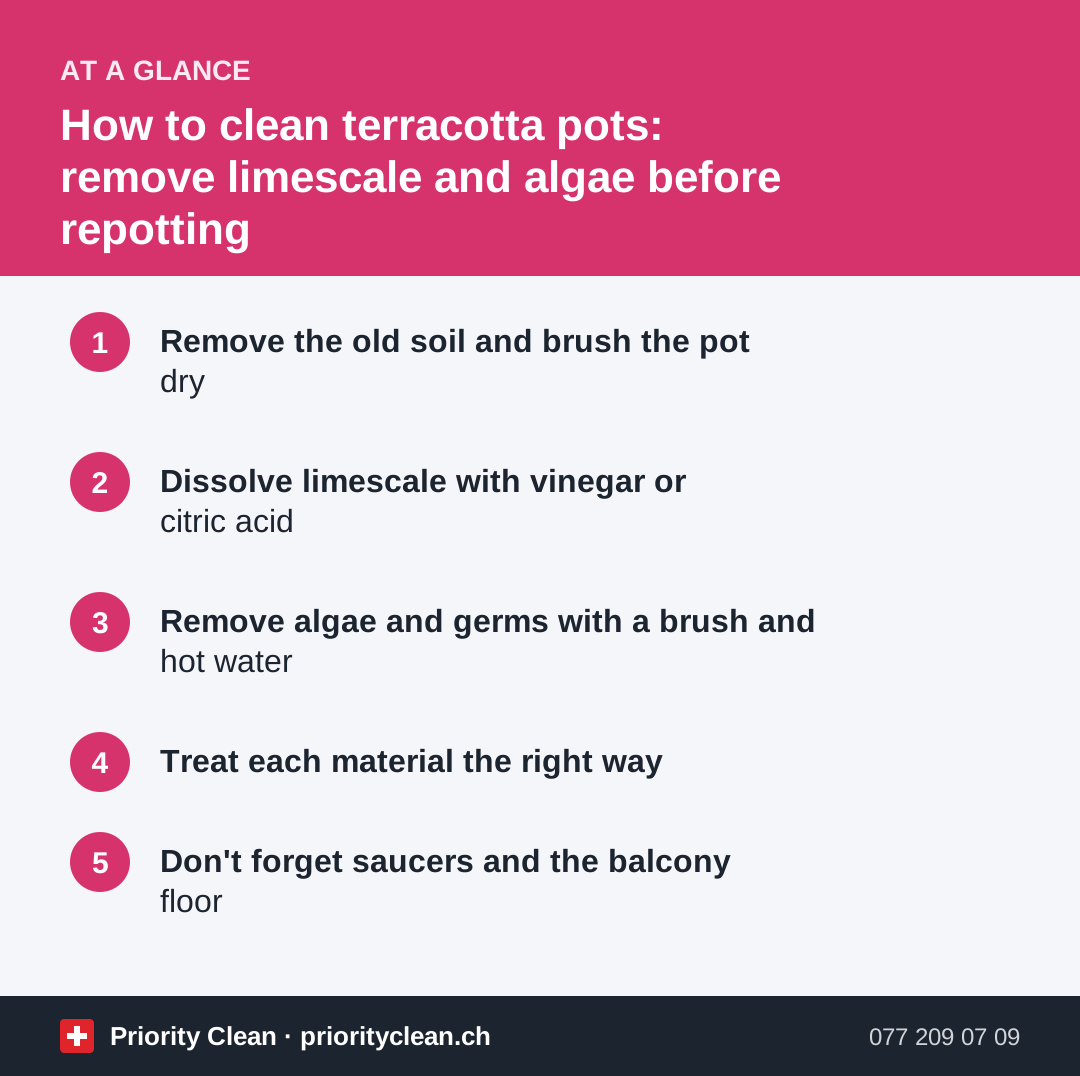
1. Remove the old soil and brush the pot dry
- Work outdoors or on old newspaper: loosen the soil with a spoon and tap the pot to empty it.
- Pull root remains and matted roots out of the base and the drainage hole.
- Brush the dry pot inside and out with a stiff brush – dry soil comes off more easily than wet mud.
- Put old soil on the compost or, depending on your commune, in the green waste – never down the drain, as soil and sand block sinks and pipes.
Then put the pots in a bucket of warm water. Terracotta can soak for a few hours until crusts and soil remains have softened.
2. Dissolve limescale with vinegar or citric acid
The white crusts are mostly limescale – and limescale dissolves in acid. For many cleaning jobs, the Swiss Foundation for Consumer Protection recommends simple household remedies such as vinegar, citric acid or soda instead of lots of specialist products. For pots, these two acids are all you need.
- Dilute household vinegar with roughly the same amount of water, or dissolve citric acid in lukewarm water according to the pack – not in hot water, or new gritty deposits can form.
- Stand the soaked pot in the solution; for thick crusts, leave it for a few hours or overnight.
- Scrub with a stiff brush or a plastic scouring sponge, and give stubborn spots a second go.
- Rinse thoroughly with clean water so that no acid stays in the clay.
Wear gloves. Vinegar essence is far stronger than household vinegar, irritates skin and eyes and should only be used well diluted. Which acid suits which job is explained in our guide Citric acid or vinegar for descaling?.
3. Remove algae and germs with a brush and hot water
Green deposits on pots are usually harmless algae. They come off with warm water, a little soft soap or washing-up liquid and a brush. Scrub the base and the drainage hole too, where the layer is often thickest.
If the old plant was diseased or infested, also pour boiling water from the kettle over the clean pot – stand it in an empty bucket and pour slowly, taking care not to scald yourself. Terracotta and glazed ceramic cope with this easily. Thin plastic can warp; hot tap water and drying in the sun will do instead.
4. Treat each material the right way
Not every pot can take the same treatment:
| Material | How to clean | Take care |
|---|---|---|
| Unglazed terracotta | Soaking, vinegar or citric acid bath, stiff brush | Rinse well, don't leave it wet in frost |
| Glazed ceramic | Sponge, washing-up liquid, diluted vinegar for limescale | No steel wool, it scratches the glaze |
| Plastic | Warm water, washing-up liquid, soft brush | No abrasive cleaners or boiling water |
| Zinc, copper, Corten steel | Water and a soft brush | No acid – it attacks metal and patina |
| Wooden planter | Brush and soft soap | Don't soak, let it dry thoroughly |
With self-watering pots, take out the insert and wick and clean the reservoir with a brush and vinegar water – slimy deposits like to build up there.
5. Don't forget saucers and the balcony floor
Saucers collect limescale, soil and standing water: soak them in vinegar, scrub the rim and rinse with clean water. Keep it up during the season, too: from May to September, the Federal Office for the Environment (FOEN) advises emptying and cleaning containers with standing water, such as plant saucers, at least once a week or covering them, so that mosquitoes such as the Asian tiger mosquito cannot breed in them.
Pots often leave pale rings on the balcony floor. On ceramic tiles, diluted vinegar helps; on natural stone such as marble or limestone, use only a neutral cleaner – acid leaves dull marks there. Pot feet let air circulate underneath, so fewer rings form. For floors, railings and glass, see our guide How to clean a balcony.
Common mistakes
- Using vinegar essence undiluted: unnecessarily harsh on skin, glazes and seals.
- Acid on natural stone or metal: one splash on a marble slab or a zinc pot leaves permanent marks.
- Only cleaning the outside: germs and pest eggs hide inside and in the drainage hole.
- Storing wet terracotta in frost: the water in the clay freezes and the pot can crack.
- Combining bleach and vinegar: this releases toxic chlorine gas.
Frequently asked questions
How do I get limescale off terracotta pots?
Soak the pot in warm water, then stand it in a mixture of household vinegar and water or in diluted citric acid. After a few hours, the crusts can be scrubbed off with a brush. Finally, rinse thoroughly with clean water.
Do plant pots need disinfecting before repotting?
For healthy plants, brushing, washing and drying are enough. If the plant was diseased or infested, also pour boiling water over heat-resistant pots after cleaning. Chemical disinfectants are usually not needed.
Do the white marks harm the plant?
The crusts on the outside are mainly a cosmetic problem. They do show, however, that limescale and fertiliser salts are building up in the pot. With fresh compost and a clean pot, the roots get a fresh start.
How do I remove water rings from the balcony?
On ceramic tiles, diluted vinegar dissolves the limescale rings. Clean marble and other limestone-based stone only with a neutral cleaner. Pot feet let air circulate underneath and help prevent new rings.
Thanks for your feedback! Feel free to share the guide.
Thanks! What was missing? Drop us a line – we will improve the guide. WhatsApp