Most people change their bed linen regularly, yet the mattress protector underneath often stays put for months. It catches sweat, skin flakes and little accidents before they reach the mattress. If you want to wash a mattress protector properly, there are two things to know above all: how often it needs doing and how much heat the fabric can take.
Spring is a good moment: the winter duvet goes into storage, windows are open more often and large items dry faster outdoors. Here is how to care for cotton flannel, quilted and waterproof protectors.
Why your mattress protector needs regular washing
While we sleep, we give off moisture, skin oils and skin flakes. The flakes feed house dust mites, and the moisture keeps the bed warm and humid. The protector collects all of this before it gets into the mattress, which itself can't be washed. If the protector is never washed, it becomes a store of dust and smells in its own right.
Not every protector can be treated the same way. The table shows what care labels often say – but the label on your own product always takes priority:
| Type of protector | Common care instruction | What to watch |
|---|---|---|
| Cotton flannel | Often 60 °C, sometimes 95 °C | May shrink a little in the first wash |
| Quilted, with filling | Often 40 to 60 °C | Needs space in the drum and takes long to dry |
| Waterproof with plastic backing | Mostly up to 60 °C, gentle cycle | No bleach, no fabric softener, no ironing |
| Encasing (mite-proof cover) | As the manufacturer states | Encloses the whole mattress |
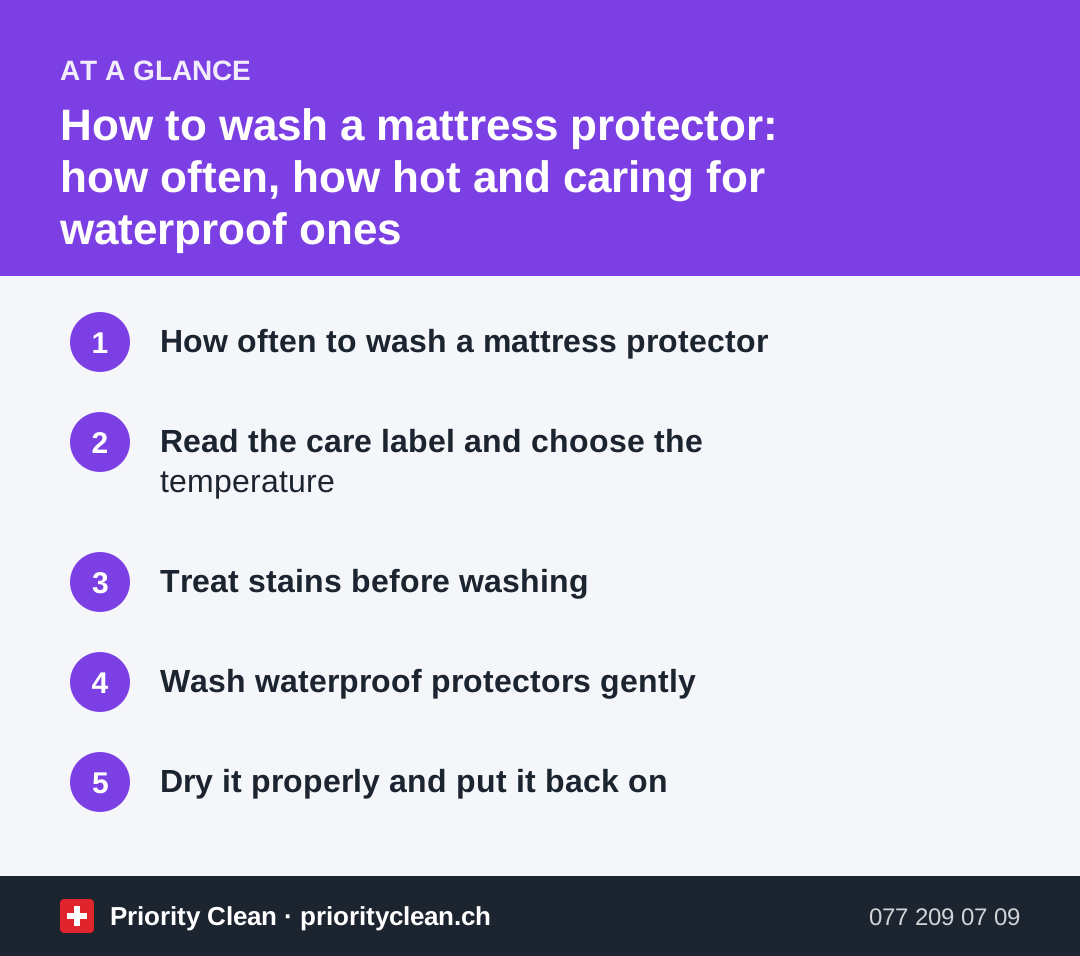
1. How often to wash a mattress protector
As a guide, every one to three months. The right rhythm depends on your everyday life:
| Situation | Recommendation |
|---|---|
| Normal use | Every two to three months |
| Heavy sweating, pet in the bed | About once a month |
| House dust mite allergy | More often, together with the bed linen |
| Children who still wet the bed at night | After every accident |
| Urine, vomit, blood, spilt drinks | Immediately |
The seasonal duvet swap in spring and autumn is a good reminder. How often duvet covers and pillowcases should go in the wash is covered in our guide How often to wash bed sheets.
2. Read the care label and choose the temperature
The number in the wash tub on the label is the maximum temperature. Bars underneath call for a gentler cycle, and a crossed-out triangle means no bleach. The square with a circle stands for the tumble dryer: the dots show the heat allowed, a cross rules it out. What each symbol means is explained in detail in the GINETEX care symbols index.
For everyday laundry, SwissEnergy (EnergieSchweiz) recommends low temperatures, eco programmes and full loads – without increasing the detergent dose at low temperatures. For a mattress protector, 60 °C is mainly worthwhile with allergies, after illness or after a stain – provided the label allows it. Otherwise 40 °C is usually enough.
Wash it with bed linen of a similar colour, but don't cram the drum: the water needs to get through such a large item. A universal detergent suits white cotton flannel; for waterproof protectors, choose a detergent without bleach, such as a colour detergent.
3. Treat stains before washing
- Blood: rinse immediately in cold water, never hot – heat makes the protein set. Then pre-treat with gall soap and wash.
- Urine: strip the protector, rinse it in cold water and wash it as soon as possible. If anything has soaked through to the mattress, see our guide Remove urine from a mattress.
- Yellowish sweat marks: rub in a little liquid detergent, leave it briefly and wash at the highest temperature allowed.
- Vomit: remove residue wearing gloves, rinse in cold water and wash separately.
Avoid bleach: it can damage fibres and coatings and must never be mixed with other cleaning products.
4. Wash waterproof protectors gently
A waterproof mattress protector has a thin plastic layer on the underside, usually polyurethane. It holds back liquids but is sensitive to heat and harsh products:
- Never exceed the temperature on the label – usually 60 °C.
- Use neither bleach nor fabric softener. Softener can reduce how well the top layer absorbs moisture.
- Don't wash it with items that have hook-and-loop fasteners, which can snag on the coating.
- Don't iron it.
- After washing, hold it up to the light: cracks or peeling patches show that it is no longer waterproof.
5. Dry it properly and put it back on
Many protectors can go in the tumble dryer, but waterproof models usually only on low heat – too much heat makes the coating brittle. If in doubt, line-dry it: in the drying room of the shared laundry or outdoors, ideally in the shade for plastic-backed models. Shake quilted protectors out now and then so the filling doesn't clump, and check that they are dry inside before putting them back.
Make use of the drying time: air the mattress, vacuum it and treat any stains. Our guide How to clean a mattress shows how.
Common mistakes
- Only changing the bed linen: the protector collects sweat and skin flakes for months.
- Hot tumble drying or ironing: the waterproof layer becomes brittle and starts to leak.
- Using fabric softener: it reduces absorbency and can harm coatings.
- Washing out blood or urine with hot water: heat sets the stains.
- Putting it back damp: leftover moisture in the bed encourages mildew and musty smells.
Frequently asked questions
How often should you wash a mattress protector?
Normally every one to three months, more often with allergies, heavy sweating or pets in the bed. After urine, blood or vomit, wash it straight away.
Can you wash a mattress protector at 60 degrees?
Yes, if the care label shows 60 °C – which is sensible with allergies and after illness. Waterproof protectors usually tolerate 60 °C at most. The number in the wash tub on the label is always what counts.
Can a waterproof mattress protector go in the tumble dryer?
Only if the label allows it, and then on low heat. Too much heat makes the coating brittle and leaky. If in doubt, hang it up to dry.
Should you wash a new mattress protector before using it?
It's a good idea: it removes smells from production and packaging, and cotton flannel shrinks before it goes on the mattress. Wash it according to the label and let it dry completely.
Thanks for your feedback! Feel free to share the guide.
Thanks! What was missing? Drop us a line – we will improve the guide. WhatsApp