Your dog spends many hours a day in its bed – and sooner or later you can see and smell it: hair in the fabric, dirt from the paws and an odour that makes itself felt throughout the flat. When it comes to washing a dog bed, though, the washing machine alone often achieves little. What really counts is the preparation, the right temperature and thorough drying.
Towards the end of winter, when dogs come home wet from walks in the slush and the spring moult is about to begin, a proper wash day is well worth it. Five steps show how to get the cover, cushion and filling clean again.
Why washing a dog bed regularly matters
A dog bed collects more than just fur. Every time your dog lies down, skin flakes, saliva, sebum and dirt from its paws and belly work their way into the fabric. Bacteria break down these residues – hence the typical musty smell, which over time also seeps into carpets and upholstery.
Skin flakes are also food for house dust mites, which thrive in warm textiles. For people with allergies, the dog's sleeping place therefore matters twice over: according to aha! Swiss Allergy Centre, animal allergens come mainly from the skin, saliva, urine and tears and stick to hair, dust and textiles. If your dog has fleas, their eggs and larvae drop off mostly where it sleeps – what to do then is explained in our guide Fleas in your apartment.
| Part of the dog bed | How to get it clean |
|---|---|
| Removable cotton or polyester cover | In the machine, as hot as the label allows, ideally 60 °C |
| Fleece blanket or cushion | Usually 30–40 °C on a gentle cycle, as the label says |
| Inner cushion with fibre filling | Often machine-washable, low spin, dry thoroughly |
| Foam or memory foam core | Not in the machine: vacuum, clean by hand, air it |
| Plastic basket | Wash with warm water and a little washing-up liquid |
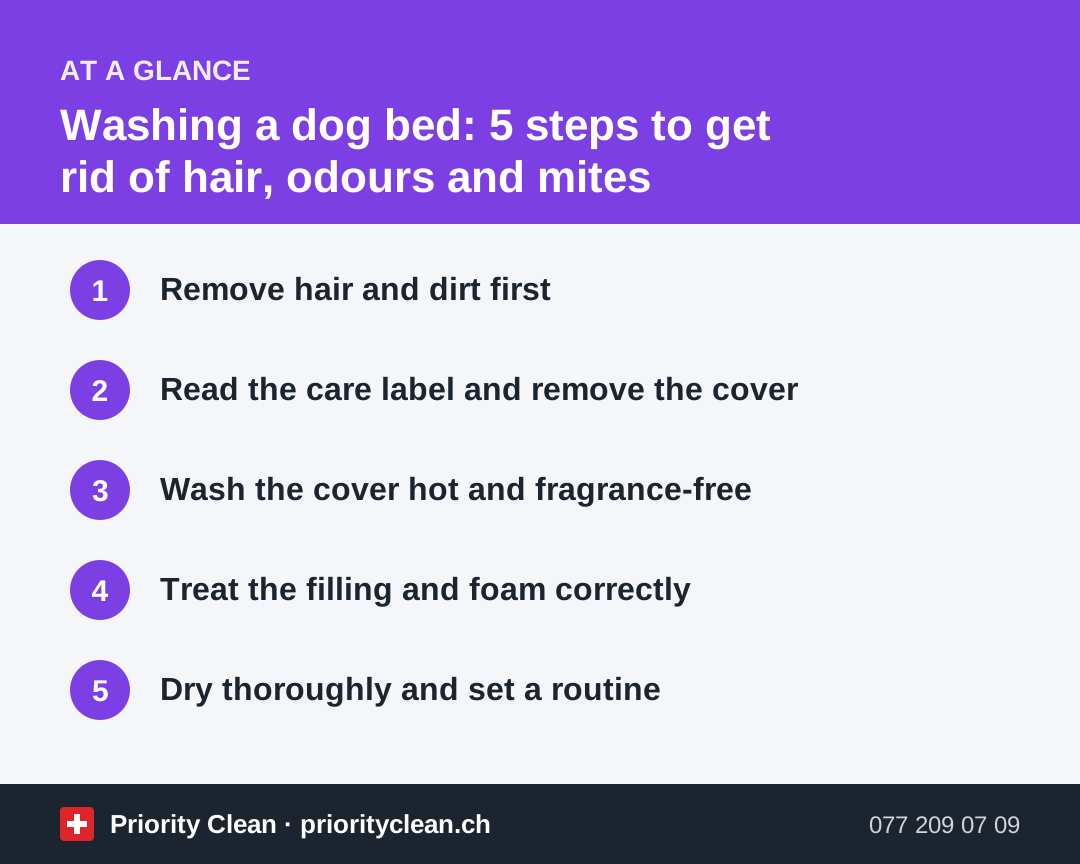
1. Remove hair and dirt first
Dog hair that gets into the machine mats in the drum, clogs the filter and, in the worst case, ends up on your next load. So the rule is: remove it first, then wash.
- Give the bed a good shake outdoors – on the balcony, with consideration for your neighbours and the house rules.
- Vacuum it with the upholstery tool, including seams, edges and corners.
- Gather stubborn hair with a slightly damp rubber glove or pick it off with a lint roller.
- Brush off dried-on mud and soil while dry.
You will find more tricks against hair on the sofa, carpet and clothes in our guide on how to remove dog hair.
2. Read the care label and remove the cover
Before anything goes into the machine, check the label. The care symbols tell you the temperature, the programme and whether the tumble dryer is allowed. The GINETEX care symbols index offers a clear overview: the number in the wash tub gives the maximum temperature, and bars underneath stand for a gentler cycle with a smaller load.
- Take off the cover, close the zip and turn it inside out – this protects the fabric and the machine.
- Take out the inner cushion or core and assess it separately (see step 4).
- If there is no label, treat the item as delicates: 30 °C, gentle cycle, low spin.
- If the whole bed doesn't fit loosely into the drum, only wash the cover. Laundry needs room to get clean.
In a shared laundry room, the laundry room rules apply. Remove hair there with particular care and check the drum and filter after your wash – your neighbours will thank you.
3. Wash the cover hot and fragrance-free
For covers and blankets that can take it, 60 °C is the best choice. aha! Swiss Allergy Centre recommends that people with a house dust mite allergy wash pillowcases, duvet covers and pyjamas at 60 °C – the same principle helps with your dog's bed. If the label only allows 30 or 40 °C, wash more often and dry especially thoroughly.
- Fragrance-free detergent: a mild product without added fragrance is enough, dosed as the pack says. Dogs have a keen nose – a heavily scented bed is sometimes avoided, and residue can irritate sensitive skin.
- No fabric softener or scent beads: they leave fragrance and a film on the fibres.
- Extra rinse: an additional rinse gets detergent residue out of thick fabric.
- Pre-treat stains: rinse urine or vomit out with cold water first and, if needed, treat it with an enzyme cleaner from a pet shop. Hot water directly on fresh protein stains can set them.
4. Treat the filling and foam correctly
The filling decides whether the whole bed can go into the machine:
- Inner cushions with fibre filling: if the label says they are washable, wash them on a gentle cycle with a low spin. If the cushion may go in the tumble dryer, two or three clean tennis balls fluff the filling back up.
- Foam and memory foam: not in the washing machine – the core can tear and hardly dries on the inside. Vacuum it, clean stains with a damp cloth and a little mild detergent, and press the water out with a towel instead of wringing.
- Against odour in the core: sprinkle a thin layer of bicarbonate of soda, leave it for a few hours and vacuum it off thoroughly.
- Waterproof inner cover: it protects the core from urine and saliva – useful for puppies and for old or incontinent dogs.
If an older core still smells despite everything, replacing it is often the better solution. Some manufacturers sell cores and covers separately.
5. Dry thoroughly and set a routine
Damp filling is a breeding ground for musty smells and mould. So let all parts dry completely before you put the bed back together. Covers and blankets dry in the air or in the tumble dryer if the symbol allows it. Lay foam flat in an airy place, not directly on the radiator and not in blazing sun – depending on its thickness, this takes one to two days.
To stop the bed from smelling strongly in the first place, a fixed routine helps:
| How often | What |
|---|---|
| Weekly | Shake out, vacuum, remove hair |
| Every one to two weeks | Wash the cover and blanket, weekly if anyone has allergies |
| Every few months | Wash the inner cushion, or clean and air the core thoroughly |
| Straight away | After urine, vomit or fleas |
A spare cover makes switching easy: your dog always lies on something clean while the other cover dries. If the smell still lingers in the flat, you'll find further measures in our guide on dog smell in your apartment.
Common mistakes
- Washing the hair along with it: it clogs the filter and ends up on the next load.
- Lots of fragrance against odours: fabric softener and scented detergent only mask the smell and bother the dog's sensitive nose.
- Putting foam in the machine: the core tears or stays damp inside.
- Letting the dog back in too soon: filling that is only dry on the outside soon starts to smell.
- Washing only every few months: by then hair, dirt and odour have worked their way deep into the fabric.
Frequently asked questions
Can you wash a dog bed in the washing machine?
The cover and many cushions with fibre filling, yes – as long as the care label allows it. Cores made of foam or memory foam, on the other hand, don't belong in the machine. Remove the hair thoroughly beforehand and use a laundry bag.
What temperature should I wash a dog bed at?
As hot as the label allows – 60 °C is ideal for covers and blankets made of cotton or sturdy polyester. Wash delicate fabrics at 30 or 40 °C, but a little more often.
How often should you wash a dog bed?
The cover every one to two weeks, and weekly if anyone in the household has allergies. Vacuuming is worth doing every week; the inner cushion and core are due every few months. After urine, vomit or fleas, wash it straight away.
Which detergent is best for a dog bed?
A mild, fragrance-free detergent in the right dose. Skip fabric softener and scent beads: many dogs dislike the fragrance, and residue can irritate the skin.
Thanks for your feedback! Feel free to share the guide.
Thanks! What was missing? Drop us a line – we will improve the guide. WhatsApp