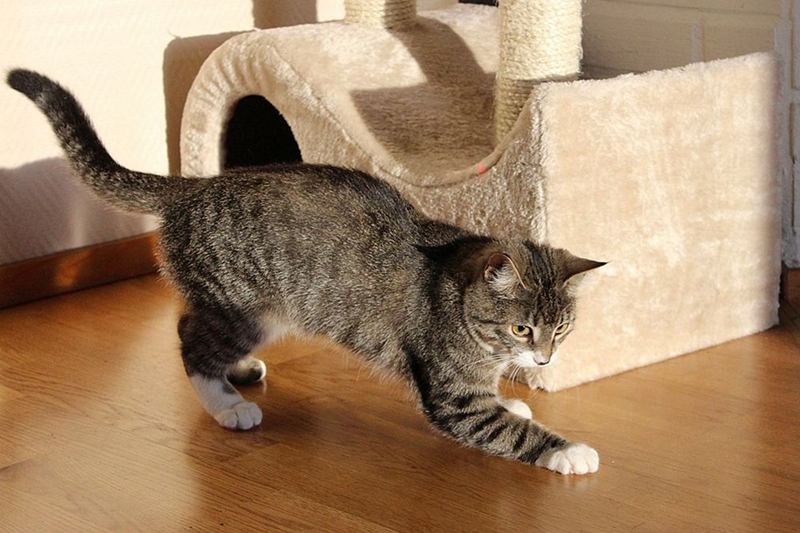
A cat tree is a favourite bed, lookout tower and scratching post all in one – and after a few months it shows: hair in the plush, dust in the sisal fibres, stains from hairballs in the bed. When you clean a cat tree, one rule comes first: your cat should still like it afterwards. Strongly scented cleaners and too much water are therefore off limits.
In spring, many cats lose a lot of hair as they moult. These five steps show how to clean plush, sisal and beds gently but thoroughly.
Why you should clean your cat tree regularly
Cats spend hours on their tree sleeping, grooming and scratching. They leave behind hair, dander, saliva and dust, and now and then a coughed-up hairball or litter stuck to their paws. Over time the plush gets matted and the cat tree starts to smell musty. If your cat has fleas, their larvae prefer to develop where it sleeps.
For allergy sufferers, every clean counts. The aha! Swiss Allergy Centre explains that animal allergens come mainly from skin, saliva and urine and stick to dust, hair and textiles. Among other things, it recommends having sleeping places cleaned by people without allergies and vacuuming with a HEPA filter.
| Material | How to clean it | Avoid |
|---|---|---|
| Plush and faux fur | Vacuum, rubber glove, lint roller, spot-clean stains | Soaking it |
| Sisal | Brush dry and vacuum | Soaking, steam cleaners |
| Removable cushions and covers | Washing machine according to the care label | Fabric softener, scent beads |
| Wood and chipboard | Wipe with a barely damp cloth, dry at once | Too much water, harsh cleaners |
| Hideaways and hammocks | Vacuum, wash removable parts | Forgetting them – that is where most dirt collects |
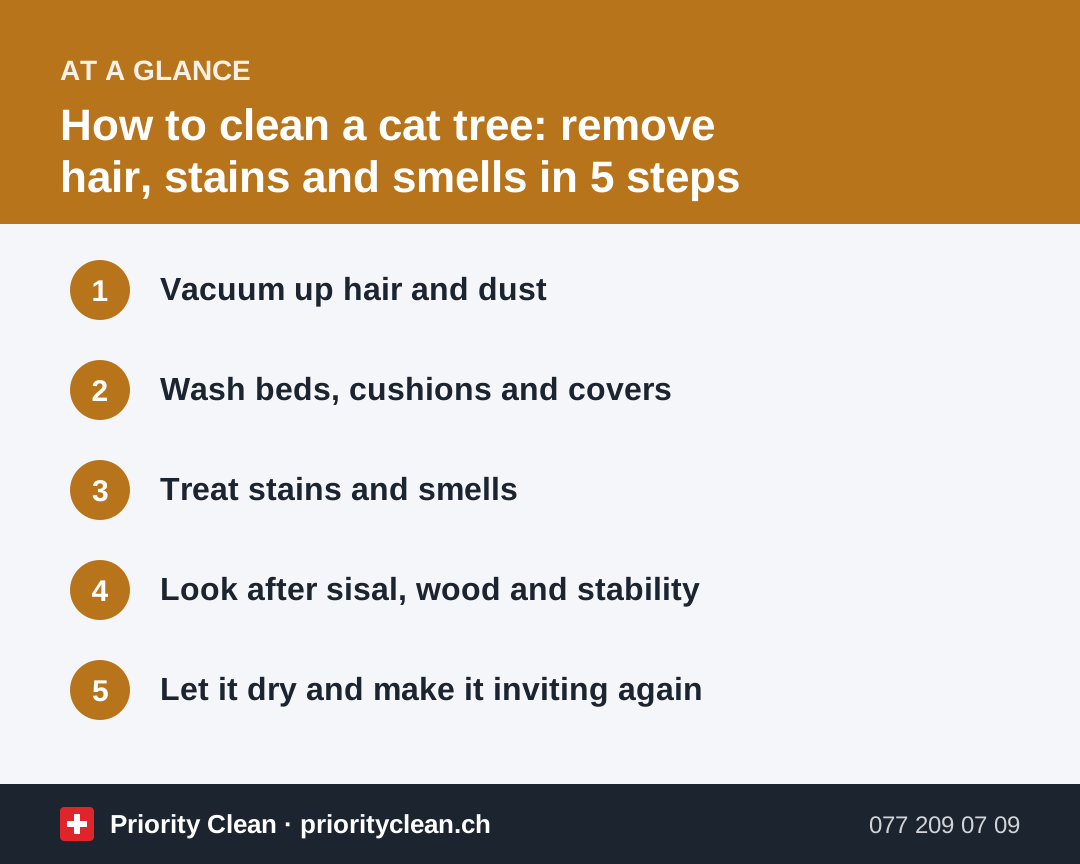
1. Vacuum up hair and dust
Work from top to bottom. Vacuum the platforms and posts with the upholstery or brush tool and the hideaways with the crevice tool. Hair that is stuck in the plush comes loose with a slightly damp rubber glove: stroke the fabric in one direction with a flat hand until the hair rolls into clumps. A lint roller does the rest. Brush the sisal along the fibres with a stiff brush, then vacuum again.
Afterwards, the vacuum cleaner itself is often full of hair – our guide on how to clean a vacuum filter and cleaner shows how to free the brush and filter. For sofas, carpets and clothes, see also how to remove cat hair.
2. Wash beds, cushions and covers
Many models have removable cushions, beds or covers with a zip or Velcro. Wash them according to the care label with a mild, ideally fragrance-free detergent and no fabric softener – cats are sensitive to unfamiliar smells. Clean fixed covers locally with a damp cloth and a little mild soapy water. Let everything dry completely, as damp padding soon smells musty.
3. Treat stains and smells
Vomit, faeces and urine contain proteins and other organic substances that ordinary cleaners only remove from the surface. Here is what to do:
- Remove residue using gloves and kitchen paper.
- Dab the stain rather than rubbing, so it does not spread.
- Apply an enzyme cleaner for pet stains as directed and leave it to work – test it on a hidden spot first.
- Dab with a damp cloth and let it dry well.
Avoid ammonia, chlorine and heavily scented products. To a cat, ammonia smells a bit like urine and can prompt it to mark the spot again. Essential oils and fragrance sprays don't belong on a cat tree either – some oils are even toxic to cats. If your cat keeps marking, talk to your vet. If the smell seems to come from the litter corner instead, see our guide on cat litter smell.
4. Look after sisal, wood and stability
Sisal does not cope well with water: soaked fibres dry slowly, smell musty and work loose. Only spot-clean stains with a well-wrung cloth and let the post air-dry. If the rope is frayed, it can be replaced on many models – replacement posts and sisal rope are available from pet shops.
Wipe wooden or chipboard platforms with a barely damp cloth and dry them straight away, as chipboard swells when wet. While you are at it, tighten all the screws: a wobbly cat tree is dangerous for a jumping cat and is often shunned.
5. Let it dry and make it inviting again
Only set the cat tree up again once everything is thoroughly dry, ideally after a night in a well-ventilated room. Put it back in its usual place. A blanket that smells of your cat or a little catnip in the bed will help your cat reclaim its spot quickly.
Common mistakes
- Scented cleaners and fabric softener: your cat avoids its spot or marks it again.
- Soaking the sisal: the fibres dry slowly and smell musty.
- Ammonia or chlorine: they can encourage marking and irritate a cat's sensitive nose.
- Setting it up again too soon: leftover moisture causes smells.
- Only vacuuming the top: most dirt collects in the hideaways and under the platforms.
Frequently asked questions
How often should I clean a cat tree?
Vacuum and remove hair once a week, more often with several cats or during moulting. Wash covers and blankets every few weeks and treat stains straight away.
Can I put a cat tree in the washing machine?
Not the cat tree itself. Removable cushions, beds, hammocks and covers can go in the machine according to the care label, with a mild detergent and no fabric softener. Clean posts and platforms dry or with a barely damp cloth.
How do I get cat urine out of a cat tree?
First blot up the urine with kitchen paper, then apply an enzyme cleaner for pet stains as directed and let it work. Products containing ammonia or chlorine are unsuitable. If a sisal post is heavily soaked, replacing it is often the cleaner solution.
What should I do if my cat has fleas?
Have your cat treated by the vet. In the meantime, vacuum beds, the cat tree and floors thoroughly and often, and wash blankets and covers as hot as the care label allows. Then dispose of the vacuum cleaner bag sealed. Find out more in our guide on fleas in your apartment.
Thanks for your feedback! Feel free to share the guide.
Thanks! What was missing? Drop us a line – we will improve the guide. WhatsApp