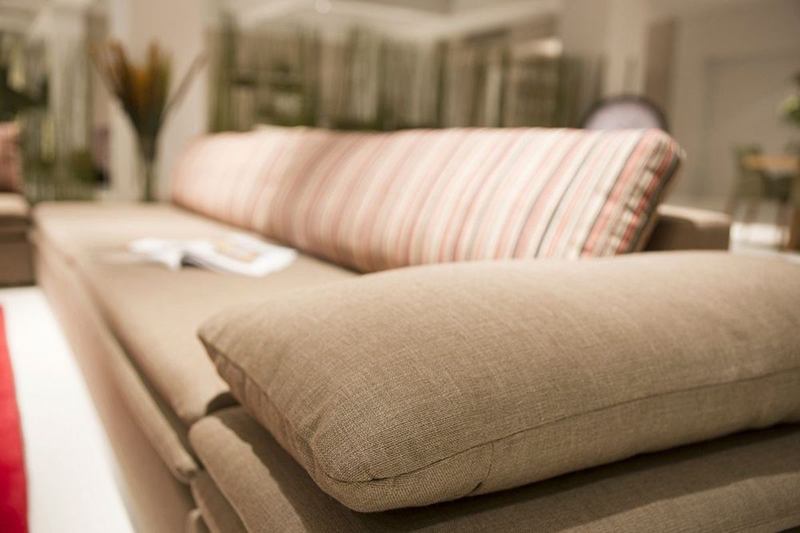
Coffee on the sofa, a dog that makes itself comfortable, and after a few years the fabric simply looks tired. More and more households therefore reach for a machine rather than a cloth – and face the question of upholstery cleaner hire versus buying one outright.
Either can be the right call, and either can go wrong. Three things decide it: the material in front of you, how much water goes into the padding, and how quickly it comes back out.
How a spray extraction machine works
A spray extraction machine sprays cleaning solution into the fabric under pressure and, in the same pass, vacuums it back out along with the loosened dirt. Unlike scrubbing, the dirt does not stay in the textile: it ends up in the dirty water tank.
That works well on widespread, ground-in soiling: hallway rugs, sofa seats, car seats, the surface of a mattress. For a single fresh stain the machine is overkill – targeted blotting is faster. On the products themselves, the Swiss consumer protection foundation sums up the basics in its guide to household remedies instead of cleaning products, which also covers the right cleaning tools.
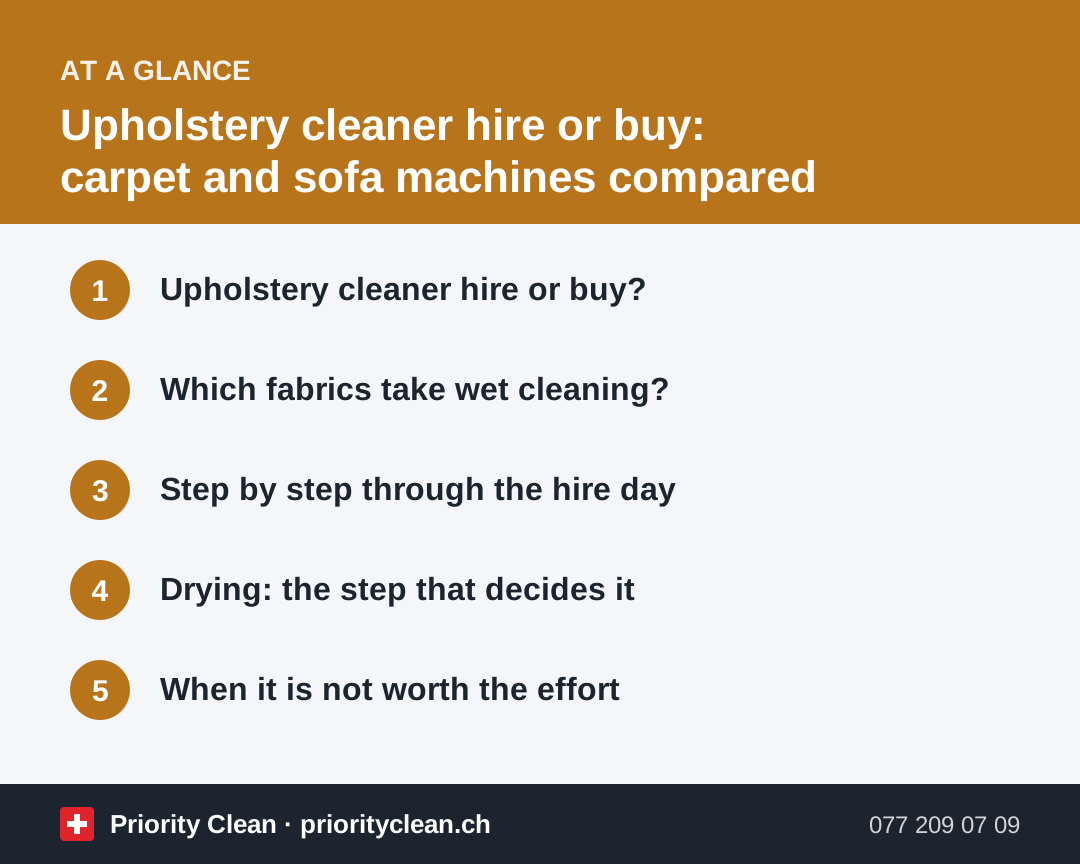
1. Upholstery cleaner hire or buy?
| Hiring | Buying | |
|---|---|---|
| Suits | one or two jobs a year, spring clean, end of tenancy | pets, small children, large carpeted areas |
| Upside | powerful professional machines, no storage, no servicing | available any time, ready the moment something spills |
| Downside | booking, transport, time pressure on the day | outlay, storage space, looking after tanks and nozzles |
| Watch out for | cleaning solution often extra, check the condition before you leave | is an upholstery nozzle and are spare parts actually available? |
In Switzerland these machines are hired out by DIY stores, hire stations and some retailers; a few property managements keep one for the building – ask the caretaker. Book early: the weekends before the customary moving dates fill up fast.
2. Which fabrics take wet cleaning?
Before you spray, find the label – usually under the seat cushion or along the seam of the cover. The international care code for upholstery fabrics gives the answer:
| Code | Meaning | Spray extraction? |
|---|---|---|
| W | clean with water-based products | yes |
| S | solvent-based products only | no |
| WS or SW | both are possible | yes, with minimal moisture |
| X | vacuum or brush only | no |
Velvet, chenille, viscose and untreated natural fibres such as linen and cotton are tricky too: they mark easily. Leather and faux leather never go through spray extraction. For those covers, see our guides on cleaning a sofa and cleaning a rug instead.
No label? Always test on a hidden area first – the back of the piece, the underside of a cushion – and let it dry completely before you carry on.
3. Step by step through the hire day
- Vacuum thoroughly, including crevices, cushion undersides and rug edges. Whatever comes off dry needs no water.
- Pre-treat stains, sparingly and precisely, following the product instructions.
- Do a test patch and wait.
- Work in strips: spray and extract, then go over the strip once or twice more without spraying. That dry pass removes most of the residual moisture.
- Do not wipe afterwards – leave the textile alone.
- Empty and rinse the tanks while the machine is still with you; it saves arguments on return.
4. Drying: the step that decides it
Upholstery is made of foam, wadding and wood. Let too much water in and it dries slowly and smells – and that is exactly where mould starts. The Federal Office of Public Health states that mould is unhealthy, must be removed quickly and that the cause of the moisture must always be found and fixed. After cleaning a sofa, that cause is home-made and therefore avoidable.
To speed up drying:
- Stand the cushions on edge so air reaches them from all sides.
- Air with the windows wide open rather than tilted: the same office advises opening windows fully and creating a through-draught where possible, for at least five minutes in the heating season.
- Point a fan at the piece; that does more than turning up the heating.
- Only use the furniture again when it feels dry deep down, which can take a full day.
- Do not dry a rug flat on parquet – stand it on edge or drape it over a clothes airer.
5. When it is not worth the effort
Sometimes the machine is the wrong answer. A single fresh stain just needs blotting. A care code of S or X rules out wet cleaning altogether. And if the sofa has sagged after twelve years and the cover is going threadbare, even the best extraction will not make it new.
Before a handover it is also worth rereading the lease and the inventory: what is required for fitted carpet is for the property management to confirm. Our guide on cleaning fitted carpet explains the approach.
Common mistakes
- Working too wet: more water does not clean better, it only lengthens the drying time.
- Ignoring the care code: on S or X fabrics, water leaves rings that never come out.
- Too much product: residue attracts the next lot of dirt.
- No test patch: colour changes often only show up as it dries.
- Windows shut: without airing, the moisture stays in the room and settles on cold walls.
Frequently asked questions
Is upholstery cleaner hire better than buying one?
Rule of thumb: if you need the machine once or twice a year, hiring costs less and gives you a more powerful model. With dogs, cats or small children and regular mishaps, your own machine, ready the moment something happens, earns its keep.
Can I clean any sofa with a spray extraction machine?
No. The care code on the label decides: W and WS accept water-based cleaning, S solvents only, X no wet cleaning. Leather, faux leather and many velvets and viscose fabrics must not go through spray extraction.
How long does upholstery need to dry after cleaning?
Anything from a few hours to a full day, depending on the material, the amount of water and the room climate. Stand the cushions on edge, air the room repeatedly with a through-draught and point a fan at the piece. Only use it again once it feels dry deep down.
What if the sofa smells after cleaning?
A musty smell almost always means residual moisture in the foam. Go over it again dry without spraying, stand the cushions up, air thoroughly and run a fan. If the smell stays or dark patches appear, get a specialist to look at it rather than adding more water.
Thanks for your feedback! Feel free to share the guide.
Thanks! What was missing? Drop us a line – we will improve the guide. WhatsApp